 NBA2026-07-25
LeBron James Signs With the 76ers: The Fantasy Fallout of Philadelphia's New Superteam
By Verdexed NBA Desk
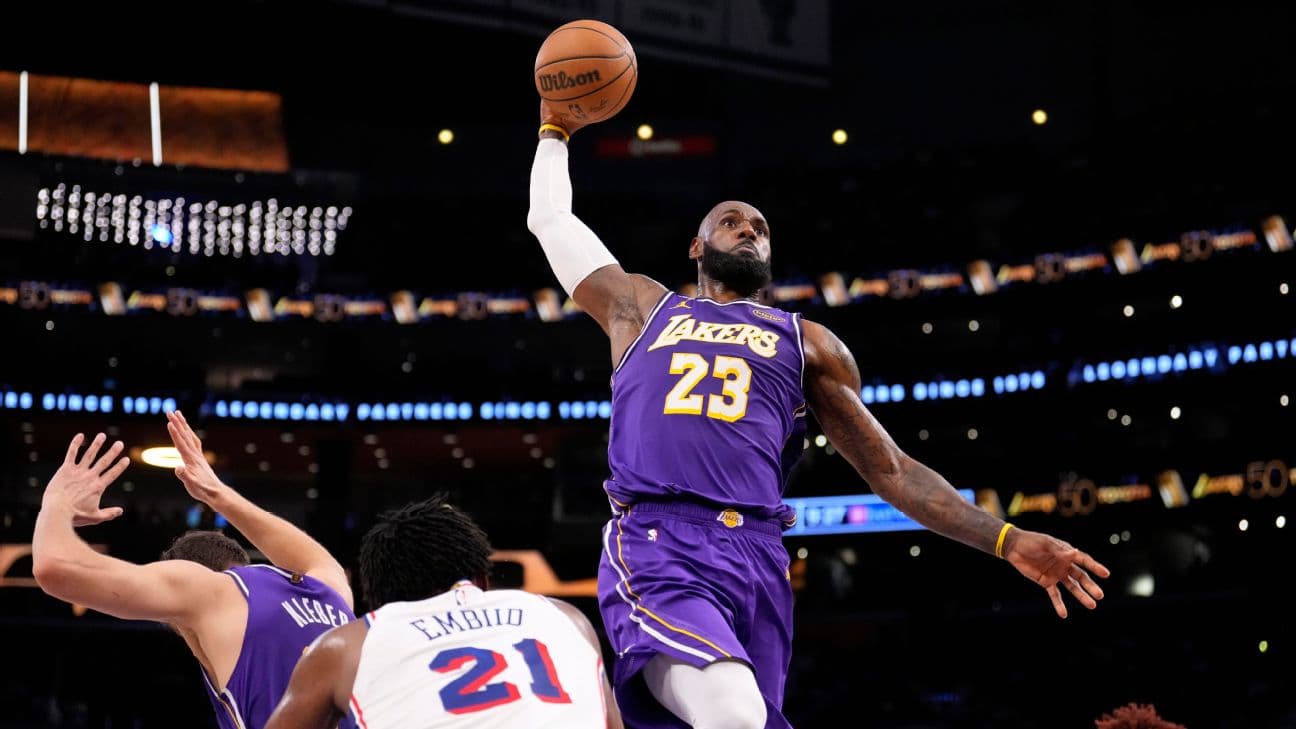
LeBron James is signing with the Philadelphia 76ers, the league's all-time leading scorer announced Friday, choosing a contender over a return to Los Angeles for what will be his 24th NBA season. The deal is reported at two years and roughly $8 million, a figure that says everything about the intent behind it. James is joining a roster that already includes Joel Embiid, Tyrese Maxey and Jaylen Brown, the latter acquired from Boston earlier this month in a trade that sent Paul George and multiple picks the other way.
The market reacted immediately. Philadelphia's championship price at DraftKings shortened from 20-1 to +900, and the 76ers moved from +750 to +370 to win the Eastern Conference. Those are large moves for a signing at the veteran minimum, and they reflect a roster that now has four players who have been the best player on a playoff team.
The usage problem is the fantasy story
Superteams are good for winning and complicated for fantasy. Philadelphia now has a starting five in which four players have historically carried usage rates in the range that produces first-round fantasy value. There is not enough basketball for all of them.
Embiid, when healthy, is one of the highest-usage players in the sport and the offense's fulcrum. Maxey has spent the last several seasons growing into a lead-guard role with the ball in his hands. Brown arrives as a five-time All-Star coming off a season in which he finished sixth in MVP voting and ranked fourth in the league in scoring. James, even at this stage of his career, remains a primary initiator whose value depends on touches.
Something has to compress. The historical pattern for rosters like this is that the highest-usage players give up the least and the third and fourth options absorb the loss. In Philadelphia's case, that most likely means Maxey's shot volume takes the largest hit, with Brown's scoring average settling below the career-best mark he just posted in Boston.
What to expect from James specifically
The temptation is to project James by his most recent Lakers seasons. That is the wrong reference. Players who join a contender late in a career on a minimum deal almost universally see their minutes and usage decline, and the decline is usually voluntary. James has spent recent seasons managing a heavy load out of necessity; in Philadelphia, that necessity is gone.
The fantasy read is that James remains a strong per-minute producer whose counting stats will fall. Assists should hold up best, because his value to this roster is partly as a connector for a lineup full of scorers. Points and rebounds are the categories most likely to slide.
There is also the load-management factor. A 24th-season player on a title team will not play 75 games, and the games he sits will be scheduled around back-to-backs and the second half of the regular season. Managers in weekly-lineup leagues should discount him more than managers in daily-lineup formats, where a missed game is easier to route around.
Embiid is the swing asset
The single largest fantasy variable in Philadelphia is Embiid's availability, and it always has been. When he plays, he produces at a level that justifies a first-round pick. The problem has never been production and has always been games played.
The new roster construction cuts both ways for him. On one hand, a team with this much talent has less reason to push a center through a heavy regular-season load, which argues for more rest and fewer games. On the other, the presence of three other creators reduces the offensive burden he carries, which historically correlates with fewer soft-tissue problems for high-usage big men.
Managers should draft Embiid expecting the usual: elite per-game production and a games-played figure that requires roster depth to absorb.
The Verdexed model take
Verdexed's projection engine models usage as a constrained resource, which produces a specific and slightly counterintuitive output for this roster. The model expects Philadelphia's team-level offensive efficiency to rise substantially while every individual player's fantasy per-game line falls, including Brown's, whose counting stats had been inflated by carrying a Boston offense that lost Jayson Tatum for most of last season.
The projection the model is most confident about is Maxey's. Guards who go from primary ball handler to third option on a title contender have historically lost more fantasy value than the market anticipates, because the loss shows up in both shot attempts and free throw rate. Maxey is being drafted on last season's role, not the one he is about to have.
The projection the model likes most is the one nobody is targeting: Philadelphia's role players. A team with four elite creators generates enormous catch-and-shoot volume for whoever occupies the fifth spot, and those players are essentially free in fantasy drafts.
Betting angle
The championship number has already moved, and moved a lot. Going from 20-1 to +900 on a minimum signing is the market pricing a narrative as much as a roster, and it is worth noting what the number does not account for: Embiid's availability, the fit questions inherent in four ball-dominant players, and the fact that the defending champion New York Knicks return their core.
The more interesting number is Philadelphia's regular-season win total. Superteams assembled in a single offseason have historically underperformed their preseason win totals in year one while outperforming their playoff seeding, because chemistry takes time and load management costs regular-season games. If the 76ers' win total is set aggressively, the under is the side with the structural argument.
Boston's number moves the other way. The Celtics traded Brown for George and picks, and the market has treated that as a straightforward downgrade. Boston went 56-26 last season with Tatum available for only 16 games, which suggests the roster around him is better than the current pricing implies.
What it means for your league
Downgrade Maxey. He is the clearest casualty of the roster's reshaping and the player whose draft price most reflects a role that no longer exists.
Downgrade Brown modestly. He is still an excellent player and will still produce, but a career-best scoring season on a team that needed him to score every night does not repeat on a team with three other options.
Draft James for the assists and the efficiency, not for the scoring, and expect a reduced games-played total. He is a mid-round value rather than an early-round anchor.
Target the Philadelphia role players nobody else is watching. A 76ers wing who shoots and defends will be open all season, and open shots on a high-efficiency offense are how deep-league rosters get built.