 NBA2026-07-10
LeBron James Free Agency: Cavaliers and Heat Lead the Chase for a 24th Season
By Verdexed NBA Desk
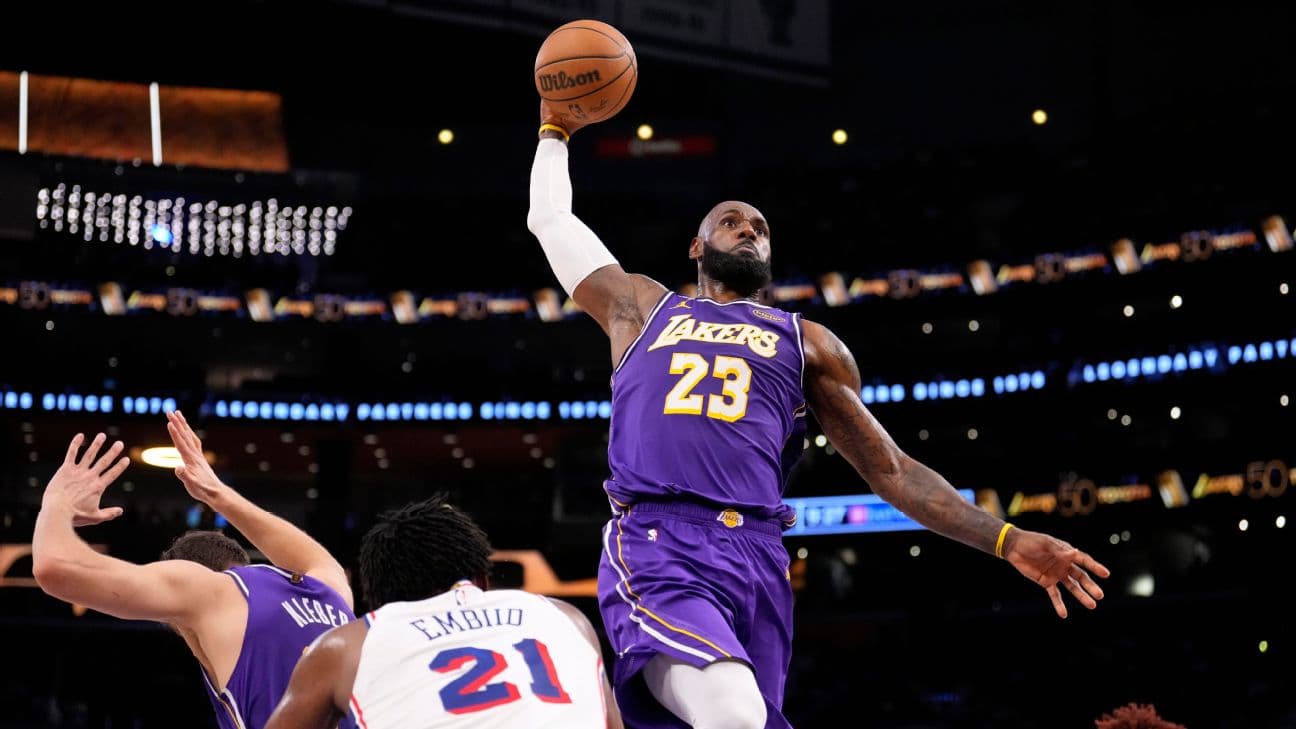
LeBron James is heading for a new team, and the entire NBA is waiting on his decision. James informed the Los Angeles Lakers that he plans to play for a different team in 2026-27, setting up a free-agency saga that could stretch deep into July as he weighs where to spend a record-breaking 24th season. The reported front-runners are the Cleveland Cavaliers and the Miami Heat, with the Philadelphia 76ers on that next tier, though his list of suitors has reportedly grown to include roughly ten teams.
This is the offseason's marquee domino, and where James lands reshapes title odds, fantasy values, and the competitive balance of both conferences.
The state of the search
James began talking with new clubs once free agency opened and has taken a patient, deliberate approach, with most expecting no quick resolution. His initial shortlist reportedly included Cleveland, Miami, and Golden State, and while the field of teams under consideration has widened, the sense from those tracking it is that the Cavaliers and Heat are the genuine leaders. Cleveland has drawn extra attention amid signs James may be drawn to a homecoming, including time spent in Akron and a reunion with former teammates.
The patience is strategic. James holds enormous leverage as the most impactful free agent on the board, and taking his time lets contenders reshape their rosters to accommodate him. For fantasy managers and bettors, the uncertainty is the story until he signs, because each destination produces a very different downstream picture.
The fantasy fallout by destination
Wherever James goes, he remains a high-usage, multi-category producer whose fantasy value is largely destination-proof. But the ripple effects on his new teammates vary enormously. A move to Cleveland would slot him alongside an established core built around Donovan Mitchell, which could mean a modest usage trim for James but a spacing and playmaking boost that lifts the efficiency of everyone around him. The Cavaliers' existing guards and bigs would see their roles recalibrated around a ball-dominant superstar.
A move to Miami would drop James into a retooled roster that just added significant talent this offseason, creating a different set of usage questions. And the Lakers themselves are a fantasy winner in his departure: Los Angeles retained Austin Reaves on a new deal, and a LeBron exit clears usage and shot volume for the players who remain, raising their ceilings. Managers in dynasty and keeper formats should be war-gaming each scenario now, because the target's fantasy stock swings meaningfully with the landing spot.
The betting angle
James still moves championship markets, and his decision will trigger an immediate repricing of title and conference odds. Adding a player of his caliber to a ready-made contender like Cleveland would shorten that team's odds considerably, while a Miami landing would reshape the Eastern Conference picture in a different way. The teams that miss out, and the Lakers who lose him, will see their numbers drift the other direction.
The sharp approach is to have positions mapped in advance. Once James signs, the odds move fast, and the value is captured by bettors who already know how they will react to each outcome rather than those scrambling after the news breaks. His decision is a rare single event that can meaningfully reset an entire conference's betting board.
The age and durability caveat
Any projection for James in a 24th season has to account for the calendar. He remains a remarkably productive and durable player for his age, but the range of outcomes widens every year, and fantasy managers should price in the possibility of load management and scheduled rest that a contender is likely to build into his season. That is actually part of what makes the landing spot matter so much: a team with enough surrounding talent to absorb his rest nights protects his long-term value, while a roster that leans on him too heavily raises the injury risk. For fantasy purposes, treat James as an elite but slightly discounted per-game asset whose games-played total is the number most worth watching, and factor the likely rest schedule into any keeper-league decision.
The Verdexed model take
Verdexed's model frames James as a destination-agnostic fantasy asset whose own line stays elite regardless of team, while flagging the teammate effects as the real actionable edge. The model's largest projected swings are not for James himself but for the players around him: a Cleveland fit trims some usage from the incumbent guards while boosting their efficiency, and a Lakers-without-LeBron scenario meaningfully raises the projections for Los Angeles's returning core.
On the title side, the model treats a James-to-Cleveland outcome as the one that most improves a contender's championship equity, given the Cavaliers' existing roster quality, while a Miami fit carries wider variance depending on how the pieces mesh. The clearest instruction the model offers is to prepare for the repricing rather than predict it: identify which teammates gain usage in each scenario and be ready to act the moment James chooses.
What to do now
Dynasty managers should hold, not panic, on James and on the players whose roles his decision will affect, since the smart move is to react to the actual landing spot rather than guess. Bettors should map their positions across the top scenarios so they can pounce when the odds move. And everyone should watch Cleveland closely, because the homecoming narrative and the roster fit both point to the Cavaliers as the team to beat in the chase. When James finally decides, the fallout will touch far more than one roster, and the managers and bettors who prepared will be the ones who profit.