 NBA2026-07-08
Kristaps Porzingis Re-Signs With the Warriors: A Discount Deal With a Fantasy Catch
By Verdexed NBA Desk
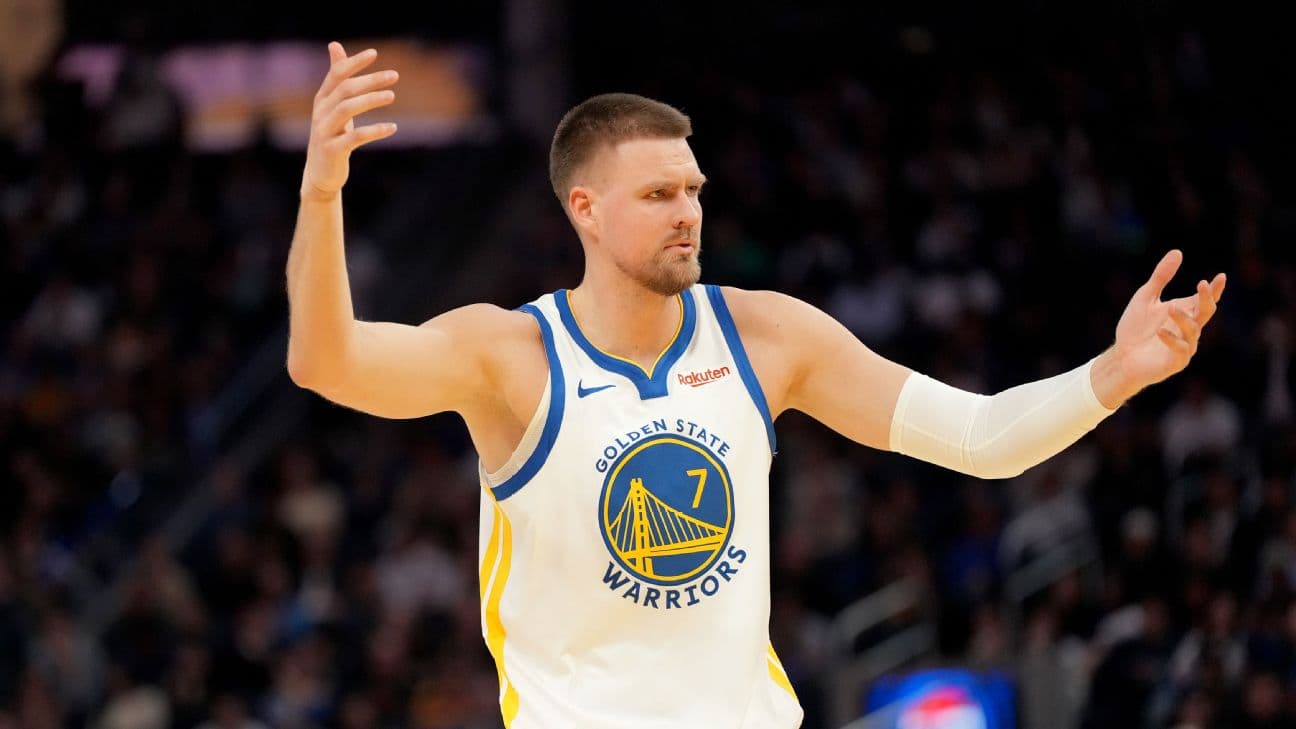
Kristaps Porzingis is staying in the Bay. The Warriors have re-signed the 30-year-old center on a two-year deal worth a reported $40 million, keeping the stretch big who arrived at the February trade deadline. It is a notable discount for a player who earned between roughly $27 million and $36 million in each of the past seven seasons, and the structure of the contract carries implications for both Golden State's flexibility and Porzingis's fantasy outlook heading into 2026-27.
The deal's fine print is instructive. The second season is a player option, and only a small portion of that second year is guaranteed, with his projected first-year salary landing around $19.5 million. Because the raise between the two years stays modest, Porzingis is immediately trade-eligible, which means Golden State retained a valuable asset it can also move if the roster math demands it. For a team balancing a championship window with cap constraints, that combination of production and flexibility is exactly what the front office wanted.
The on-court fit
Porzingis joined the Warriors from Atlanta at the deadline in a swap that sent out Buddy Hield and Jonathan Kuminga, and he posted roughly 16 points per game on solid shooting across a short 15-game sample in Golden State. That production came in a supporting role next to the Warriors' established stars, which is the key context for projecting his value. He is a floor-spacing seven-footer who can rim-protect and stretch defenses, a rare skill set, but he is not going to be the offense's first option in the Bay.
That role clarity cuts both ways for fantasy. Porzingis offers a tantalizing per-game profile: threes and blocks from the center position, plus efficient scoring, is a combination that can win categories. But his usage will be capped by the stars around him, and his minutes have historically been managed to protect against the injuries that have followed him throughout his career. The re-signing locks in the role; it does not remove the two variables, health and touches, that determine whether he returns a strong line or a frustrating one.
The fantasy read
Porzingis is a classic upside-with-caveats fantasy big. When healthy and on the floor, his per-game production, particularly blocks and three-pointers, gives him standout value at a position where that specific combination is scarce. Managers who prioritize those categories will find him an appealing mid-round target. The problem is availability. A career of injuries and a Golden State medical staff likely to lean on load management means his games-played total, not his per-game rate, is the real question.
The smart way to draft him is to treat Porzingis as a high-ceiling piece rather than a foundation. Pair him with durable, high-floor players so that a stretch on the injury report does not sink a roster, and be ready to lean on his category-winning nights when he plays. His trade eligibility adds a wrinkle worth monitoring: if Golden State moves him to a team that hands him a larger role, his usage and counting stats could climb, making him a name to track at the trade deadline as well as on draft day.
The betting angle
For the Warriors, retaining Porzingis at a discount is a quiet win that helps their outlook without moving the market dramatically. His spacing and rim protection raise the team's ceiling in the games he plays, and the flexibility of his contract keeps Golden State nimble in the trade market. From a futures standpoint, the Warriors' win total and playoff odds benefit modestly from continuity, but the bigger swing factors remain the health and form of their franchise cornerstones rather than a role-playing big.
The more interesting market implication is optionality. Because Porzingis is immediately tradeable, Golden State holds a chip it can convert into an upgrade if a star becomes available. That is the kind of behind-the-scenes flexibility that does not show up in a single game line but can reshape a contender's trajectory mid-season, which is worth keeping in mind when evaluating the Warriors' path over the full year.
The Verdexed model take
Verdexed's model frames Porzingis as one of the widest-variance bigs on the board: elite per-minute production in blocks and threes, dragged down by an aggressive discount for expected missed time. The projection values his category profile highly on a per-game basis but applies a games-played haircut steeper than almost any comparable center, which is the model's way of pricing the injury history and the Warriors' likely load management. The result is a player whose draft-day value depends heavily on format and roster construction.
The model's cleanest guidance is to buy the ceiling at a discount rather than reach. In leagues that reward blocks and three-pointers from the center spot, Porzingis offers a scarce combination worth targeting a round or two after the safe bigs come off the board. The projection also flags his trade eligibility as a live upside lever: a move to a team offering more usage would meaningfully raise his outlook, making him a monitor-and-react asset well past draft night. For Golden State's futures, the model treats the re-signing as a small positive tied more to flexibility than to a direct on-court leap.
What's next
Training camp will confirm how Golden State intends to deploy Porzingis and whether his role grows or holds steady alongside the stars. The actionable takeaways: draft him as a high-upside, category-specialist big rather than a cornerstone, insulate his injury risk with durable teammates, and keep an eye on his trade eligibility as a second path to a bigger role. The talent is real and the price is right; the only question, as always with Porzingis, is how many games he plays.