Josh Allen Produced 357 Yards and Four Touchdowns in Houston and the Bills Are Already the AFC Problem
By Verdexed NFL Desk
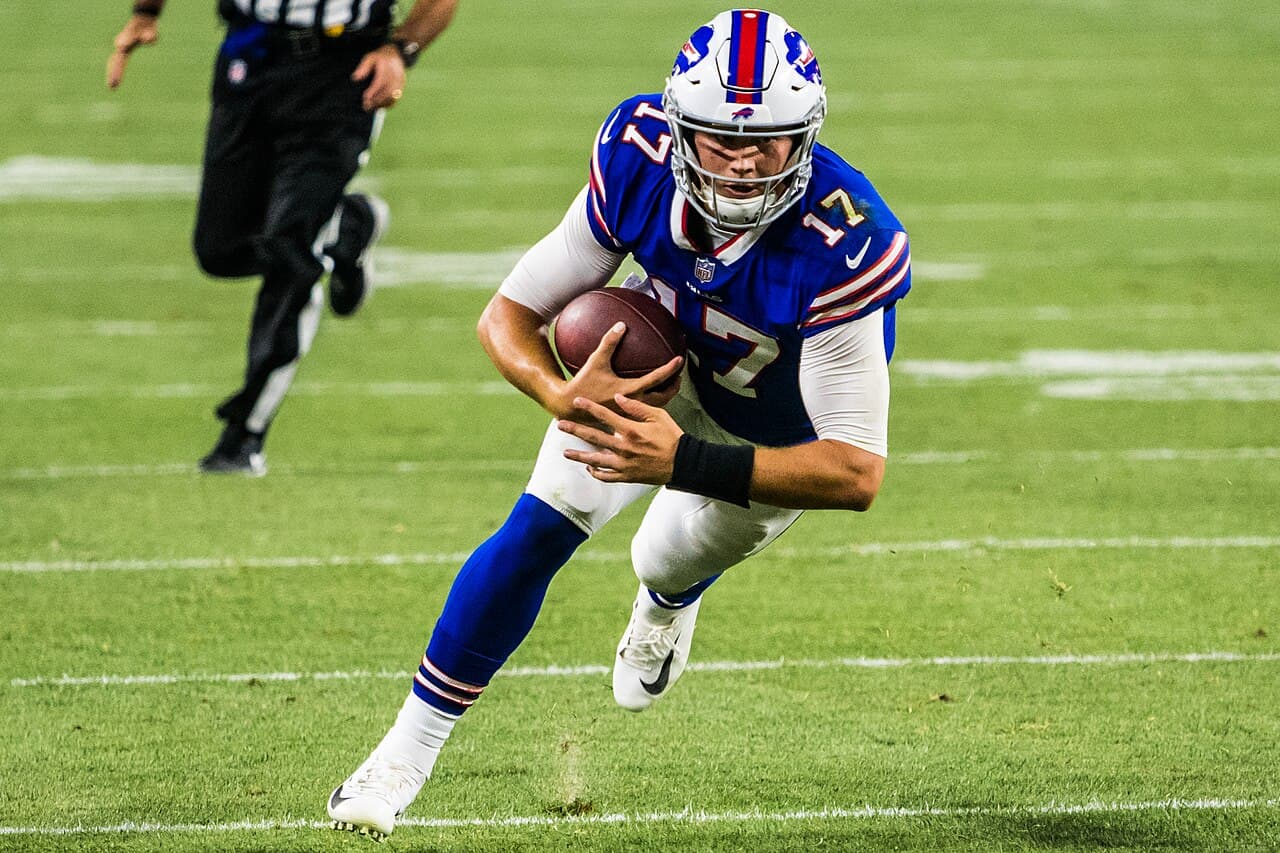
Josh Allen completed 20 of 29 passes for 334 yards and two touchdowns with no interceptions, added two more scores on the ground, and led a 96-yard game-winning drive as Buffalo beat Houston 36-31 at NRG Stadium on Sunday. The final margin came on a late touchdown to Joshua Palmer, and the game ended when Greg Rousseau stripped C.J. Stroud on Houston's last possession.
Four total touchdowns, 357 total yards, zero turnovers, against a Houston defense that has spent two seasons as one of the league's most feared units. That is a statement, and it came in the one environment where Buffalo has historically struggled: a hostile road building against a good defense in September.
The 96-yard drive is the number that matters
Buffalo needed the length of the field with the game on the line and covered it. That is the difference between a team that wins 11 games and a team that wins a conference, and it is the exact situation where the Bills have come up short in recent Januaries.
Allen's efficiency on the drive is the part worth noting for anyone projecting the rest of the season. Twenty completions on 29 attempts for 334 yards is 11.5 yards per attempt, which is a number you see from offenses built on explosive plays rather than volume. Buffalo did not need 45 throws to score 36 points.
Houston's side of it was nearly as impressive and ultimately irrelevant. Stroud had the Texans in position to win and lost the ball to Rousseau at the worst possible moment. Strip sacks are variance; the pressure rate that produced it is not.
Fantasy fallout
Allen is the QB1 you drafted and there is nothing to discuss. Four total touchdowns in Week 1 against Houston is the ceiling outcome, and he will not do it every week, but the rushing floor makes him the safest quarterback in the format.
Joshua Palmer is the interesting name. Catching the go-ahead touchdown in a game like this is the kind of usage that tells you where a receiver sits in the pecking order when it counts. He is a speculative add in deeper leagues and a monitor everywhere else, because Buffalo's receiver distribution has historically been the hardest in football to predict week to week.
On the Houston side, Stroud threw enough to be useful and the Texans scored 31 points in a loss, which is a positive signal for their pass catchers even in defeat. A team that can score 31 on Buffalo is not a team to fade in fantasy terms.
The Verdexed model take
The model had Buffalo as a modest road favorite in this game and the result landed close to the projection, which is not always the case in Week 1. More useful is what the result did to the rest-of-season numbers.
Buffalo's projected point differential moved up, and Houston's defensive efficiency grade moved down. Those two adjustments compound: a Bills team that can score 36 on the best defense on its schedule has a higher floor in every other week, and a Texans defense that allowed 36 is no longer the automatic total-suppressor the market has treated it as.
The model's AFC projection now has Buffalo as the conference's most likely representative in the Super Bowl by a meaningful margin over the field, which is a stronger position than the futures market currently reflects. The gap is not enormous, but it is real, and it exists because the market has not yet repriced Houston's defense.
Betting angle
The Bills host Detroit on Thursday night in Week 2 as a favorite of more than a field goal, with a total around 52.5. That is a very different game from the one they just played, and it is the more dangerous spot.
Buffalo on a short week, coming off an emotional road win, hosting an offense that just scored 31 in overtime against New Orleans, is a classic letdown profile. The number reflects some of that but probably not all of it.
The Houston market is where the value sits. The Texans are likely to be underpriced for the next two weeks while the market digests a loss in which they scored 31 points and led late. Houston opened as a short home favorite against Cincinnati in Week 2, and a 2.5-point line for a team that just went toe to toe with Buffalo is a number to look at.
The total in the Buffalo game is the play to avoid rather than attack. A 52.5 on a Thursday night after a Sunday road game asks both offenses to be sharp on three days of rest, and short-week totals have a long history of landing under.
What it means
Buffalo answered the question it needed to answer, on the road, against the defense best equipped to ask it. That does not win anything in September, but it changes the shape of the AFC picture, because the conference's projected order has depended for two years on the assumption that Houston's defense would be the thing that eventually stopped the Bills.
It did not. Allen went 20 of 29 for 334, ran for two more, and the Bills covered 96 yards when they had to. Everything downstream of that, the futures prices, the fantasy projections, the weekly spreads, gets adjusted toward Buffalo.
What's next
Thursday, and the short week. The best time to fade a team is immediately after its best performance, and the best time to buy one is immediately after a narrow loss that looked like a win. Buffalo and Houston are those two teams right now, in that order.