James Harden Re-Signs With Cleveland for Three Years and the Cavaliers' Guard Math Is Settled
By Verdexed NBA Desk
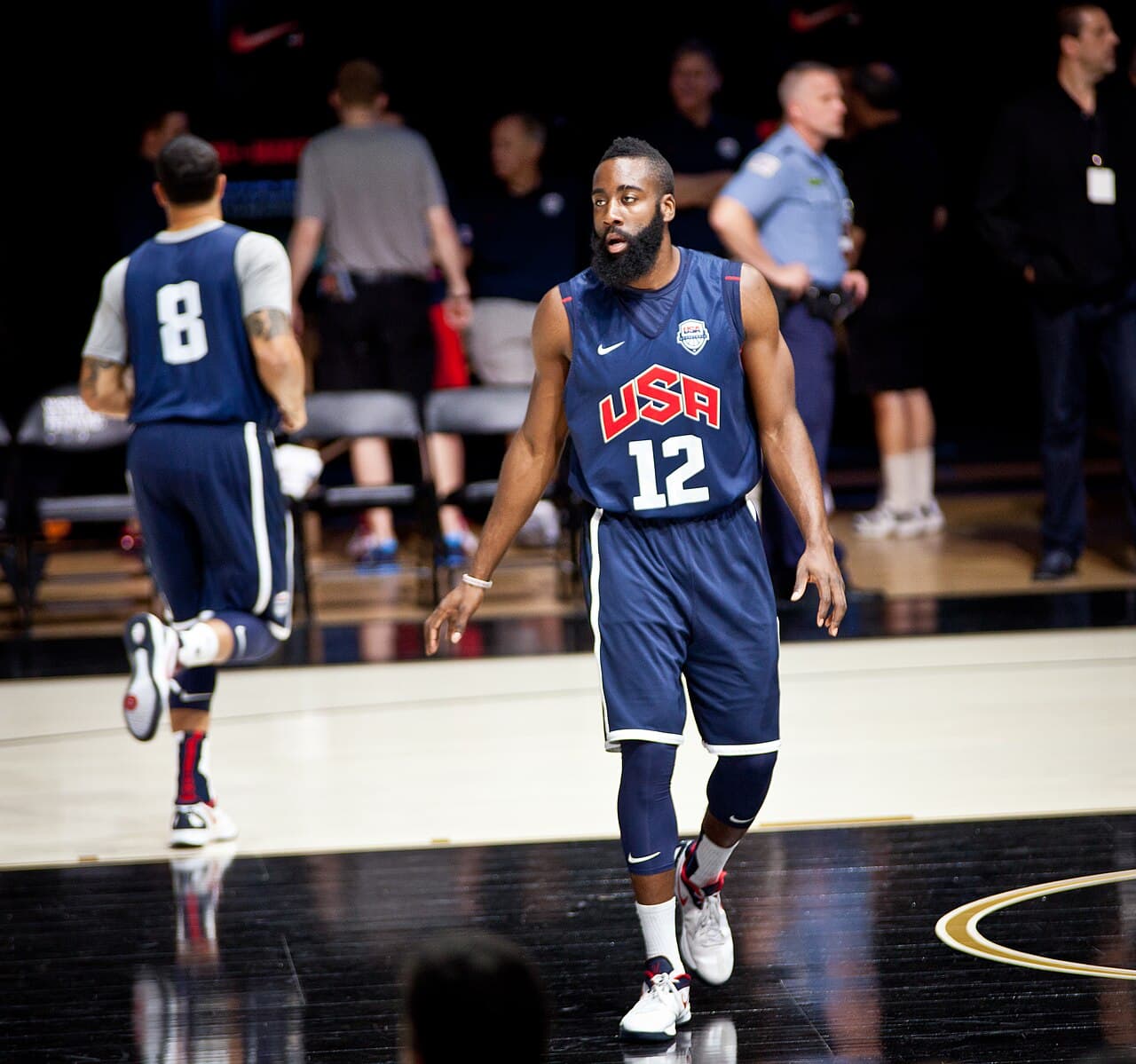
James Harden has agreed to a three-year, $97 million contract to remain with the Cleveland Cavaliers, according to multiple reports, a deal that includes a player option for the 2028-29 season and a trade kicker. The agreement was reported Thursday morning and had not been formally announced at the time of reporting.
Cleveland acquired Harden from the Clippers in early February, sending out Darius Garland and a second-round pick, and the team went 21-9 after his debut. Harden averaged 20.5 points, 7.7 assists, and 4.8 rebounds per game following the All-Star break, shooting 46.6 percent from the field and 43.5 percent from three. He turns 37 on August 26.
Why Cleveland paid
The straightforward answer is that the alternative was worse. The Cavaliers traded their starting point guard to acquire Harden, and letting him walk would have left a roster built around Donovan Mitchell, Evan Mobley, and Jarrett Allen with no primary initiator at all. Once the Garland trade happened, this signing became close to mandatory.
The less obvious answer is that Harden's post-trade production justified it on the merits. A 43.5 percent three-point mark on his volume, paired with a 7.7 assist average, is not the profile of a player in decline; it is the profile of a player who found a role that suits him. Cleveland's record with Harden and Mitchell on the floor together reflected that.
The risk is entirely on the back end. A three-year deal for a player turning 37 means the Cavaliers will be paying a 39-year-old in the final season, and the player option means Harden controls whether that happens. Cleveland has effectively bought a two-year competitive window and accepted the third year as the cost.
The roster around him
Cleveland's 2026-27 payroll is anchored by Mitchell and Mobley at roughly $50 million each, with Harden's new deal starting in the low $30 millions and Allen at $28 million. Around that core the Cavaliers have Max Strus, Dennis Schroder, Sam Merrill, Jaylon Tyson, Craig Porter Jr., and Tyrese Proctor, plus the additions the front office made in the same week as this signing.
Cleveland also acquired Peyton Watson in a five-team sign-and-trade and picked up Cam Whitmore from Washington, moves that reshape the wing rotation and cost the Cavaliers Strus and Tre Mann in the process. Between those transactions and Harden's contract, Cleveland has committed almost all of its available flexibility for the next two seasons.
Fantasy fallout
James Harden. Draft him as a guard whose value is concentrated in assists and threes, with a points average that will fluctuate with Mitchell's health. His age is the reason to fade him a round earlier than his production suggests, not the reason to avoid him. Load management on a 37-year-old guard is not a possibility, it is a certainty, and games played is now the biggest variable in his projection.
Donovan Mitchell. Unchanged, and that is the point. Mitchell's usage was healthy with Harden on the floor, which is not something that could be assumed before the trade. He remains a first-round fantasy pick.
Evan Mobley. A quiet beneficiary. Mobley's fantasy value has always been capped by his offensive touches, and a playmaker of Harden's caliber generates more efficient looks for a big man who finishes than a scoring guard does.
Jarrett Allen. Similar logic, smaller effect. Allen's role is already defined and his fantasy value is rebound-driven.
Dennis Schroder. The clearest loser. Cleveland's guard minutes are now spoken for, and Schroder's fantasy relevance depends on running an offense he will not be running.
The Verdexed model take
Verdexed's model prices veteran guards past 35 with an explicit availability curve rather than a flat games-played assumption, because the failure mode for players in that band is missed games rather than degraded per-minute production. Harden's per-minute projection for 2026-27 is close to what he produced after the trade. His projected games played is the number the model discounts hardest.
For Cleveland as a team, the model's read is that the signing raises the floor more than the ceiling. A roster with Mitchell, Mobley, Allen, and Harden has a clear path to a top-four seed and a much less clear path past a team with more perimeter defense. The model's Eastern Conference projection treats the Cavaliers as a contender for the conference rather than a favorite for it.
Betting angle
Cleveland's win total should move up modestly on this news, and it will. The more interesting market is the conference futures, where Cleveland has been priced behind teams that made larger offseason moves. A roster that went 21-9 in a 30-game sample with this exact group returning is a stronger baseline than the market has been assigning, and the sample is large enough to be meaningful rather than a hot streak.
The counterargument is durability, and it is a real one. A Cleveland futures position is a bet on Harden playing 65 games rather than 55. Anyone taking the Cavaliers at a number should size it knowing that.
The season-long player prop worth watching is Harden's assists. A guard averaging 7.7 in a partial season with a new team typically improves that number with a full training camp in the system.
What to do in your league
Move Harden into the range where you would take a productive but age-risky guard, which in most formats is the fourth or fifth round rather than the second. The production is real. The games are not guaranteed.
Draft Mobley with more confidence than you did last year. His offensive environment improved and his price has not fully caught up.
Avoid Schroder in standard formats. He is a deep-league injury contingency now, not a rotation asset.
What's next
The deal is not officially announced, which means the terms reported are subject to the usual formalization. Once it is signed, Cleveland's roster is essentially complete, and the remaining questions are rotational rather than transactional. Watch how the Cavaliers use Harden and Mitchell in the preseason, because the minutes they spend together are the ones that determined Cleveland's record last spring.