 NBA2026-09-02
Jalen Duren's Standoff With Detroit Has an October 1 Deadline
By Verdexed NBA Desk
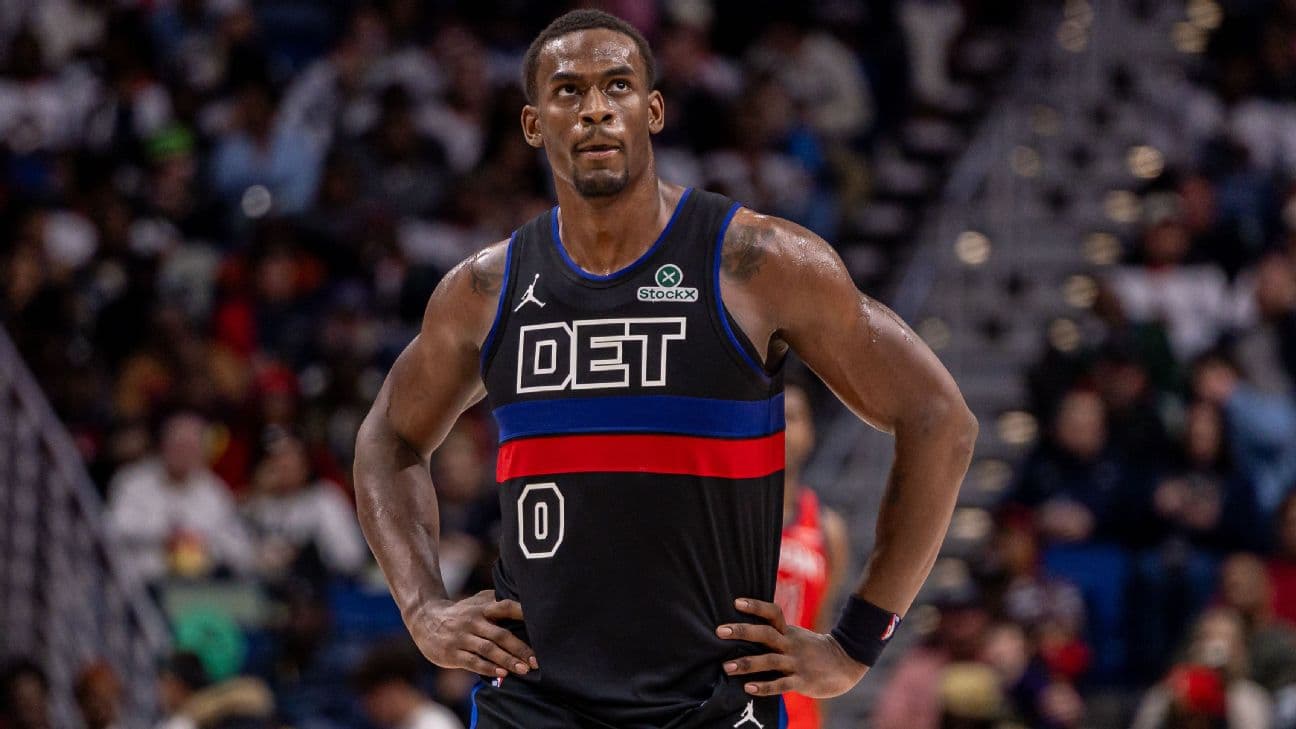
Jalen Duren is the last unsigned restricted free agent in the NBA, and the standoff between the 22-year-old center and the Detroit Pistons has now stretched into September with training camp roughly three weeks away. Detroit has offered a five-year contract in the neighborhood of $35 million annually, according to league sources cited in multiple reports. Duren's camp is seeking north of $40 million.
The gap is real, and so is the deadline. Duren has until October 1 to accept his qualifying offer, a one-year deal worth roughly $9.6 million that would grant him a no-trade provision for the season and send him into unrestricted free agency in the summer of 2027.
How the leverage actually works
Restricted free agency is designed to favor the team, and it mostly does. Detroit has made clear it has no intention of facilitating a sign-and-trade and intends to keep its center. Without a rival offer sheet, Duren's only genuine leverage is the threat of taking the qualifying offer, betting on himself for a season, and reaching the open market a year early with full control over his destination.
That is a real threat, and it is more credible for Duren than it would be for most players in his position. He made third-team All-NBA last season for a Pistons team that won 60 games and finished atop the Eastern Conference, which made him supermax-eligible and technically opened a path to a five-year extension worth up to roughly $287 million. Detroit has signaled it is unwilling to make him the highest-paid player from his draft class, particularly with Cade Cunningham entering the second year of his own maximum deal.
Detroit's counterargument is durability of value. Duren's postseason production did not match his regular-season profile, and centers whose value is concentrated in rebounding, rim protection and finishing are the archetype teams have historically been most reluctant to pay at the very top of the market.
Fantasy fallout
Duren is a top-tier fantasy center in category leagues, and the standoff creates a genuine draft-day problem. A player who misses training camp entirely tends to open the season in worse conditioning and in a smaller role than his talent dictates, and coaching staffs are not shy about limiting minutes for a player who was not in the building in October.
The scenarios split cleanly. If Duren signs a long-term deal in the next three weeks, he is a second-round fantasy pick who anchors rebounds, field goal percentage and blocks. If he takes the qualifying offer and reports late, the first month of his season is a downgrade and his draft price should reflect it. If the standoff extends into the regular season, the entire Detroit frontcourt rotation becomes live for fantasy purposes.
The player worth monitoring in that third scenario is whoever Detroit starts at center in his absence. Backup bigs on good teams with a starter-sized opportunity are among the most valuable early-season waiver adds in category leagues, and this is the most likely source of one in the league right now.
The betting angle
Detroit's win total has been priced with Duren in the lineup, which is the correct default assumption. The market is treating a resolution as close to a certainty, and history supports that: restricted free agents almost always sign, because the alternative costs both sides money.
The nuance is timing rather than outcome. A Duren who signs on September 20 and reports to camp on time is worth more to Detroit's regular-season win total than one who signs on October 1 and arrives out of rhythm. That difference is not currently in the number, and it is small enough that it may not be worth betting. It is worth knowing.
The Verdexed model take
Our simulations rate Detroit as a legitimate top-four team in the Eastern Conference with Duren in a full-season role, and drop the Pistons by roughly two and a half projected wins in the scenario where he misses camp and opens the season on a minutes restriction.
The more interesting output is on the contract itself. Modeling Duren's production against comparable center contracts across the league puts his fair market value closer to Detroit's offer than to his ask, which is the outcome that both sides' public positioning would suggest is coming. Front offices with the leverage of restricted free agency generally get their number. The question is how much of the season gets spent getting there.
What's next
October 1 is the hard date on the qualifying offer, and Pistons camp opens shortly after. The reporting from Detroit has consistently described the two sides as still holding a gap rather than closing one, which is not the language that precedes an imminent agreement.
The precedent worth watching is what happened last summer, when a comparable standoff ended with the player accepting the qualifying offer, gaining a no-trade clause and reaching unrestricted free agency a year early. Players and agents have seen that path work. That is precisely why this one has taken until September, and why fantasy managers should not assume the situation resolves before their draft.
What to do in your league
Two rules apply to any fantasy draft that happens before this resolves.
First, do not reach. Duren's category profile makes him extremely valuable when he plays a full role, and extremely frustrating when he does not, and there is no way to price that in a September draft. Let him fall to the point where the downside scenario is survivable and take him there.
Second, handcuff the situation if your league is deep enough. Detroit's backup center is worthless if Duren signs on time and is a weekly starter if the standoff drags into November. That is a free option, and free options on good teams are the cheapest edge available in a draft.
The broader lesson applies well beyond Detroit. Restricted free agency has become a genuine source of fantasy variance in recent seasons, as more teams have discovered that holding firm produces better outcomes than bidding against themselves. Managers who treat every unsigned player as a certainty to report on time have been wrong repeatedly. Build the roster that survives being wrong.