 NBA2026-09-11
Jalen Duren Is Increasingly Willing to Take the Qualifying Offer and Detroit Has Weeks to Avoid It
By Verdexed NBA Desk
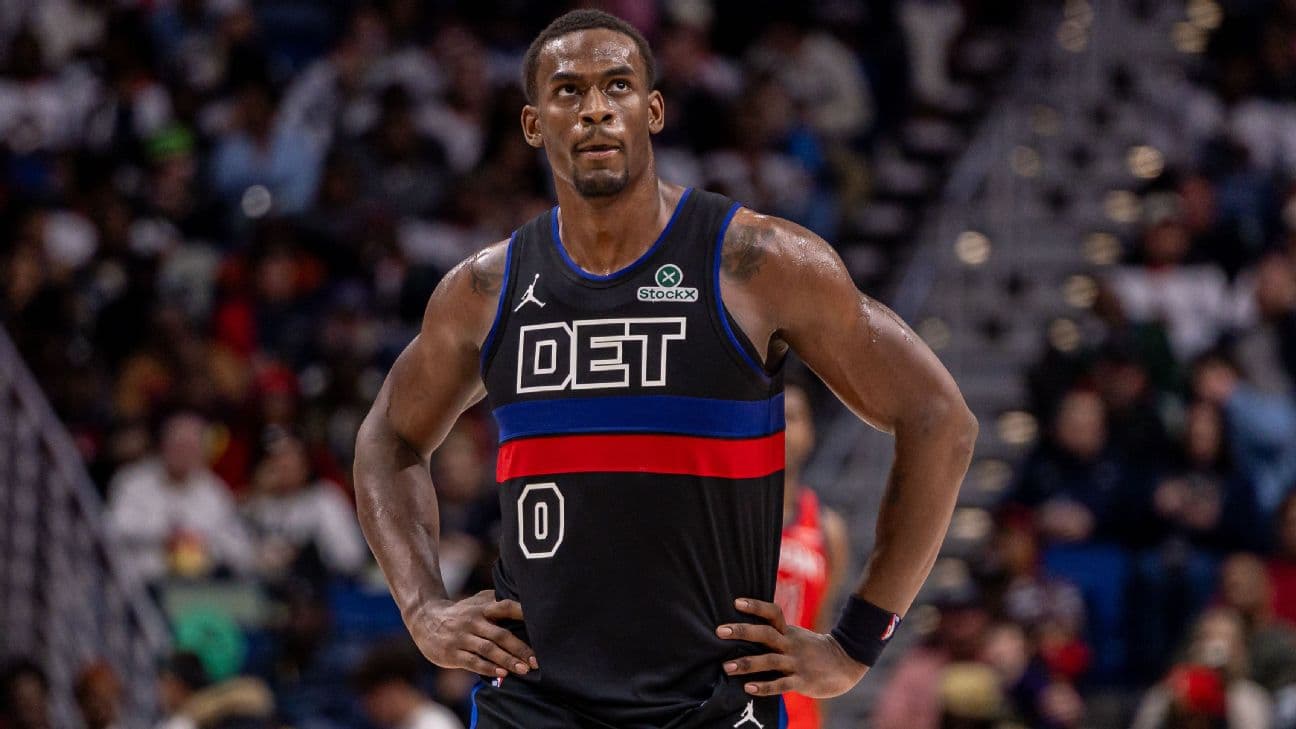
Jalen Duren is increasingly prepared to play the coming season on his qualifying offer rather than sign a long-term contract with Detroit, according to reporting this week. The offer is worth roughly 9.6 million dollars, and accepting it would set Duren up to become an unrestricted free agent next summer with no team able to match.
The gap in negotiations has been reported at approximately five million dollars per year. That is not an unbridgeable number in absolute terms, but it has held for weeks, and the practical deadline is the end of September.
What the qualifying offer actually does
A qualifying offer is a one-year contract a restricted free agent can accept to end the standoff on his own terms. It pays less than a long-term deal in the short run and buys total control in the long run: the player carries a one-year no-trade clause, and when the season ends he hits unrestricted free agency with no restricted tag available.
It is used rarely because it is expensive. A player who takes it forfeits the guaranteed money of a multi-year deal and bets on himself for a full season, including the injury risk. Players who have taken it historically have done so when the gap in negotiations reflected a disagreement about their value rather than a disagreement about a few million dollars.
Duren's case is the former. He is a young starting center coming off a season that put him in the All-NBA conversation, and the Pistons have been unwilling to pay the number that comes with that. From Duren's side, one season at a below-market rate followed by an open market is a rational bet.
From Detroit's side, it is close to the worst outcome available. The Pistons would keep him for a season, gain nothing in flexibility, and then watch him leave for nothing.
Fantasy fallout
The good news for fantasy managers is that the contract dispute does not change the basketball. Duren is going to play for Detroit either way, and a player on a qualifying offer in a contract year has every incentive to produce.
If anything, the qualifying-offer scenario is the better fantasy outcome. Players in walk years take more shots, play more minutes, and chase counting statistics, and a center whose entire future earnings depend on the next 82 games is going to rebound at a level his team cannot talk him out of.
The risk is availability, and it cuts in an unusual direction. A player on a one-year deal has a stronger incentive to play through minor injuries, but a team with no long-term commitment to him has less reason to protect him. In practice those tend to cancel out.
Draft Duren where his production says to draft him. Rebounds and field goal percentage from the center position are scarce, and the contract noise has almost certainly suppressed his average draft position below where his projection sits.
The Sacramento connection
Detroit's leverage in these talks is also connected to what else is on the market. Sacramento attempted to send Domantas Sabonis to the Pistons in a sign-and-trade for Duren last month and was turned down, which tells you Detroit values Duren above an established All-Star center at a higher salary.
That is a meaningful data point. A team that rejects a Sabonis-for-Duren swap is not a team preparing to let Duren walk, which argues that a deal eventually gets done. It also means the five-million-dollar gap is about the cap sheet rather than about how the Pistons view the player.
How this usually ends
Restricted free agency standoffs that reach mid-September almost always resolve in one of three ways. The player signs a slightly reduced long-term deal, the team finds a sign-and-trade that satisfies both sides, or the player accepts the qualifying offer and the two sides run it back for a year with the relationship visibly damaged.
The first outcome is the most common by a wide margin, which is why the reporting about Duren's willingness to take the qualifying offer should be read as negotiating posture as much as intent. A player who is genuinely committed to the one-year path does not usually let that get reported. He simply signs it.
The complication in Detroit is that the Pistons have other cap commitments coming and have been reluctant to set a precedent at the center position. That is a front office problem rather than a basketball one, and front office problems have a way of being solved in the last week before a deadline.
Betting angle
Detroit's win total assumes Duren is in the starting lineup, and he will be regardless of which contract he signs. There is no direct market edge in the negotiation itself.
The indirect edge is in next summer's free agency markets, which some books open early. A player who takes a qualifying offer becomes the most valuable unrestricted free agent available a year from now, and the early prices on his 2027 destination will be set before the market fully processes what the qualifying offer means.
For this season, the more useful application is the Pistons' team total and their over-under on playoff seeding. A contract standoff that ends with the player on the roster is a non-event, and any price movement caused by the headlines is a fade.
The Verdexed model take
Player projection models do not care about contract status, and they should not. Duren's minutes, usage and per-minute production are all stable inputs, and none of them change based on which piece of paper he signs.
The model's read is that Duren is a top-20 fantasy asset in category formats on the strength of rebounding and efficiency, with the usual center-position caveat about free throws. The contract situation adds no variance to that projection, which is exactly why it represents a buying opportunity in leagues where drafters treat uncertainty as risk.
What's next
The end of September is the operative date. If Duren signs an extension, nothing changes for fantasy purposes. If he takes the qualifying offer, nothing changes this season and everything changes next summer.
Either way, draft him. The only people who should care about the outcome right now are Detroit's front office and the 29 teams already clearing cap space for 2027.