Jadarian Price Is Winning Seattle's Backfield While Zach Charbonnet Sits on PUP
By Verdexed Fantasy Desk
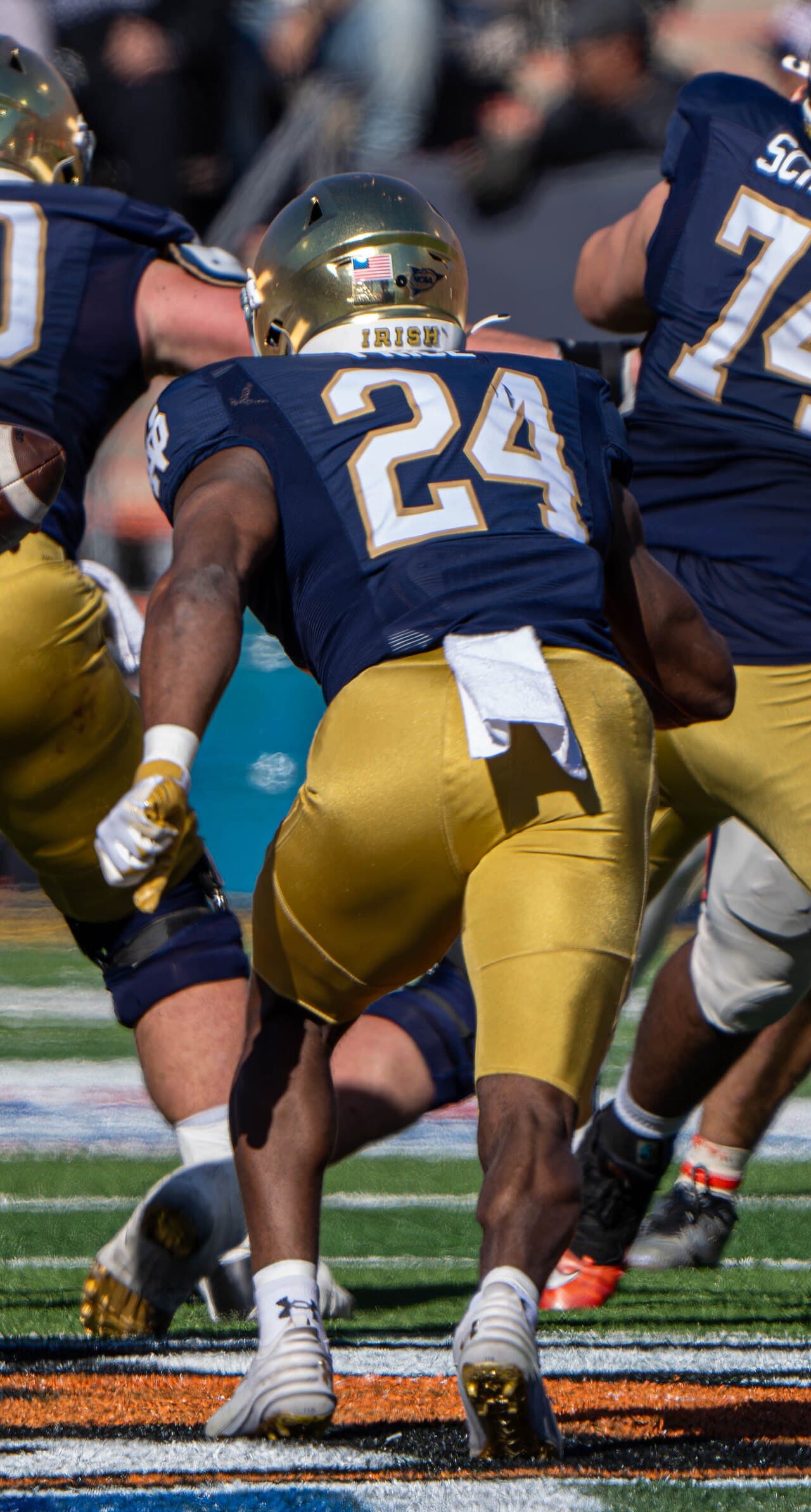
Jadarian Price has spent the opening stretch of Seattle's training camp taking snaps with the first, second and third teams, and he has been one of the most consistently praised players in camp reports out of Renton. The Seahawks took the Notre Dame running back with the final pick of the first round in April, and the depth chart in front of him has largely cleared itself.
Zach Charbonnet, Seattle's leading returning rusher, opened camp on the physically unable to perform list. He tore an ACL in the divisional round in January and had surgery in February, which is a timeline that can work for a Week 1 return and can just as easily not. He is one of five Seahawks who opened camp on PUP, a group that also includes safety Nick Emmanwori and running back Kenny McIntosh.
What the depth chart actually looks like
Charbonnet ran for 730 yards on 184 carries last season and led the team with 12 touchdowns, which is the profile of a lead back in a run-heavy offense rather than a satellite piece. He is also the player Seattle would most like to have healthy, and the organization has every incentive to bring him back slowly given that the roster just won a Super Bowl and the schedule does not demand urgency in September.
Behind Charbonnet the room thins fast. George Holani contributed down the stretch last season and is a known quantity as a rotational back. McIntosh is on PUP alongside Charbonnet. That leaves Price as the healthiest back with real draft capital, taking reps at every level of the depth chart, in a camp where the coaching staff has openly framed the starting job as available.
The pass-catching detail
The most fantasy-relevant piece of the camp reporting is not that Price is getting first-team work. It is that he is getting a major workload as a pass-catching back. Receiving usage is the single most predictive indicator of rookie running back fantasy production, because it survives game script, it survives committee splits, and it does not depend on goal-line hierarchy.
Price's college profile supports it. He played 41 games at Notre Dame, totaled 1,692 rushing yards and 21 rushing touchdowns, and did most of it without ever being the every-down starter, in part because he shared a backfield with Jeremiyah Love, now with Arizona. Backs who produce efficiently in split college roles frequently outperform their volume-based projections when handed a larger share.
Fantasy fallout
Price's cost has been rising through camp and is still below where a first-round rookie back with a clear path to touches should be priced. The specific inefficiency is that the market discounted him at the draft because Charbonnet was already in the building, and it has not fully repriced for the fact that Charbonnet's availability for Week 1 is genuinely uncertain.
Charbonnet is the more interesting question. If he is activated off PUP before the regular season and looks healthy, he is a mid-round value with a proven touchdown share. If Seattle moves him to reserve PUP at final cuts, he misses a minimum of four games, and his season becomes a stash rather than a starter. That binary is worth watching more closely than any other single roster decision in Seattle.
The Verdexed model take
The model projects Price as the higher-volume Seattle back over the full season, with the largest single driver being receiving work rather than carries. The rushing split is closer to even than the camp reports suggest, because the model weights Charbonnet's established touchdown role heavily and does not assume a rookie inherits goal-line duty in a Super Bowl-winning offense.
The result is a projection that puts Price in the flex range with RB2 upside and Charbonnet in the flex range with RB2 upside, which is the standard unsatisfying answer for a split backfield. The tiebreaker is price. Price is currently the cheaper of the two in most rooms and has the healthier knee.
Betting angle
Seattle's team rushing attempts total should hold up. This is a run-first offense with a defense good enough to protect leads, and the departure of Kenneth Walker III does not change the play-calling philosophy.
The sharper number is Price's rushing yardage prop, which is priced off a rookie-backup baseline while he takes first-team reps. The market also has not properly handicapped Charbonnet's Week 1 availability, and any prop that assumes a full 17-game season for him carries risk the price does not reflect.
What to do in your league
Draft Price as your RB3 with the expectation that he opens the season as the lead back. That is a defensible bet even if Charbonnet is ready, because the receiving usage gives Price a floor independent of the rushing split.
If you can get Charbonnet at a discount after the roster-cut news cycle, take it. A back who scored 12 touchdowns last season is not going to be a bench piece for long once healthy, and post-injury discounts on established touchdown scorers are historically one of the better sources of mid-season value.
What's next
The decision point is final roster cuts, when Seattle must either activate Charbonnet or place him on reserve PUP. Everything between now and then is rehab reporting, which is the least reliable category of camp news. Watch the preseason snap counts instead: if Price plays into the second half of Seattle's exhibition games, the staff is still evaluating. If he does not play at all, they have already decided.
The PUP distinction that matters
Fantasy managers routinely conflate two different designations that share a name. A player on the active PUP list in training camp can be activated at any point and can practice the moment he is cleared, with no games missed. A player placed on reserve PUP at final roster cuts is ineligible for the first four games of the regular season, minimum.
Charbonnet is currently on the first kind. Whether he stays there is the entire question. Teams that expect a player back in September leave him on active PUP and take the roster-spot hit. Teams that quietly know a player needs more time move him to reserve PUP and buy themselves a month of flexibility.
Seattle has not signaled which way it is leaning, and it has no reason to before it has to decide. That is normal, and it means the market will not have clarity until the final week of August.