Jacob Misiorowski Struck Out the First Seven, Set a Brewers Record, and Closed the NL Cy Young Race
By Verdexed MLB Desk
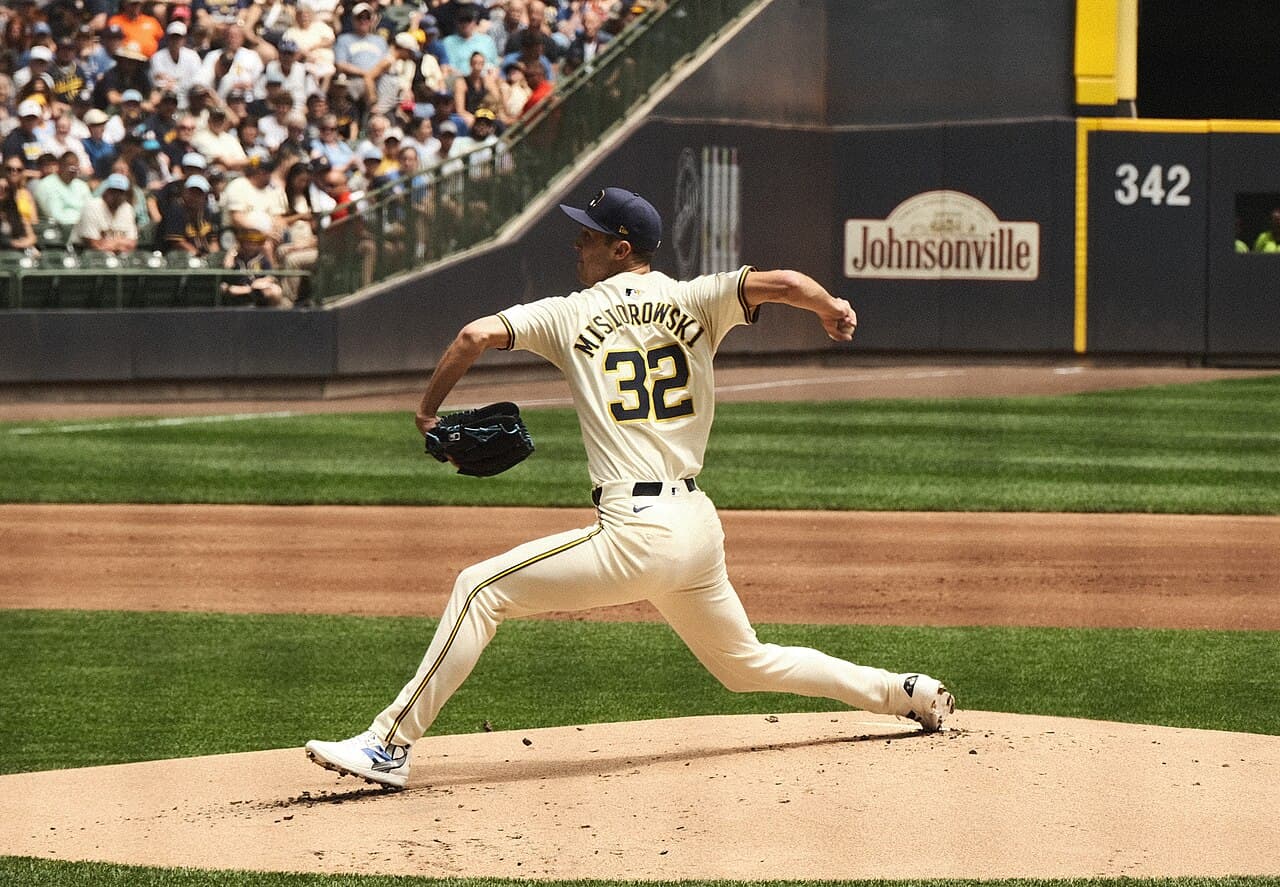
Jacob Misiorowski struck out the first seven batters he faced this weekend, the most consecutive strikeouts to open a game by any pitcher in Milwaukee Brewers franchise history. It came in the same stretch during which he became the fastest pitcher in Brewers history to reach 200 strikeouts in a season, passing Corbin Burnes, who needed 145 and two thirds innings to get there in 2021. By the accounting of multiple outlets, Misiorowski is the second fastest pitcher in major league history to that mark.
He is also carrying a sub 2.00 ERA that leads the majors, and he leads the National League in strikeouts and WHIP. The National League Cy Young race, which looked genuinely competitive in June, no longer does.
The season in context
The counting stats are extraordinary, but the rate at which he is accumulating them is the story. Reaching 200 strikeouts faster than any pitcher in a franchise that has employed a Cy Young winner in the last five years is not a fluke of usage. It is a strikeout rate that sits in rarefied company historically.
Two things drive it. The first is velocity that sits at the top of the league. The second, and the more important one for projecting the rest of the season, is that he is pairing that velocity with command good enough to keep his WHIP among the league leaders. Power arms with elite strikeout rates and poor control are volatile. Power arms with elite strikeout rates and a WHIP under 1.00 are the profile that wins awards and anchors fantasy staffs.
His first August start was a reminder that even dominant seasons include losses that are not the pitcher's fault. He allowed two runs over seven innings while striking out ten and took the loss because Milwaukee did not score. Pitcher wins remain the least informative statistic in the sport, and this is a clean illustration of why.
Fantasy fallout
If you own Misiorowski, you are not selling. The question for everyone else is what to do about him in the six weeks that remain.
In redraft leagues, the practical answer is nothing, because his price in any trade market is now at maximum and no owner in a competitive league is moving him. In leagues where trades still happen, the more actionable move is to buy the pitchers around him whose value is suppressed by comparison rather than to chase him.
The workload question is the one worth monitoring. Young pitchers with elite stuff who are having career seasons in a contending organization face innings management decisions in September that nobody announces in August. Milwaukee has been aggressive about protecting arms in past seasons. If you are in a head to head league with a playoff structure in the final weeks, understand that a skipped start in late September is a live possibility for any young ace, and build your rotation depth accordingly.
Dynasty owners have the simplest situation. A pitcher this young with this combination of stuff and command is among the most valuable assets in the format, and the only thing that meaningfully changes that is an elbow.
The Verdexed model take
Our pitcher projections lean heavily on strikeout rate and walk rate rather than on ERA, because ERA is contaminated by defense, sequencing, and luck in ways that strikeouts and walks are not. Misiorowski's underlying profile supports his surface results, which is not always true of pitchers running sub 2.00 ERAs in August.
That distinction matters for the rest of the season. Pitchers whose ERA outruns their peripherals regress hard in the final six weeks. Pitchers whose peripherals justify their ERA generally do not, and the model treats those two groups very differently. Misiorowski is in the second group.
The projection that falls out is a continued elite run through the end of the season with the primary risk being usage rather than performance. The model's ERA forecast for his remaining starts is higher than his current mark, because almost no pitcher sustains a sub 2.00 mark over a full season, but it remains among the best in baseball.
For Milwaukee's game level projections, his starts represent one of the largest single game edges in the sport. A team's win probability with an elite ace on the mound versus a replacement level starter differs by a wide margin, and Misiorowski sits at the top end of that scale.
Betting angle
The National League Cy Young market has moved decisively in his direction, with his odds reported at their shortest of the season. That is the correct direction, and it also means the value is gone. Betting a heavy favorite in an award market six weeks out is a poor use of capital unless you believe the field is weaker than the price implies, and here the price already reflects the gap.
The live markets are elsewhere. Strikeout props on his individual starts remain the most interesting recurring opportunity, though books have adjusted upward all season and the easy edges have closed. The more durable angle is Milwaukee's game lines on days he pitches. Public money follows aces, which tends to inflate the price on his starts. That argues for looking at the other side rather than for laying the number.
His season long strikeout total prop, if you can still find one, is the other market where the math has been favorable. A pitcher reaching 200 strikeouts at his current pace is on track for a total that most preseason projections did not contemplate.
What is next
Milwaukee remains among the best teams in baseball by record, and the practical question for the final six weeks is how the organization balances a run at a division title against protecting an arm it will need in October. Those two goals mostly align, but not entirely.
Watch his innings per start rather than his results. A team that starts pulling its ace at 90 pitches instead of 105 is a team managing toward the postseason, and that is a real change to his fantasy value in the final weeks even if the ERA never moves.
What to do in your league
Own him and start him. That much is trivial. The higher value insight is what his existence does to the rest of your staff. Managers who roster a true ace tend to overrate their pitching depth, because the ace flatters the aggregate numbers. Check your innings distribution and make sure your fourth and fifth starters are not quietly costing you the ratio categories that the ace is carrying.
In roto formats, the strikeout category is where his value concentrates most heavily. If you are close in strikeouts and far behind in another pitching category, his remaining starts are the reason to bank the category rather than chase elsewhere.