 NBA2026-06-27
Thunder Re-Sign Isaiah Hartenstein on a 3-Year, $75M Deal: A Fantasy-Friendly Center Stays Put
By Verdexed NBA Desk
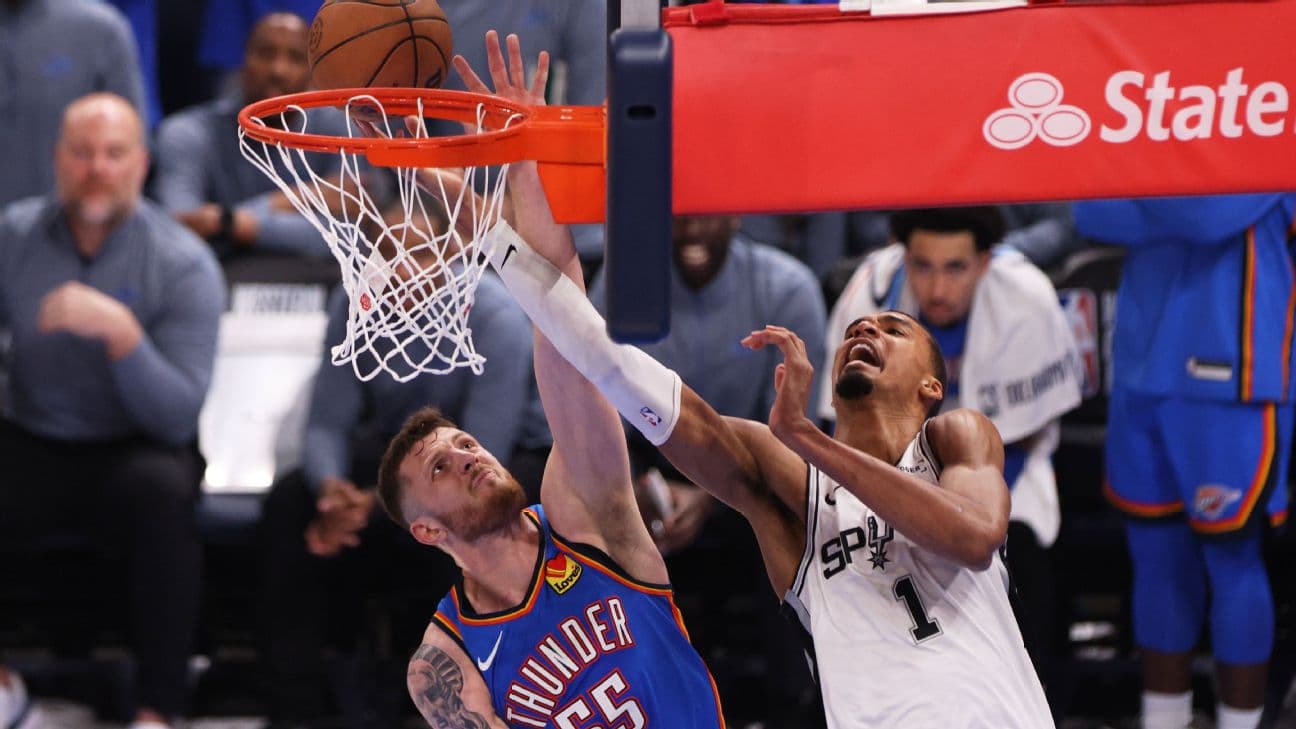
The Oklahoma City Thunder kept one of the quieter fantasy assets in their frontcourt off the open market, re-signing center Isaiah Hartenstein to a three-year contract worth $75 million. To get there, Oklahoma City declined Hartenstein's team option for the coming season and reworked the relationship into a longer-term deal, a maneuver that both saves the franchise money in the short term and locks in a productive big man. For fantasy managers, the headline is continuity: a rebounding-and-playmaking center stays in a winning environment with a defined role.
The deal
The Thunder turned down Hartenstein's sizable option for the upcoming season in order to sign him to the new three-year, $75 million contract that runs through 2028-29. The structure brings his total guaranteed money with the franchise into the nine-figure range across his Oklahoma City tenure and includes a trade kicker plus a mutual option on the final year, giving both sides flexibility to revisit the deal down the road. Crucially, declining the option actually trims Oklahoma City's salary for next season, which matters for a team operating above the second apron and trying to manage its books.
The basketball takeaway is simpler than the cap mechanics: a contending team valued its starting center enough to commit multiple years, and that stability is good news for anyone projecting his fantasy line.
Fantasy fallout: Hartenstein
Hartenstein has carved out a useful fantasy niche as a center who contributes across rebounds, assists, blocks, and field-goal percentage without needing high scoring volume to return value. His playmaking from the elbow is unusual for a big, and it gives him an assist floor that most centers cannot match. Staying in Oklahoma City means his role does not get disrupted by a new system or a new pecking order, which is exactly what you want from a mid-round big.
The one cap on his ceiling is the same as it has always been: in a deep, talented lineup, his scoring and minutes can fluctuate, and there are nights when the offense flows around him rather than through him. That makes him a steadier category contributor than a points-league standout. Draft him as a reliable source of boards, dimes, and percentage, with the understanding that his counting stats are tied to how Oklahoma City distributes minutes in the frontcourt.
What it means for the Thunder
Retaining Hartenstein lets Oklahoma City preserve the frontcourt balance that has worked, and it removes one variable from a roster trying to stay in the title mix. For fantasy purposes, continuity at center also stabilizes the players around him: there is no sudden vacuum of rebounds or rim protection to redistribute, so the rest of the Thunder's fantasy values stay roughly where they were. The mutual option on the back end is the only long-range wrinkle, and it is a 2028 problem, not a draft-day one.
The roster-construction angle
In category leagues, Hartenstein is the kind of player who wins you a roster build rather than headlining it. His value comes from filling the specific buckets that punt-friendly builds need: rebounds, blocks, assists, and a clean field-goal percentage that does not drag your team down. Managers who draft for balance should view him as a connective piece, the center who lets you chase scoring and three-pointers elsewhere while he covers the defensive categories and the boards. That role is far more secure now that he is locked into a defined spot rather than facing a possible relocation.
There is also a quiet durability bonus to drafting a player in a stable, contending situation. Winning teams have less incentive to tank minutes late in the season, and a center on a contender is less likely to be shut down or load-managed into irrelevance down the stretch than a comparable big on a lottery team. For managers planning around the fantasy playoffs, that end-of-season reliability is an underrated tiebreaker, and it tilts slightly in Hartenstein's favor.
The betting angle
From a team-building standpoint, keeping Hartenstein helps Oklahoma City preserve the interior defense and rebounding that underpin its win profile, which matters for season-long futures and team totals. A contender that retains its starting center without disruption is easier to trust in win-total and playoff markets than one patching the position with an unproven replacement. The deal does not change the Thunder's ceiling, but it removes a downside scenario, and markets tend to reward that kind of continuity.
The Verdexed model take
The model treats this as a value-neutral-to-slightly-positive outcome for Hartenstein's fantasy stock. There was always a small risk that a move elsewhere could have boosted his usage, but the trade-off would have been leaving a stable, winning role for uncertainty. Staying put keeps his projection clean: a dependable double-double threat with elite-for-a-center passing, drafted in the middle rounds as a category-balancing anchor rather than a ceiling play.
What's next
The number to watch is minutes. If Oklahoma City keeps Hartenstein in the high-20s or low-30s per night, his rebounding and assist totals hold and he returns mid-round value comfortably. If the Thunder lean into smaller looks or split frontcourt time more evenly, his counting stats could dip even with the role secured. With the deal done and the system unchanged, fantasy managers can pencil him in with more confidence than most centers in his tier, which is the whole point of a continuity signing like this one.