Draymond Green Re-Signs With the Warriors on a One-Year Deal
By Verdexed NBA Desk
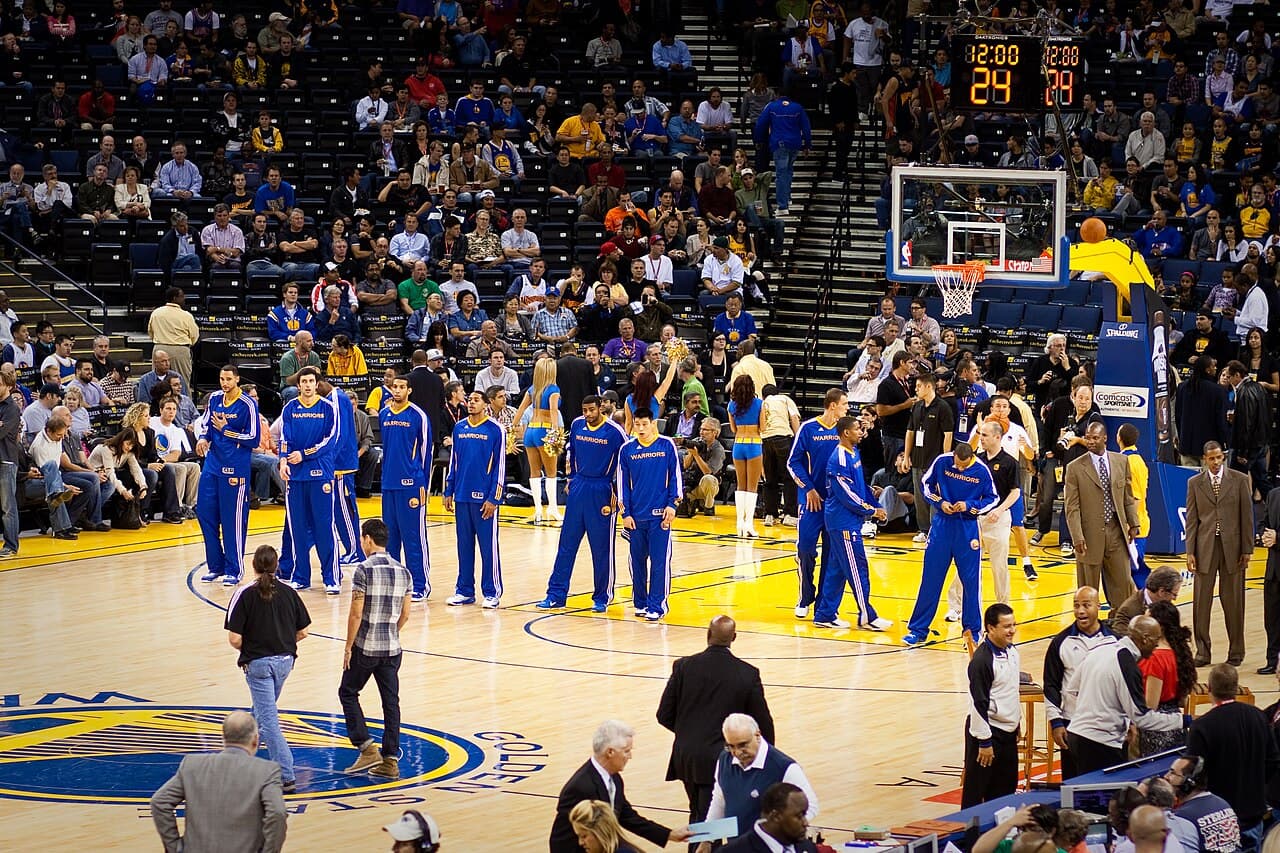
Draymond Green is back in Golden State. The Warriors and Green agreed to a one-year contract reported at $27.7 million, a figure that essentially matches the player option he declined earlier this offseason to give the front office cap flexibility. That flexibility was aimed at LeBron James, who signed with the Philadelphia 76ers instead, and Green re-signed for the equivalent of what he walked away from.
It is the tidiest possible resolution to a gambit that did not work. Green will play his 15th season with the Warriors, and if he appears in 51 games he becomes the second player in franchise history, alongside Stephen Curry, to reach 1,000 games with the organization.
What it means for the Warriors
Golden State enters 2026-27 with the same core problem it had in June: a roster built around aging stars in a conference that has gotten younger. The James pursuit was an attempt to solve that with a swing, and its failure means the Warriors run it back with a group that has been trending in the wrong direction.
Green remains the defensive engine. His value has never been about scoring, and it is not going to start being about scoring now. He is the player who allows Golden State to switch across four positions and the one who organizes the defense on possessions where the personnel around him does not.
The one-year term is the interesting part. Short deals for veterans on this side of the age curve are usually about preserving trade flexibility, and a $27.7 million expiring contract is a genuinely useful salary-matching piece at the February deadline. That is not a prediction, but it is a structural reality the Warriors just created for themselves.
The fantasy read
Green has always been an odd fantasy asset. He does not score enough to be a category-league anchor, and he does not shoot enough volume to help in percentages. What he provides is a rare combination for a big: assists at a guard-level rate, plus steals and blocks in the same package.
In nine-category leagues, that combination still has value, particularly for managers building around a punt-points or punt-scoring structure. A big man who averages meaningful assists while contributing defensive counting stats is genuinely hard to replace, and Green is one of a handful of players in the league who does it.
The costs are the same ones they have always been. Turnovers are a real negative, foul trouble limits minutes, and the games-played risk grows every season. Managers drafting Green need to be doing it deliberately as part of a specific roster build rather than taking him as a best-available pick.
The Verdexed model take
Verdexed's model projects Green as a top-90 player in nine-category value with an unusually large spread between his floor and ceiling, driven almost entirely by games played. Our model's minutes projection has him in the high 20s per game, which is a step down from his prime and consistent with how Golden State has managed him recently.
The model is more bullish on his real-world impact than on his fantasy value, which is the recurring pattern with defensive specialists. Green's on-off numbers have consistently outpaced what his box score suggests, and our model's team-level projection for Golden State degrades meaningfully in the minutes he does not play.
For the Warriors as a whole, the model has them in the play-in range in the West rather than as a top-four seed. Re-signing Green does not change that projection, because the model had already been assuming he would return in some form. What would have changed the projection is the James signing that did not happen.
What to do in your league
Draft Green in the middle rounds of a category league if your build supports him, and skip him entirely in points leagues. That is close to an absolute rule with this player, and it has been for a decade.
If you are targeting him, pair him with high-volume scorers rather than with other low-usage specialists. The most common mistake with Green is stacking him alongside similar players and ending up with a roster that wins defensive categories and loses everything else.
In dynasty, he is a sell wherever a contending manager values the counting stats. A one-year contract on a veteran in his mid-30s is the definition of a depreciating asset, and the market for him will never be better than it is right after a re-signing headline.
Betting angle
The Warriors' season win total is the market that matters, and it should not move on this news. Green returning was the base case in every projection, and books priced it that way. Any number that drifts up on the headline is offering value on the under.
The more interesting market is Golden State's playoff qualification price. Our model has the Warriors closer to the play-in tournament than the market does, which makes the under on their seeding-related props the side worth examining once those markets open in the fall.
What's next
Watch the rest of the Warriors' roster construction. Golden State still has spots to fill after missing on James, and the players they add around Green will determine whether his minutes are spent as the defensive anchor of a competitive team or as the veteran holding together a transitional roster.
That distinction matters for fantasy. Green's counting stats have historically been better on teams where he is the primary playmaking big, and worse on teams where his minutes are managed for the postseason. Which version Golden State fields in October is not settled yet.