 NFL2026-09-11
Drake Maye Threw Three Interceptions on Deep Balls and the Patriots Lost a 10-Point Lead in Seattle
By Verdexed NFL Desk
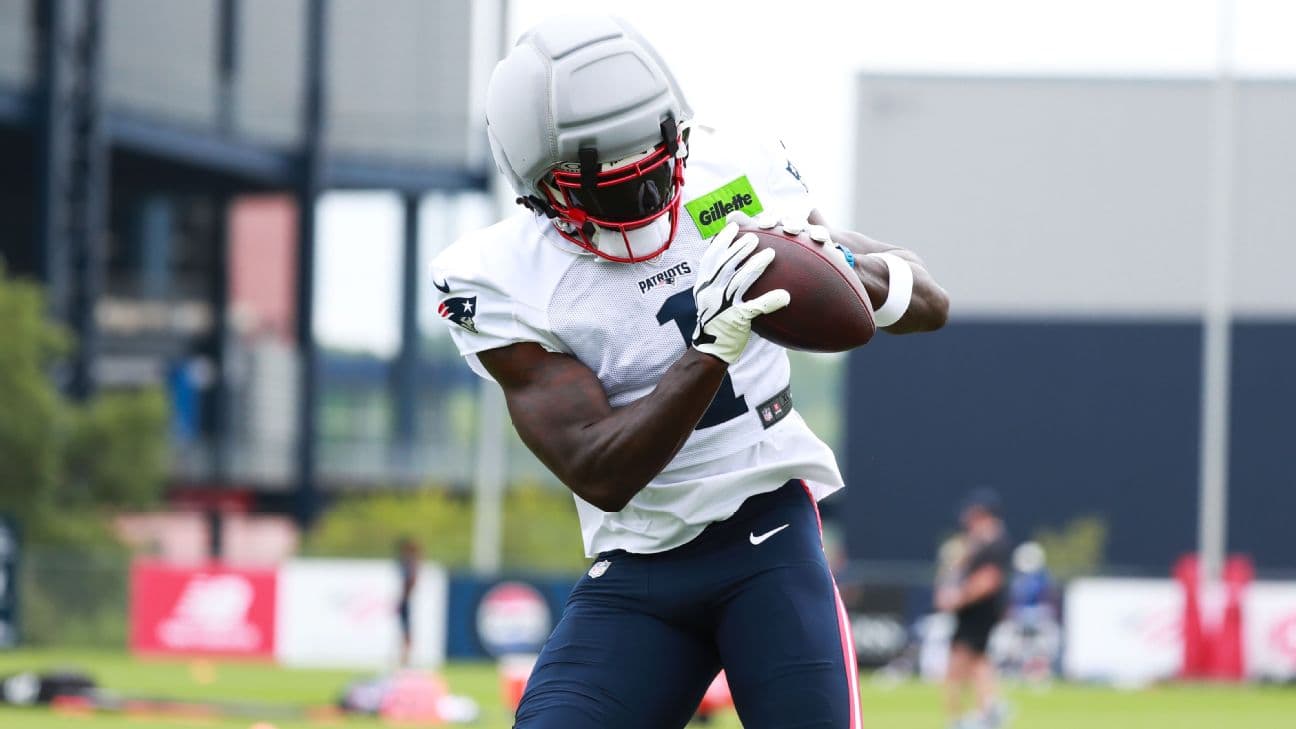
Drake Maye threw three interceptions on New England's final three possessions and the Patriots lost 13-10 in Seattle to open the season. The 2025 Most Valuable Player runner-up finished 23-of-33 for 178 passing yards with one touchdown, three interceptions and 47 rushing yards, and New England led 10-0 early in the third quarter before none of it held.
Maye took responsibility afterward, saying he stopped being patient and that the decisions he forced cost his team the game. That is an accurate self-assessment, and the tracking data backs it up.
Where the game actually turned
On throws of 10 or more air yards, Maye was 3-of-8 for 44 yards with three interceptions. Every pick came on a ball thrown down the field, and per the post-game tracking, he threw only one interception on deep attempts across the entire 2025 season. That is the single most important number in the box score, because it says the problem was not accuracy or protection. It was shot selection under duress against a defense specifically built to take away the deep third.
Seattle's secondary spent 2025 as one of the best units in the league at defending vertical throws, and it played that way. The first two interceptions led directly to Seattle's final 10 points. The last one came on a lob into the end zone with 26 seconds remaining, when New England was already in position for a game-tying field goal attempt.
The context that makes this survivable is that the Patriots' offense functioned everywhere else. Maye completed 23 passes, added 47 yards on the ground, and the team moved the ball well enough to build a two-score lead on the road. Short and intermediate throws were fine. The failure was concentrated in a handful of decisions in a compressed window.
The A.J. Brown problem
New England's offseason centerpiece was acquiring A.J. Brown to give Maye a true number one receiver, and Brown's Patriots debut ended in the third quarter with an ankle injury. He left the stadium in a boot.
That injury changes the read on the second half of the game. A quarterback pressing for explosive plays after losing his best downfield target is a more understandable failure than the same behavior with a full arsenal. It also means the deep passing game that produced three turnovers was being run without the player it was designed around.
Christian Gonzalez, New England's cornerback, spent the night shadowing Jaxon Smith-Njigba and held him to one catch for five yards in coverage. The Patriots' defense did its job. The offense could not stay out of its own way.
Fantasy fallout
Do not sell Maye. This is the textbook version of a buy-low window: a highly drafted quarterback, a terrible box score, a loss, and a public narrative forming within 24 hours. His rushing production is the floor that makes him startable regardless of passing volatility, and 47 yards on the ground in a game he lost is a strong signal that the designed-run element is intact.
The passing volume is also fine. Thirty-three attempts on the road in a close game is a normal workload, and New England's pass rate should only increase if it spends more time trailing. The efficiency will regress toward his established level, which was good enough to finish second in MVP voting a season ago.
The urgent question is Brown's ankle. If he misses time, New England's target distribution collapses toward its tight end and its running backs, which is a materially worse fantasy environment for everyone including Maye. Managers holding Brown should be monitoring practice reports rather than making decisions this week, and managers holding Maye should treat him as a low-end QB1 until Brown's status is clear.
Hunter Henry becomes the beneficiary in an offense without Brown, and he has been Maye's most trusted target for two seasons. In deeper leagues he is the add.
Betting angle
The market will shade New England's next number based on the three interceptions, which is usually an overcorrection. Interception rate is among the least stable quarterback statistics from week to week, and a three-pick game is far more likely to be followed by zero or one than by another three. Teams coming off multi-turnover losses have historically been slight value against the spread the following week for exactly that reason.
The complicating factor is Brown. If he is ruled out, the market adjustment is justified and the value disappears, because New England's passing offense without him is a different unit. Wait for the injury report before touching the number.
The Seattle side deserves a note too. The Seahawks won this game with Drew Lock playing most of it after Sam Darnold left on the opening series, and they still put 13 points on the board while their defense generated three takeaways in the fourth quarter. A defense that can win a game by itself is a live underdog-price asset all season.
The Verdexed model take
Quarterback models weight expected points added per dropback and pressure-adjusted accuracy far more heavily than raw interception totals, precisely because picks are noisy. Maye's Week 1 profile grades out poorly on the deep component and roughly neutral everywhere else, which produces a much smaller downgrade than the final line suggests.
The more meaningful input is the receiver availability. Losing a true alpha receiver moves a passing offense's projection more than a single bad game from the quarterback does, and the model treats the Brown injury as the primary unknown heading into Week 2.
What's next
New England is 0-1 with a quarterback who made three bad decisions in ten minutes and a receiver room that may be down its best player. Neither of those things is a season. The correct posture is to buy Maye at the discount, hold Brown and wait for the ankle report, and add Henry in leagues where he is available.
Maye called the game-sealing interception unacceptable and said he would be better. The tape says he is right about both.