Deshaun Watson and Shedeur Sanders Open Browns Camp in a Real Competition: The Fantasy Order in Cleveland
By Verdexed Fantasy Desk
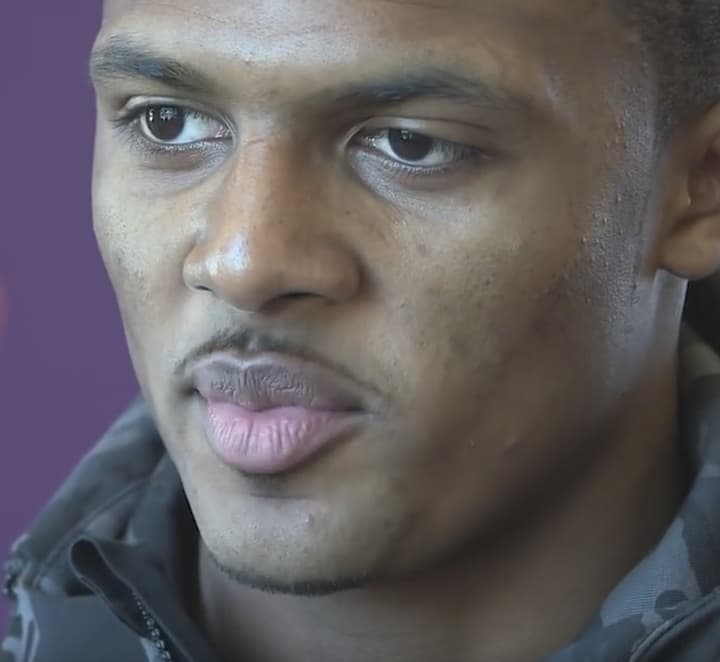
The Cleveland Browns opened training camp without a named starting quarterback, and by the team's own account that is because the competition earned the extension rather than because nobody separated. Head coach Todd Monken has said publicly that he wanted to enter camp with a clear QB1 and came away from the offseason program impressed enough by both Deshaun Watson and Shedeur Sanders that he kept the job open.
The room is four deep: Watson, second-year passer Sanders, 2025 third-round pick Dillon Gabriel, and rookie Taylen Green, a sixth-round selection in the 2026 draft. Realistically it is a two-man race, and the padded practices that begin this week are where it gets decided.
Where each quarterback stands
Watson is healthy for the first time in a long time. He missed the 2025 season entirely following a pair of Achilles surgeries and has appeared in only 19 games since 2022 between suspension and injury. Health alone does not settle anything, but it is a genuine change in inputs. He was reportedly the favorite to open the season as the starter based on offseason work.
Sanders is the more interesting variable. A year ago he opened camp as the fourth quarterback on the depth chart. He is now in legitimate contention to start, which is an unusual trajectory and one that says as much about Cleveland's evaluation of the alternatives as it does about his development. Reports through the spring described split reps and shifting momentum rather than a decisive edge either way.
Gabriel remains in the building as a developmental option. Green is a rookie sixth-rounder. Neither should factor into fantasy calculations in August.
Why the outcome matters to fantasy managers
Cleveland reshaped its receiver room this offseason around younger options, with KC Concepcion and Denzel Boston reordering the depth chart. That is a group whose fantasy value is almost entirely a function of who is throwing the football and how often.
Watson's most productive NFL seasons came with an aggressive downfield element and significant rushing production. Whether any of that survives two Achilles surgeries and three lost years is the central unknown of Cleveland's season. Quarterbacks returning from Achilles repairs historically lose scrambling volume before they lose arm strength, and rushing production was a meaningful share of Watson's fantasy value.
Sanders is the higher-variance outcome. A second-year quarterback getting his first extended run typically produces a lower completion percentage, more sacks, and a slower offense, which suppresses team passing volume. It also produces more downfield attempts, which is where receiver ceilings come from.
Fantasy fallout
The honest read is that no Cleveland pass catcher should be drafted with confidence in redraft leagues until the starter is named. Every projection in that room has a quarterback-shaped hole in it.
The right approach is to treat Cleveland receivers as late-round upside picks rather than roster anchors. Concepcion and Boston both carry the profile of players who could produce useful volume in a bad offense, which is a real fantasy archetype, but neither should be drafted ahead of a comparable receiver in a settled situation.
Cleveland's running back room is the more reliable place to look. Offenses with quarterback uncertainty run more, especially early, and Monken's history suggests a willingness to lean on the ground game when the passing game is not functioning. Any Browns back with a defined early-down role is being drafted at a discount relative to his projected touches.
The Verdexed model take
Verdexed's model treats an unresolved quarterback competition entering pads as roughly a coin flip weighted toward the incumbent, and it discounts the entire passing offense's projection until the situation resolves. That discount is not a prediction that Cleveland's offense will be bad. It is an acknowledgment that the range of outcomes is unusually wide, and wide ranges are worth less in a fantasy context than narrow ones at the same mean.
On the betting side, Cleveland's season win total is one of the more genuinely uncertain numbers on the board. The defense has been the team's identity, and defenses travel more reliably than offenses year to year. That argues for the under on team passing props and against fading the Browns outright on the spread in low-total games.
The specific market to watch is Cleveland's implied team total in Week 1. If the Browns name Sanders and the market shades their total down sharply, that is likely an overcorrection. Second-year quarterbacks in their first start are unpredictable in both directions, and books tend to price the downside more heavily than the historical distribution supports.
What to do in your league
Do not reach for a Browns receiver. Do consider a Browns running back a round later than his consensus rank suggests. Ignore Cleveland's quarterbacks entirely in single-quarterback formats, and treat Sanders as a speculative last-round stash in superflex leagues where the upside of a starting job justifies the roster spot.
What's next
Padded practices are the evaluation that matters. Watson's mobility under a real rush is the single most informative data point available, because it determines whether Cleveland is getting a version of the quarterback it paid for or a pocket passer with a compromised lower body.
Monken has not committed to a timeline for naming a starter. Watch the first-team rep distribution in joint practices in mid-August. That is where these decisions almost always leak before they are announced.
The historical base rate for this kind of competition
Open quarterback competitions that reach padded practices without a named starter resolve toward the incumbent more often than not, but the margin is narrower than most assume. What decides them is rarely training camp statistics. It is how the coaching staff weighs floor against ceiling.
A staff that believes it has a playoff roster picks the veteran. A staff that believes it is evaluating for the following season picks the young player. Cleveland's situation is genuinely ambiguous on that question, which is why the competition has stayed open.
The wrinkle specific to this room is that Watson's contract situation is unlike any other in the league, and the organization has every financial incentive to establish whether the player it committed to can still function at a starting level. That incentive points toward giving Watson the first opportunity and a short leash rather than toward an early move to Sanders.
For fantasy managers, that shape matters. A season in which Watson opens as the starter and Sanders takes over in October produces a very different value curve for Cleveland's pass catchers than one in which Sanders wins the job outright in August. The first scenario suppresses the entire receiver room's early-season production and creates a midseason buying opportunity. The second creates a chaotic but potentially higher-ceiling passing game from Week 1.