 NFL2026-07-27
David Montgomery and Woody Marks Split the Texans Backfield: The Committee That Decides Two Draft Prices
By Verdexed Fantasy Desk
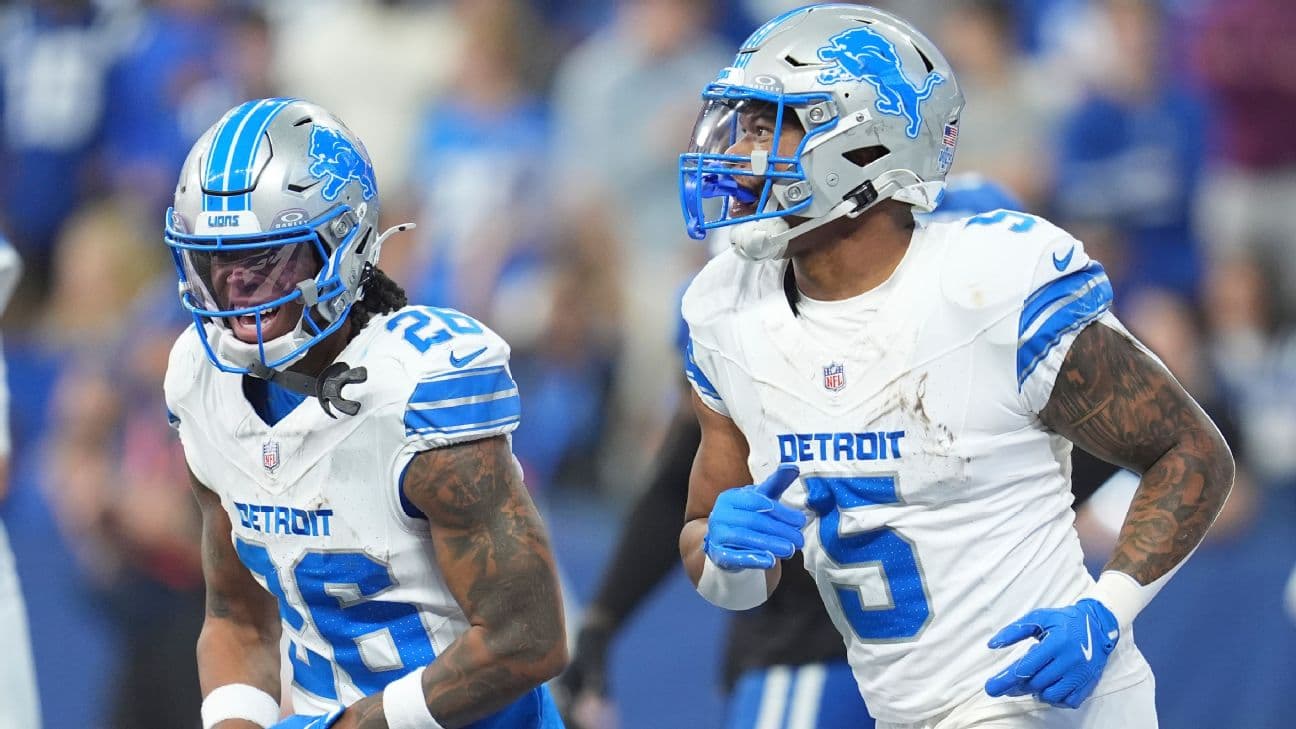
The Houston Texans open training camp with the most consequential unresolved backfield in fantasy football, and neither of the two principals is a mystery. David Montgomery, acquired from Detroit in March for offensive lineman Juice Scruggs and a pair of draft picks, arrives on a two-year deal reported at $16.5 million with $10 million guaranteed. Woody Marks returns after seizing control of the Houston backfield midway through his rookie season. Both are locks for the roster. Only one of them is being drafted at a price that a committee role can justify.
The numbers from 2025 frame the problem. Marks finished with 220 touches for 911 scrimmage yards and five touchdowns, and the meaningful split is what happened late: over his final eight games, he averaged 17.5 touches per game and handled roughly 63 percent of the backfield work. That is starter volume. Montgomery, meanwhile, had the least productive season of his career in Detroit, logging career lows in carries and total touches while sharing with Jahmyr Gibbs, a role he was reportedly unhappy with.
Why Houston made the trade
The tape explains part of it. Montgomery is a downhill, gap-scheme runner, and nearly 46 percent of his carries in 2025 came on man or gap concepts, the second-highest rate in the league. Marks ran a lower but still substantial share of gap concepts. A team that wants to establish a physical short-yardage and goal-line identity does not usually go acquire a veteran back to sit behind a second-year player.
The contract is the tell. Ten million guaranteed is not backup money, and teams do not trade draft capital for a change-of-pace piece. Houston paid for a starter, and the reporting around the deal indicated Montgomery would enter the season as the number one back.
The counterargument is equally strong: Marks earned the job on the field, he is on a rookie contract, he is younger, and Houston watched him handle a near two-thirds workload without the offense falling apart. Teams rarely take carries away from a productive young back who is cheap.
The three scenarios
Scenario one: Montgomery leads, Marks is the passing-down back. This is the version the contract implies. Montgomery takes early downs and goal-line work, Marks catches passes and spells him. Montgomery becomes a touchdown-dependent RB2, Marks becomes a PPR-dependent flex.
Scenario two: Marks leads, Montgomery is the closer. This is the version last season's usage implies. Marks handles 15-plus touches, Montgomery gets short-yardage and clock-killing work. Marks becomes a low-end RB2, Montgomery becomes a touchdown vulture whose fantasy weeks are entirely score-dependent.
Scenario three: a true even split. The worst outcome for everyone. Two backs at 10 to 12 touches each, neither startable outside of matchups.
Fantasy managers should note that scenario three is more common than either clean outcome, and that it is the one the market prices least accurately.
The Verdexed model take
Our backfield projections weight three inputs: recent usage, contract and acquisition cost, and the coaching staff's historical distribution patterns. Recent usage points at Marks. Acquisition cost points at Montgomery. When those two signals conflict, our model widens both players' variance rather than picking a winner, and it applies a meaningful haircut to both point projections relative to what either would earn as a clear starter.
That is the actionable insight. The sum of the two projections is close to what a single lead back in this offense would produce, but neither individual projection clears the bar for a confident weekly start. Our system currently grades both as flex-tier assets with RB2 upside, which is exactly the range where the market tends to overpay for the name it recognizes.
Age is the model's tiebreaker in the medium term. Montgomery is entering his eighth season with a heavy career touch count, and our age-and-workload curve penalizes that profile aggressively. Marks carries far less accumulated wear.
Betting angle
Rushing-yardage season props for both backs are candidates for unders on the same logic that governs the fantasy read: a committee splits volume, and books set individual props before the split resolves. The sharper play is on the combined market where it exists, since Houston's team rushing volume is the more predictable quantity.
Our model's Houston team totals are unremarkable, which is itself informative. A backfield split matters far less when the offense around it is projected in the middle of the league.
What to do in your league
Draft the cheaper of the two. That sounds glib, but it is the correct process when two players share a role and neither has separated. If Montgomery's name recognition and contract keep his ADP a full round or more above Marks, take Marks. If the market corrects and Marks becomes the more expensive back, take Montgomery. You are buying the same uncertain role either way, so pay the lower price for it.
In best-ball, own both if the cost allows. Committee backfields produce spike weeks for whichever back happens to score, and best-ball scoring captures those without forcing a start decision.
What's next
The first two weeks of camp practices will tell you more than the entire offseason did. Watch which back takes first-team reps in the opening team period, which back is on the field in goal-line work, and which back stays in for third-and-long. That last one is the most valuable signal in PPR formats, because the passing-down role is the only part of this split that is stable regardless of who wins the early-down job.
Preseason snap distribution is noise. First-team practice reps are not.