Colston Loveland Is Caleb Williams' Favorite Target at Bears Camp: The TE1 Case
By Verdexed Fantasy Desk
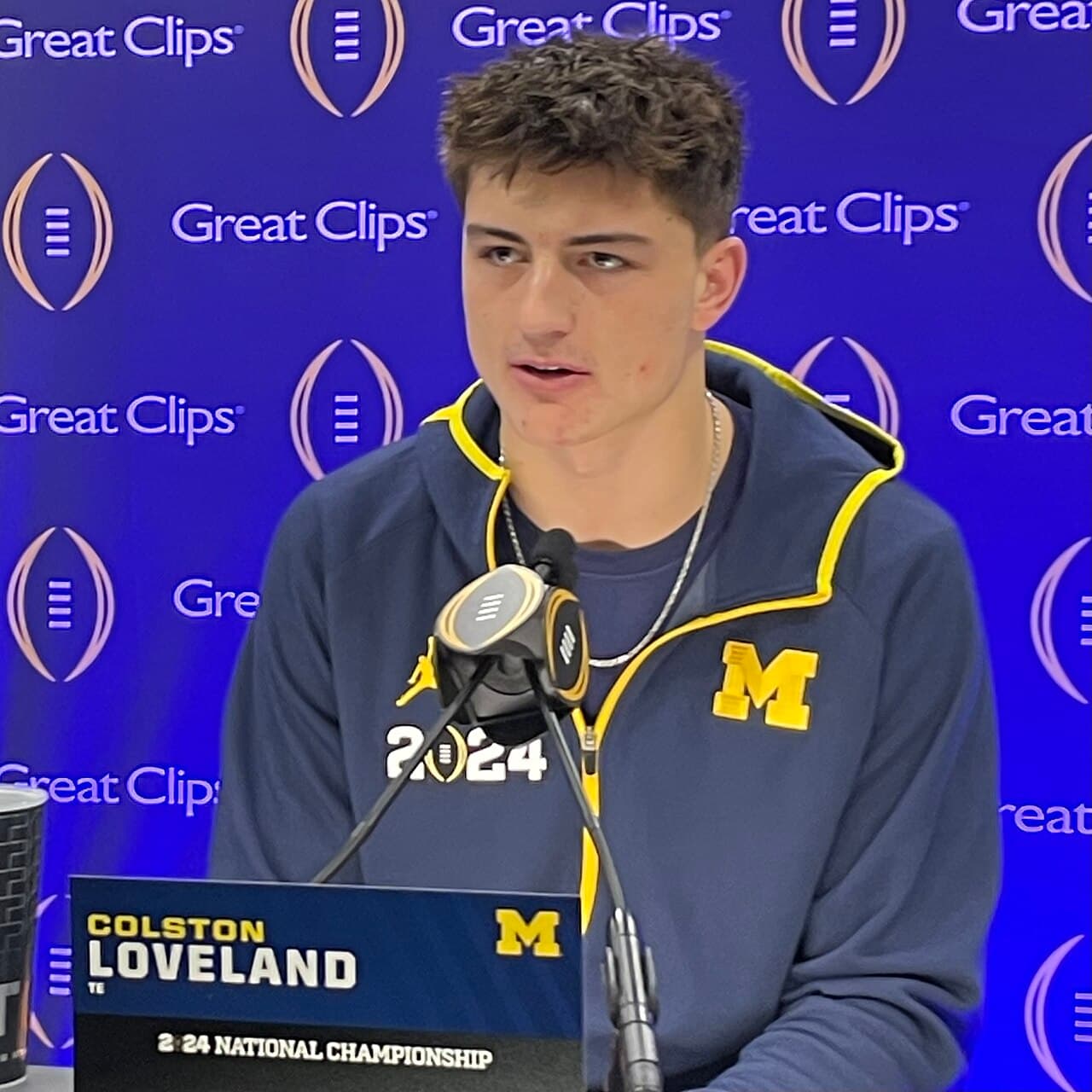
Chicago tight end Colston Loveland has been the most consistent pass catcher on the field through the opening week of Bears training camp, connecting with Caleb Williams for two touchdowns in an 11-on-11 period at the team's third practice and drawing four targets in the closing two-minute drill. Williams has since said publicly that he believes Loveland can become the best tight end in football. For a position where volume certainty is worth more than talent, the second-year tight end just got a very loud endorsement from the person who decides where the ball goes.
The fantasy market has Trey McBride and Brock Bowers as the clear top two at the position. Loveland is not being drafted in that range. That gap is the opportunity.
The setup
Loveland was Chicago's first-round pick in 2025 and finished his rookie season on a strong note, posting 16 catches for 185 yards and two touchdowns across the final two regular-season games. That is a small sample, but it is the right kind of small sample: it came at the end of a rookie year, in an offense that had begun to trust him, rather than in a September burst that faded.
He enters year two at 6-foot-6 and 241 pounds in Ben Johnson's offense, which is the detail that should interest fantasy managers most. Johnson's play-calling history is built around creating advantageous matchups for a movable tight end, and Chicago spent a first-round pick to acquire exactly that archetype. ESPN's projections have Loveland tied for the team lead in targets and leading the Bears in receptions this season.
Why the camp reports matter more here than usual
Training camp hype is the cheapest commodity in football, and most of it should be discarded. Tight end is the exception, for a specific structural reason: tight end production is more dependent on designed usage than any other skill position. A wide receiver can produce on broken plays and scramble drills. A tight end mostly produces on plays that were drawn up for him.
When a quarterback targets a tight end four times in a two-minute period, that is not a highlight, it is a preview of the situational package. Two-minute offense is where coaching staffs put their most trusted personnel. Loveland being the focal point of that period, in his second season, is a stronger signal than a hundred one-handed grabs in seven-on-seven.
Williams' public endorsement adds to it without being the whole case. Quarterbacks talk up teammates every August. What is harder to fake is the target distribution in the periods that count.
The Chicago passing-game math
The concern with any Bears pass catcher has always been distribution. Chicago has invested in receivers, and a target tree with several credible options can cap any individual's ceiling. That risk is real, but it cuts differently for a tight end than for a receiver. The tight end in this scheme is not competing for the same routes; he is being schemed into space that the receivers create by clearing out.
The other variable is Williams himself. His development curve is the single largest input into every Bears fantasy projection. An efficient Williams lifts Loveland into the top-five tight end conversation. A stagnant Williams caps Loveland as a touchdown-dependent TE1 who is frustrating on a weekly basis. Neither outcome is priced in at his current cost, which is the point.
The Verdexed model take
Verdexed's tight end projections separate two components: expected route participation and expected targets per route run. Loveland already scored well on the first as a rookie, because Chicago played him extensively. The camp reports move the second, which is the component that actually drives fantasy points.
The model's current output places Loveland in the tier immediately below McBride and Bowers, and closer to that top tier than his draft cost implies. Put plainly: the projection says he is the third or fourth tight end off the board, and the market is treating him as the sixth or seventh. That is a full tier of surplus value at a position where the difference between the fourth tight end and the eighth tight end is often the difference between a set-and-forget lineup slot and a weekly guessing game.
The betting expression of the same view is Chicago's receiving-touchdown market. Once season-long props post, Loveland's touchdown number is the one to watch, because red-zone target share is the fastest-moving variable for a big-bodied second-year tight end in a new coordinator's system, and the market is slow to reprice it before Week 1.
What to do in your league
Take him a round earlier than your rankings say. That advice runs against the usual discipline of never reaching, but tight end is a position where the tiers are cliffs rather than slopes. Missing the top four at tight end means streaming, and streaming tight end is a season-long tax.
If you already hold McBride or Bowers, Loveland is your trade target from a manager who drafted him as a backup. The acquisition cost right now is a mid-round pick. By October, if the target share holds, it will be considerably more.
In dynasty, this is not a debate. A 22-year-old first-round tight end whose quarterback is publicly campaigning for him, in an offense designed by a coordinator known for tight end usage, is a top-three dynasty asset at the position.
What's next
Watch the red-zone periods in the Bears' remaining camp practices and the first preseason game. Loveland's route participation was never the question; his target share inside the twenty is. Chicago's red-zone offense was the weakest part of its attack last season, and the most obvious fix on the roster is the 6-foot-6 tight end the front office drafted in the first round.
If the two-minute and red-zone usage from the opening week holds through August, Loveland will not be available at a discount much longer.