 NFL2026-09-09
Chicago Opens at Carolina With Three Healthy Backs and No Declared Split
By Verdexed NFL Desk
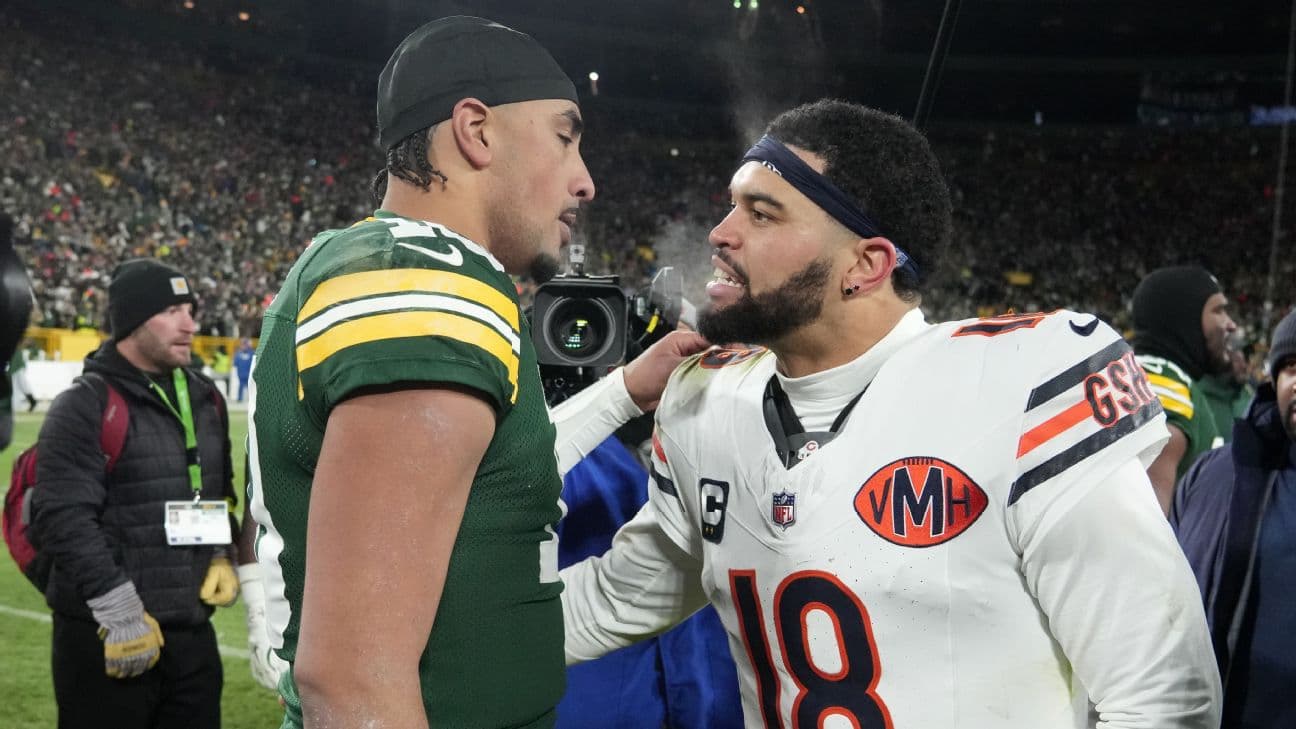
The Bears travel to Carolina on Sunday with a backfield that looked settled in July and does not look settled now, and fantasy managers who drafted into it are getting no help from the coaching staff.
D'Andre Swift left a practice last week with abdominal cramps, which sounded alarming for about an hour and then resolved into nothing. He is expected to play in the opener. That is the good news and it is genuinely good, because Swift is the only Chicago back with an established NFL workload.
Kyle Monangai is the complication. He has not practiced fully since exiting an August 16 session early, and reporting since then has described a hyperextended knee with a week-to-week timeline. Swift told reporters after a September 2 practice that Monangai was running and looked good, which is encouraging without being a designation.
Roschon Johnson is the name that changed
The third back is the one whose stock actually moved. Chicago's offensive coordinator spoke publicly about the trust Roschon Johnson built while Monangai was sidelined, noting that Johnson's workload increased as opportunities opened and that he proved himself reliable.
That is coach language for a real role. Johnson is also, alongside Swift, one of only two running backs on Chicago's active roster. Salvon Ahmed and Zavier Scott are on the practice squad, which means that unless Chicago elevates someone, Sunday's carries are being divided among a maximum of three players and possibly two.
The fantasy implication is that Johnson has genuine Week 1 standalone value, not just handcuff value. A back who is one of two healthy options in a game his team is favored to keep close is going to touch the ball.
What the split probably looks like
If Monangai is active but limited, the likeliest shape is Swift as the clear lead on early downs and in the passing game, Johnson as the change-of-pace and short-yardage back, and Monangai in a reduced complementary role that grows through September.
If Monangai is inactive, Swift's projection climbs toward a workhorse number and Johnson becomes a legitimate flex play in twelve-team leagues. That is the outcome fantasy managers should be rooting for if they roster either.
The version nobody wants is a genuine three-way committee, which would leave Swift as a low-end RB2 and both backups as unrosterable. Carolina's defense is not the kind of matchup that forces a team to abandon the run, so a committee could hold all game.
The fantasy fallout
Swift is a start in all formats regardless of how the split resolves. His pass-game role is the floor, and the pass-game role is not in question. He caught passes at a healthy clip throughout his time in Chicago and nothing about the depth chart threatens that.
Johnson is a priority cheap waiver add, worth around five percent of a season-long FAAB budget. He is not a must-start, but he is the type of player who wins a week in October when someone above him gets hurt, and the acquisition cost right now is close to zero.
Monangai should be held, not dropped. A hyperextended knee that had him running within three weeks is a short-term problem, and his role before the injury was significant enough that he will get it back.
The Verdexed model take
Verdexed's model treats undeclared backfield splits as a variance problem rather than a projection problem. When a coaching staff refuses to name a lead back in Week 1, the model widens the outcome distribution for every back in the room and lowers the median for the presumed starter.
For Swift specifically, that means a projection that sits slightly below where his ADP implied, with a fatter upside tail if Monangai sits. The model's read is that Swift's floor is protected by receiving work and his ceiling is capped by goal-line uncertainty, which is the exact profile of a solid RB2 rather than a set-and-forget RB1.
The betting angle is on Chicago's team rushing total rather than on any individual back. Books shade individual rushing props down when a split is unknown, but team rushing totals do not carry that discount, and Chicago in a close game against Carolina projects to run more than the market number implies.
Carolina opened as a home underdog in a game the market has priced tightly, which supports a script where both teams stay committed to the ground game into the fourth quarter. That is the environment where team rushing overs cash and individual player overs do not.
What to do in your league
Start Swift. He is the only back in this room with a locked role and the receiving usage insulates him from any goal-line vulture.
Add Johnson if he is free. The cost is trivial and the coaching endorsement is real.
Hold Monangai through at least Week 3. Dropping a back with a defined pre-injury role for a Week 1 waiver flier is the kind of move that looks smart for six days and terrible for the next twelve weeks.
Do not start any Chicago back other than Swift in a twelve-team league this week. The information is too thin.
What's next
Sunday's snap counts settle this. If Johnson takes more than a third of the backfield snaps in a competitive game, he becomes a weekly flex consideration and Swift's ceiling drops. If Swift plays two-thirds of the snaps and handles the goal-line work, he is an RB1 for the rest of September regardless of what Monangai's knee does.
Chicago's Week 2 injury report will be the first clean read on Monangai. Until then, this is a Swift backfield with a real number two and a lot of unanswered questions.