 NBA2026-07-04
Celtics Reshape Their Frontcourt: Mitchell Robinson Signs and Neemias Queta Gets Paid as a Timeshare Forms
By Verdexed NBA Desk
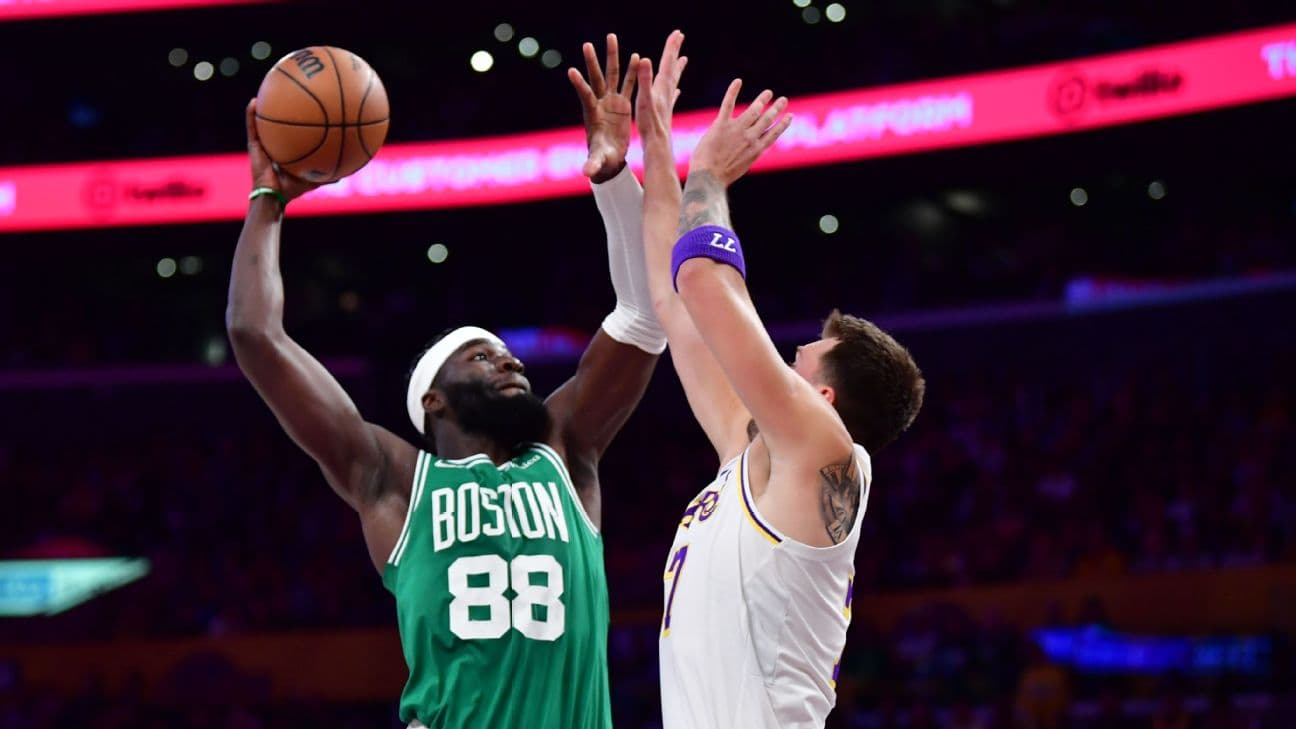
The Boston Celtics reshaped their frontcourt in the opening days of free agency, agreeing to a three-year, reported $47.4 million deal with center Mitchell Robinson while also extending incumbent big man Neemias Queta on a reported four-year, roughly $56 million contract. The two moves together set up a center timeshare in Boston that complicates both players' fantasy outlooks, and the ripple reached New York, where the defending-champion Knicks reportedly replaced the departing Robinson with veteran Andre Drummond on a one-year, minimum-level deal. For fantasy managers, this is a cluster of moves that reshuffles the value of three centers at once.
Boston's new frontcourt math
Robinson joins Boston on a deal that reportedly uses the full non-taxpayer mid-level exception, a mechanism that hard-caps the Celtics at the first apron. He is an elite per-minute rebounder and rim protector who reportedly ranked near the top of the league in offensive rebounding, but he comes with a long history of durability and minutes questions. That profile makes him a specialist and a streamer more than a locked-in every-night starter, which is the crucial nuance for anyone drafting him.
Queta, meanwhile, is coming off a breakout that earned him a top-five finish in Most Improved Player voting after he reportedly started nearly every game and produced double-digit rebounds with useful block totals. The extension confirms Boston's long-term belief in him. The problem for his fantasy value is timing: adding Robinson directly threatens Queta's workload, turning what had been a clear starting job into a frontcourt timeshare that could cap both players' minutes and dent their standard-league floors.
Fantasy fallout in Boston
The two Celtics centers now come with mutual risk. Queta's value takes the bigger hit relative to expectations, since he enters the season as an extended, paid-up starter whose minutes are suddenly contested. Draft him as a mid-round center with real downside until the rotation clarifies in camp. Robinson, for his part, is a high-upside per-minute producer whose fantasy relevance is gated by how many minutes he actually plays, given both the timeshare and his durability history.
The practical read is that this is a situation to monitor rather than to buy into blindly. A true timeshare would leave both players as matchup-dependent options rather than reliable starters, while an injury or a clear pecking order in camp could restore one of them to fantasy relevance. Until Boston tips its hand, both carry more risk than their talent alone would suggest.
The Knicks ripple: Andre Drummond
Losing Robinson left a hole in New York's championship frontcourt, and the Knicks reportedly filled it by signing Andre Drummond to a one-year, minimum-level deal after he left Philadelphia. Drummond is a proven per-minute rebounding monster whose fantasy relevance hinges entirely on volume behind starter Karl-Anthony Towns. In a backup role, he is a rebounds-and-steals streamer; in an expanded role, he is a must-add.
That makes Drummond a sensible stash in deeper leagues, precisely because Towns has an injury history and New York now lacks another true center after Robinson's departure. If Towns misses time, Drummond's minutes and production would spike into standard-league relevance in a hurry. As a handcuff to a starting center on a contender, he is exactly the kind of speculative add deeper formats reward.
The betting angle
None of these moves reshapes a title picture on their own, but together they matter at the margins. Boston upgraded its frontcourt depth and rim protection while accepting a hard cap at the first apron, a constraint that limits future flexibility. New York, the defending champion, absorbed a real subtraction in Robinson and replaced him with a cheaper, older option, a small downgrade in its frontcourt that is worth noting for anyone modeling the Knicks' repeat odds. The market is unlikely to move much on any single one of these signings, but the cumulative frontcourt reshuffle is a legitimate input.
The Verdexed model take
The model treats the Boston frontcourt as a timeshare and splits the projected center production between Robinson and Queta, applying a downside adjustment to Queta relative to his pre-signing outlook and gating Robinson's value on his minutes and durability. It carries Drummond as a rebounds-and-steals streamer with a clear conditional spike if Towns misses time, which makes him a priority stash in deeper formats.
The practical read: temper expectations on Queta until the rotation clears, treat Robinson as a per-minute specialist rather than a safe starter, and stash Drummond in deeper leagues as a Towns handcuff with real upside.
There is a draft-strategy lesson buried in this cluster of moves. Center is the position where a single free-agent signing can quietly erase a projected starter's value, and Boston just demonstrated it: Queta went from a locked-in every-night big to a timeshare risk overnight. Managers who draft centers should build in that fragility, favoring bigs with secure roles over talented players in muddled situations, and keeping a cheap handcuff like Drummond stashed against exactly the kind of injury or rotation shuffle that turns a backup into a weekly starter.
What is next
The camp rotation in Boston is the story to watch, since how the Celtics split center minutes between Robinson and Queta will determine whether either is draftable as more than a matchup piece. In New York, the variable is Towns' health, which is the switch that turns Drummond from a deep-league stash into a genuine fantasy contributor. The model keeps all three centers flagged and will reprice them as the rotations and health pictures settle heading into the season.