Bijan Robinson and Jahmyr Gibbs Are Holding In at Camp: The Fantasy Read on Two Top-Five Backs
By Verdexed NFL Desk
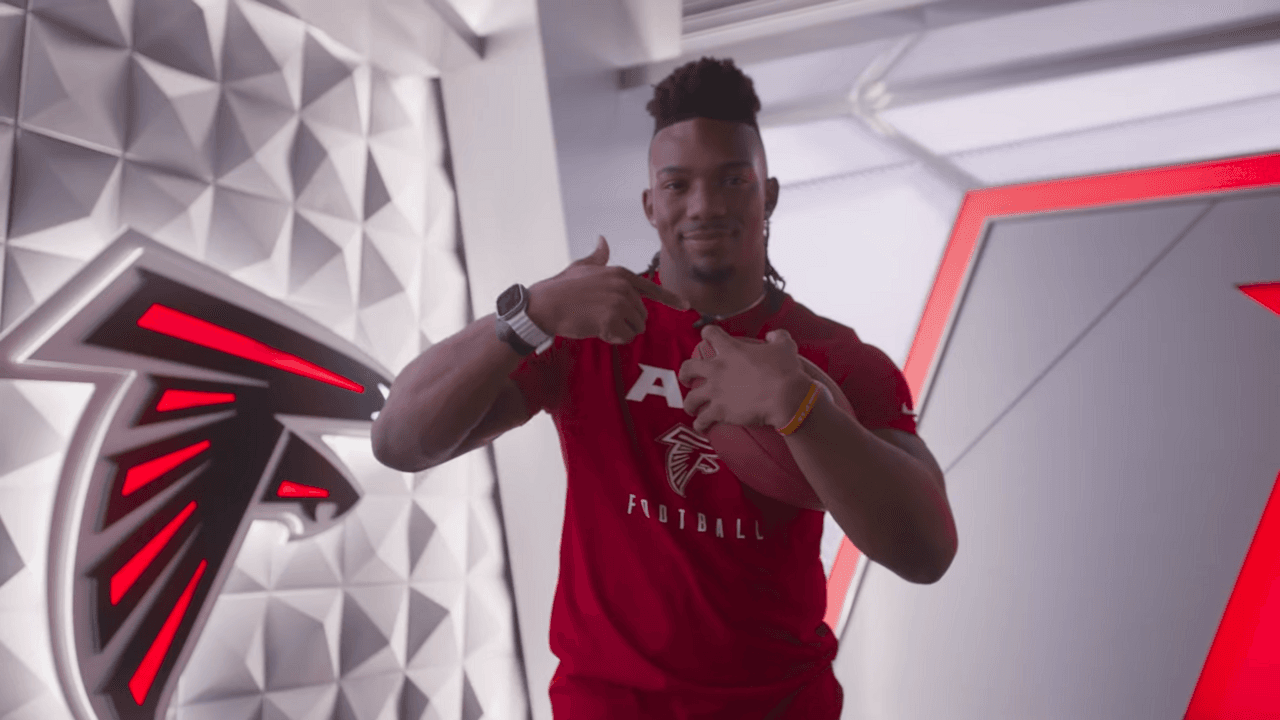
Bijan Robinson and Jahmyr Gibbs, the two running backs who sit at or near the top of nearly every fantasy draft board, both reported to training camp this week and both were non-participants at Wednesday's practice. Neither is holding out. Both are holding in, a distinction that matters enormously for anyone drafting in the next six weeks.
The two backs entered the league together as first-round picks in the 2023 draft, and their teams both exercised fifth-year options this spring. That means neither is scheduled to reach unrestricted free agency until 2028. They are not leveraging an expiring deal. They are leveraging the only window they have: the six weeks before the season when a team's willingness to pay is at its most elastic.
What a hold-in actually means
A holdout is an absence. A player who does not report to camp accrues fines for every day missed, and under the current collective bargaining agreement those fines are not forgivable for players on rookie contracts. A hold-in is different. The player reports, is physically present in the building, attends meetings, and simply does not take part in team drills. The fines do not accrue. The leverage stays intact. The risk of a soft-tissue injury during a contract dispute drops to zero.
Robinson reportedly did footwork and jogged on the side during Atlanta's first practice, staying visibly engaged with teammates rather than disappearing. Gibbs has followed the same script in Detroit. Both organizations have publicly treated the situations as ordinary business rather than a rupture, and multiple reports have characterized talks in both cities as ongoing rather than stalled.
That combination, present in the building and negotiating in good faith, is historically the version of this standoff that ends with a signature well before Week 1.
Why the market is stuck
Saquon Barkley currently holds the top of the running back market at an average annual value in the $20 million range, a number set when Philadelphia bet on a veteran back coming off a productive season. Robinson and Gibbs are both younger, both on rookie-scale money, and both coming off seasons that made them foundational offensive pieces. Their camps are seeking to reset the ceiling, not match it.
The complication is structural. Teams have spent a decade arguing that running back production is replaceable and that paying premium money at the position is a losing proposition. Atlanta and Detroit both have to decide whether Robinson and Gibbs are exceptions to that rule. Atlanta has already committed significant long-term money on offense this offseason, including a four-year extension for Drake London reported at $141 million, so the front office is not unwilling to pay. Detroit has been similarly aggressive keeping its own core in place.
The likely outcome is that whichever back signs first sets the number and the second follows within a narrow band. That is how the wide receiver and edge markets have moved in recent years, and there is no obvious reason this position behaves differently.
Fantasy fallout
The practical fantasy impact of a hold-in is close to nothing, and drafters who treat it as a red flag are the ones creating value for everyone else in the room.
Robinson remains the centerpiece of an Atlanta offense that returns London, Kyle Pitts and a quarterback situation that will lean on the run game while it sorts itself out. Gibbs remains the most explosive back in a Detroit offense that has consistently produced top-five scoring volume. Neither player's role, snap share, or projected touch count changes because he stood on the sideline in late July.
The risk that does exist is narrow and worth naming: if either standoff extends deep into August, that back misses joint practices and preseason reps, and a player who misses the ramp-up period carries slightly elevated soft-tissue risk in September. That is a real but small tax, and it is the kind of thing that shows up as one missed game in a 17-game season, not a lost year.
The Verdexed angle
Verdexed's board does not move either back. Both remain inside the top five at the position, and Robinson remains in the conversation for the overall 1.01 in point-per-reception formats because of his receiving floor. The model cares about projected touches, offensive volume, and red zone share. A contract dispute in July moves none of those inputs.
Where the model does see an edge is in the handcuff market. Every year, a small number of drafters overreact to camp holdouts by pushing backup running backs up their boards. If Tyler Allgeier in Atlanta or Detroit's second back drifts up in your league's average draft position over the next two weeks, that is a sell signal, not a buy signal. The backup's value is contingent on an injury, not on a contract, and the contract is going to get resolved.
The betting angle is quieter but real. Atlanta and Detroit season win totals should be untouched by this news. If a book or a prediction market shades either number down on hold-in headlines, that is the side to take. Contract disputes involving players who report to camp have an extremely high historical resolution rate before Week 1.
What to do in your league
Draft both backs at their existing prices. If anything, target the one whose deal has not been announced by your draft date, because that is where the discount lives. A room that watches a player skip practice on the local news will discount him by half a round, and half a round on a top-five running back is one of the cleanest edges available in a redraft league.
Do not spend a mid-round pick on either handcuff as insurance against a contract. Spend it on the handcuff you would want anyway if you believe the lead back carries genuine injury risk, and let the contract news be noise.
What's next
Both teams have roughly five weeks of runway before the regular season, and both have every incentive to get their backs on the practice field for joint sessions in mid-August. Watch for the first deal to land, because it will set the number that unlocks the second.
Until then, the signal to track is not the negotiation. It is whether either player moves from non-participant to limited participant. That transition, more than any report about term or guarantees, is the tell that a signature is close.