A Sub-.500 Team Is Going to Win the AL West and Host a Wild Card Series
By Verdexed MLB Desk
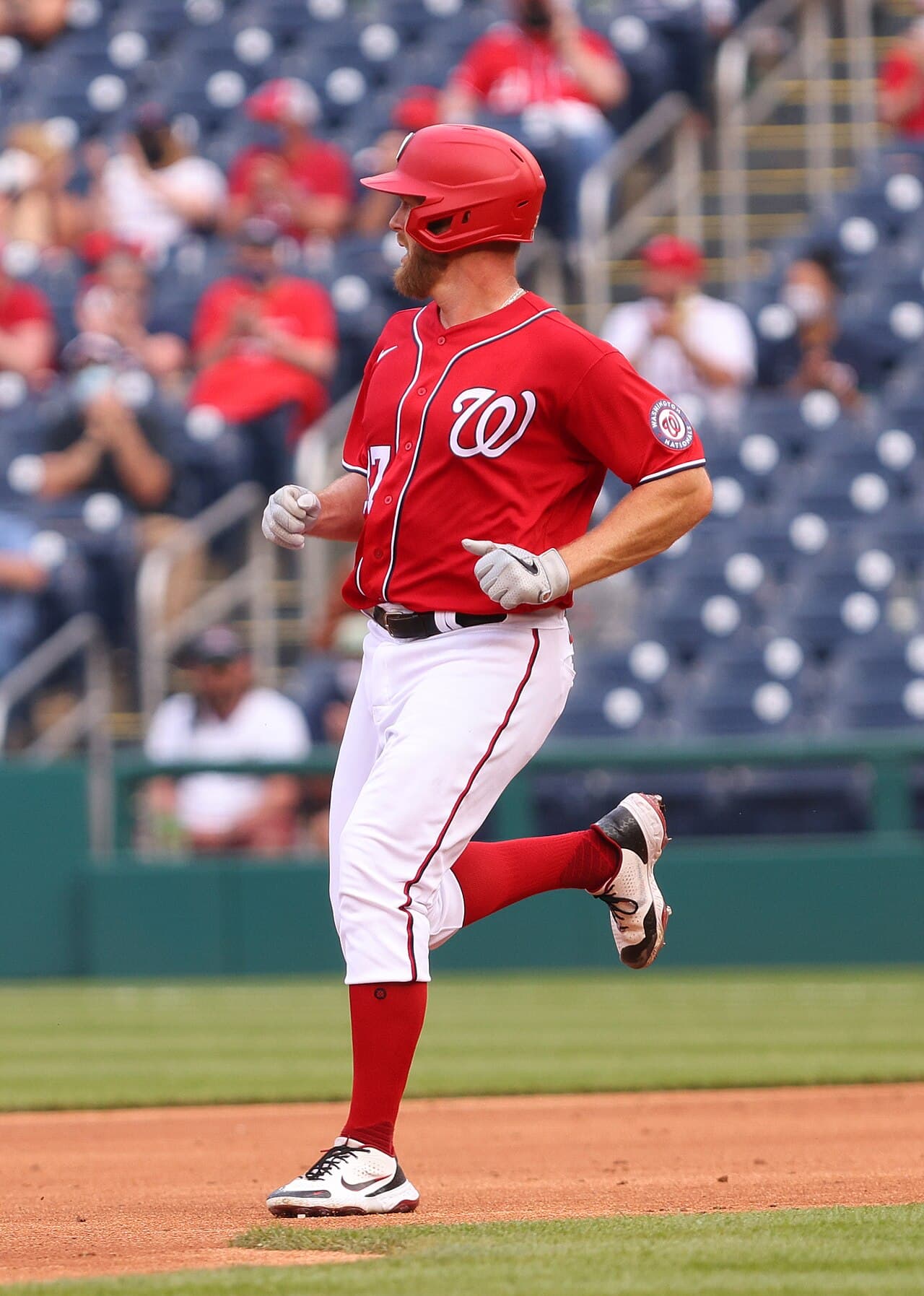
Houston and Texas entered Thursday tied atop the American League West at 78-80, which sets up an outcome the sport has spent decades trying to avoid: a team that finishes below .500 will win a division, host a wild card series, and hold home field in a round of the playoffs against a club that won meaningfully more games.
The Astros own the head-to-head tiebreaker, having taken the season series 9-4. That is the safety net Houston carries into the weekend and the obstacle Texas has to overcome outright rather than on a technicality.
How the division got here
Both clubs spent the season underperforming preseason expectations, and neither found the stretch run that usually resolves a race like this. What makes the situation unusual is not that a weak division exists, which happens regularly, but that the format hands the winner a genuine competitive reward rather than just a banner.
Under the current playoff structure, the three division winners in each league occupy the top three seeds. The top two receive byes. The third hosts the lowest-seeded wild card in a best-of-three, with all three games at the division winner's park. That is the prize waiting for a team that may finish 80-82.
Meanwhile, the loser of this race is in a considerably worse position. Texas sits multiple games back of the wild card cutoff, which means the team that finishes second in the AL West likely misses October entirely rather than sliding into a wild card. This is winner-take-all in the literal sense.
The competitive distortion is real
It is worth being precise about how large the advantage is. A sub-.500 division winner hosting a three-game series against a wild card team that won, say, 90 games is a substantial structural gift. Three home games, a set rotation, and no travel is worth several percentage points of series win probability on its own.
Whether that is a problem for baseball is a question for the league office. Whether it is exploitable is a question for bettors, and the answer there is clearer.
Betting angle
The market's instinct in this spot is usually correct in direction and wrong in magnitude. Books will make the wild card team a favorite against a sub-.500 division winner, which is the right call, but the price typically does not fully account for home field being worth less in a short series than the format's structure suggests.
The specific inefficiency: a road favorite in a best-of-three is often available at a price that undercounts the talent gap. When one team won 90 games and the other won 80, the underlying quality difference is large, and three games at the weaker team's park does not close it. The public sees "division winner hosting" and adjusts too far.
The second angle concerns Houston's and Texas' remaining games this weekend. Teams playing for their season against opponents with nothing at stake create one of the few genuinely predictable motivation edges in baseball, which is a sport where motivation effects are usually overstated. Here they are not, because the opponents may be resting regulars while the Astros and Rangers play their best available lineups.
What it means for October
For anyone building an American League bracket, the practical consequence is that one path through the playoffs is softer than it looks on a seed line. The wild card team drawing the AL West champion is getting the best matchup available in the round despite being the road club, and that team's division series odds should be priced better than its seed implies.
Tampa Bay has already clinched the top American League seed and the bye that comes with it, which insulates the Rays from all of this. They will play whoever emerges, rested, at home, in a division series, having watched three teams exhaust their bullpens.
The Verdexed model take
The model treats a division title as a scheduling outcome rather than a quality signal, which is exactly the correction this situation requires. Record against a specific set of opponents tells you how a team did. Run differential, underlying rate statistics and roster health tell you how good it is, and those inputs do not care which division a club plays in.
By those measures, neither Houston nor Texas belongs in the tier of American League clubs that should be expected to advance. A team hovering around .500 that wins a weak division is, in the model's framing, a coin flip in a short series at best and an underdog against any genuinely strong opponent.
The nuance worth stating is that Houston in particular has a roster capable of playing better than its record. Underperformance relative to underlying metrics is common and partially self-correcting, and a team that runs its two best starters in a best-of-three is a different proposition than the same team across 162 games. The model's lean is that the AL West champion is underrated by its record and still overrated by its seed, which sounds contradictory and is not: both the record and the seed are poor descriptions of the same club.
What's next
Three days decide it. Houston needs only to match Texas the rest of the way to win the division on the tiebreaker, which puts the burden squarely on the Rangers to gain ground.
Whoever wins hosts a wild card series starting Tuesday with all three games at home. Whoever loses goes home, most likely without a wild card berth to fall back on, which is a harsh ending for a race this close and a fitting one for a division this flawed.