 NBA2026-07-14
2026 NBA Free Agency Fallout: Porzingis Stays in Golden State, Middleton Lands in Washington
By Verdexed NBA Desk
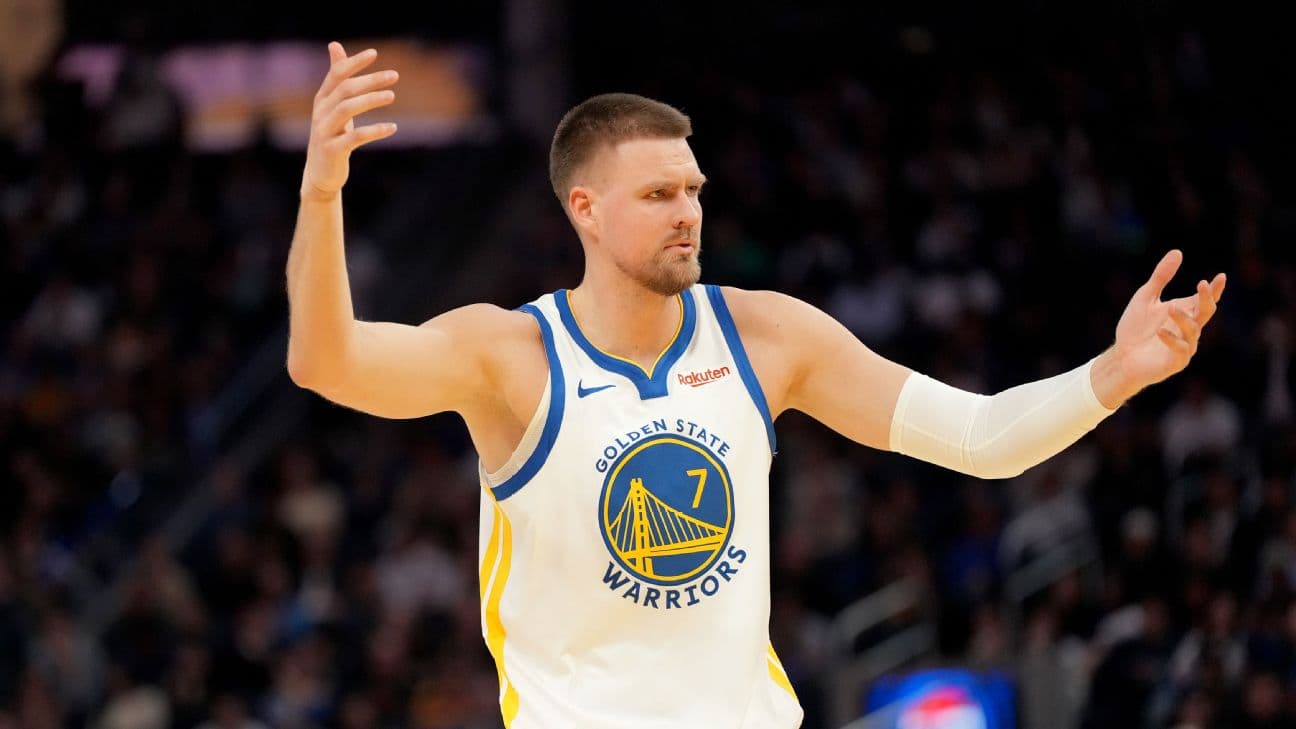
The 2026 NBA offseason has been defined by blockbusters, from the Jaylen Brown and Paul George swap to Ja Morant's move to Portland, but the mid-tier signings are where fantasy managers find value. Kristaps Porzingis re-signing with the Warriors, Khris Middleton landing in Washington, and a handful of rotation deals around the league all carry roster and role implications that will shape category production next season. Here is the fantasy fallout from the summer's quieter moves.
Kristaps Porzingis stays in Golden State
Porzingis and the Warriors agreed to a new two-year, $40 million deal that includes a player option, keeping the big man in a system that maximizes his skills. For fantasy, continuity is the headline. Porzingis remains one of the game's most unique statistical contributors, a center who scores, stretches the floor, and blocks shots, filling categories that are hard to replace.
The fantasy caution with Porzingis has always been availability, not production. When he plays, he is a strong multi-category contributor; the question every draft is how many games he suits up for. Staying in Golden State does not change that calculus, but it does keep him in a winning environment that may manage his workload carefully. Draft him for the per-game value and plan around the games-played risk.
Khris Middleton lands with the Wizards
Middleton agreed to a three-year, $17.6 million deal with Washington via sign-and-trade, a move that reshapes his fantasy outlook. On a rebuilding Wizards roster, a veteran wing with Middleton's scoring and playmaking pedigree could see a larger role than he would on a contender, which is a potential fantasy positive if his health cooperates.
The same availability caveat that follows Porzingis applies to Middleton. His per-game production has remained useful when he is on the floor, but recent seasons have been dotted with missed time. Landing on a young team hunting for veteran stability could mean steady minutes and touches when healthy. Treat him as a deeper-league target with upside tied directly to how many games he plays.
The role-shifting rotation deals
Beyond the headliners, several signings move the fantasy needle in deeper formats. Kevin Huerter's three-year deal to stay in Detroit keeps a floor-spacing guard in a defined role, the kind of consistent three-point contributor that helps in category leagues. San Antonio's decision to re-sign wing Julian Champagnie after a strong playoff showing rewards a young player whose role appears to be growing next to the Spurs' rising core.
In New York, the champion Knicks retained rotation pieces to run it back, with veteran guard depth re-signing to support the title core. Those deals matter less for the individual signees' fantasy value and more for what they signal about minutes distribution. A team keeping its rotation intact tells managers where touches are spoken for and, by extension, which roles are locked rather than up for grabs.
Fantasy fallout: opportunity is the whole game
The throughline across these signings is opportunity. Porzingis keeps a defined, high-value role in a good system. Middleton trades a smaller role on a contender for a potentially larger one on a rebuilder. Huerter and Champagnie lock in the minutes that make their category contributions reliable. In fantasy, role clarity is worth as much as raw talent, and this batch of deals clarified several rotations heading into the fall.
The availability theme cannot be ignored. Both Porzingis and Middleton offer strong per-game value with real games-played risk, which is the profile that rewards managers who draft the production and build depth to cover the absences. The safest fantasy value in this group may actually be the healthy, defined role players like Huerter, whose floor is steadier even if the ceiling is lower. In deeper category leagues, a reliable 30-minutes-a-night contributor who does one thing well can win you a week that a higher-upside star spends in street clothes.
The Verdexed model take
Verdexed's basketball model separates per-game value from projected availability, and that split is the key to this free-agent class. Porzingis grades as an elite per-game multi-category contributor with a significant games-played discount, which is why his draft value depends heavily on format and on how aggressively managers punish injury risk. Middleton's projection rises modestly on the larger potential role in Washington but carries the same availability haircut.
For the rotation signings, the model rewards role certainty. Huerter and Champagnie project as stable contributors precisely because their minutes and usage are defined, and defined roles are the most predictable input in fantasy basketball. The broader signal is that this offseason's mid-tier market handed out clarity, and clarity is what the model prizes when setting rest-of-season projections.
What to do in your league
Draft Porzingis for his per-game ceiling but build a bench that can absorb the games he misses. Target Middleton in deeper formats as a role-based upside play tied to his health. And do not overlook the defined role players like Huerter, whose reliable minutes make them the safer category contributors even without the star upside. In fantasy basketball, the players you can count on to be on the floor are worth more than the market often admits.
What's next
Training camps will finalize the rotations these signings only sketched, and the availability questions around Porzingis and Middleton will be answered game by game once the season begins. The blockbusters grabbed the headlines, but the role-defining signings are where fantasy managers will find their edges. Read the opportunity, price the injury risk, and let the defined roles anchor your draft.