 NFL2026-06-30
Wait on Quarterback in 2026: Why the Smart Play Is Late-Round QB and Matchup Streaming
By Verdexed Fantasy Desk
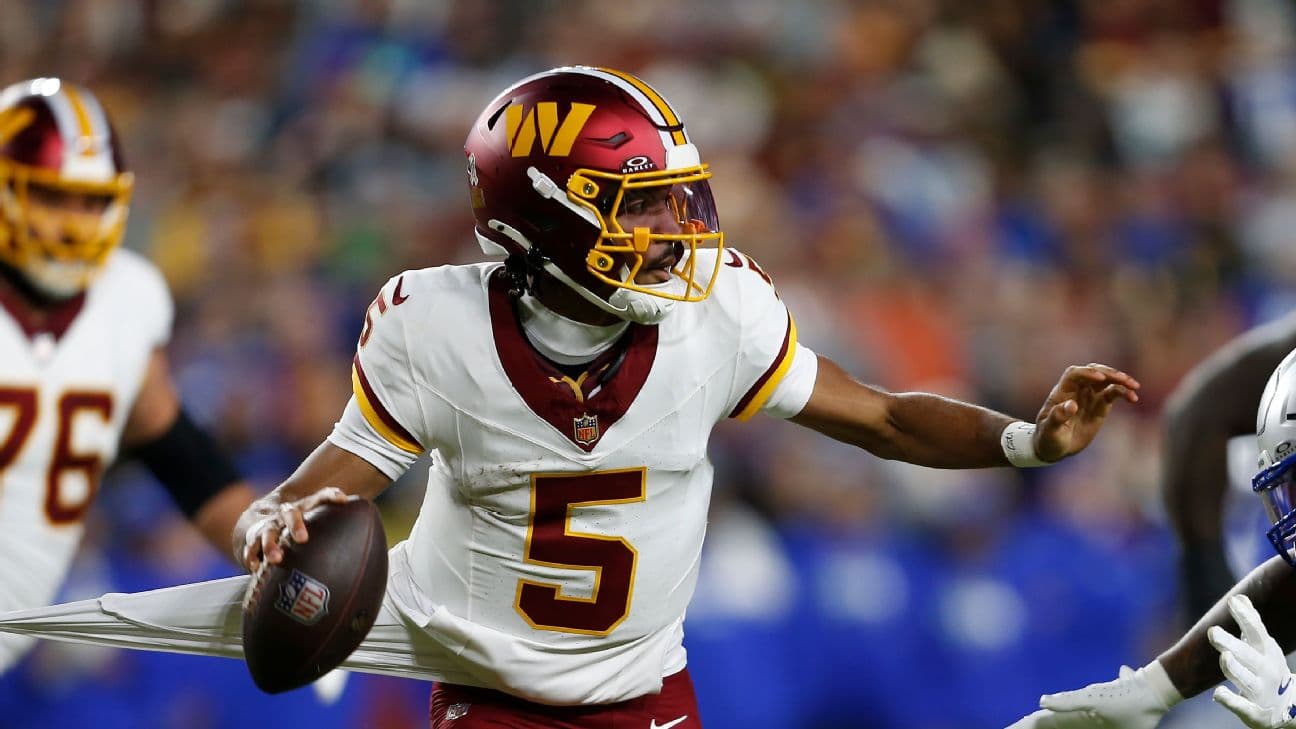
The most repeatable edge in fantasy football drafts is also the simplest: wait on quarterback. The position is deeper in 2026 than it has been in years, the gap between the elite arms and the streaming pool keeps shrinking, and every pick spent early on a quarterback is a pick not spent on the running backs and receivers that actually decide leagues. The winning approach is to let the room reach for passers, then build a quarterback room out of value and matchups.
The depth is the whole argument
In a typical 12-team league, more than a dozen quarterbacks are capable of finishing as a weekly QB1 in the right matchup. That depth changes the math. When the difference between the fourth quarterback off the board and the fourteenth is a handful of points per week, paying a premium for the early option is a poor allocation of draft capital. The opportunity cost is enormous: a second or third-round quarterback means passing on a foundational skill-position player at a position where the talent cliff is far steeper.
The rushing quarterback complicates this slightly, because the handful of true dual-threats carry a points floor that pocket passers cannot match. But even there, the market overpays, and managers who miss on the top rushing arms can recreate much of that production by targeting mid-tier mobile quarterbacks later or by streaming based on matchup.
The buy-low arms to target late
The best late-round quarterback targets are players whose price has dipped below their ceiling. Jayden Daniels and Lamar Jackson are the headliners of that group, dual-threat producers whose rushing floors give them weekly QB1 upside even in a tough passing matchup, and whose draft cost has softened after uneven or injury-affected seasons. Buying a proven rushing quarterback at a discount is the single most efficient way to get elite production without paying an elite price.
The ascending tier is just as useful. Drake Maye enters 2026 as a young passer with a rising arrow, and even with a thin supporting cast, his development and rushing ability give him real upside relative to a late-round cost. The broader point is that the late rounds are full of quarterbacks with paths to top-12 weeks, which is exactly why there is no reason to reach early.
How to stream to QB1 production
The streaming approach is to draft two quarterbacks in the late rounds whose schedules complement each other, then start whichever has the better matchup each week. Target arms facing the league's weakest pass defenses, quarterbacks in dome environments or favorable weather, and offenses projected to be in shootouts or playing from behind, since negative game scripts inflate passing volume. Done well, a streaming tandem can match a top-five quarterback's season-long output for a fraction of the draft cost.
The key discipline is to actually play the matchups rather than anchoring to a name. The whole reason to wait on the position is to stay flexible, and that flexibility is wasted if a manager stubbornly starts the same quarterback into a brutal defense every week.
The Verdexed model take
Verdexed's model quantifies positional value by measuring the points gained over a replacement-level starter, and at quarterback that replacement level is unusually high because the position is so deep. The model's read is that the value lost by waiting on quarterback is small, while the value gained by spending those early picks on scarce running back and receiver production is large. In plain terms, the math favors building the skill positions first and assembling the quarterback room from the discount bin.
The model also rates the rushing quarterbacks as the exception worth a slight premium, because designed runs and scrambles add a points floor the projections can count on. That is why buying a discounted dual-threat passer late grades out as the highest-value quarterback play on the board.
Roster construction in practice
The practical version of this strategy is to leave your draft with two quarterbacks taken in the final third of the board, chosen so their bye weeks and early-season schedules do not overlap. That pairing gives you a startable option every week without sacrificing a single premium pick. In superflex or two-quarterback leagues the calculus changes, because the position becomes scarce and the early arms carry real positional value; there, you cannot punt entirely and should secure your starters earlier. But in standard single-quarterback formats, the depth of the position is a gift, and the managers who exploit it are the ones who walk away with the strongest running back and receiver cores in the league.
What to do in your league
Do not draft a quarterback in the first several rounds unless a falling dual-threat is too cheap to pass up. Target buy-low rushing arms like Jayden Daniels and Lamar Jackson, add an ascending passer such as Drake Maye, and pair two complementary schedules so you can stream the matchups. Spend your premium picks on running backs and receivers, and let your league-mates pay full price for a position you can fill for pennies. That is how drafts are won.
The discipline is what separates the managers who merely talk about waiting on quarterback from the ones who actually execute it. When the run on passers starts, it is tempting to follow the crowd. Resist it, trust the depth, and let the value come to you in the later rounds where it reliably does.