Travis Etienne's Hamstring Has Alvin Kamara Running the Saints Backfield
By Verdexed Fantasy Desk
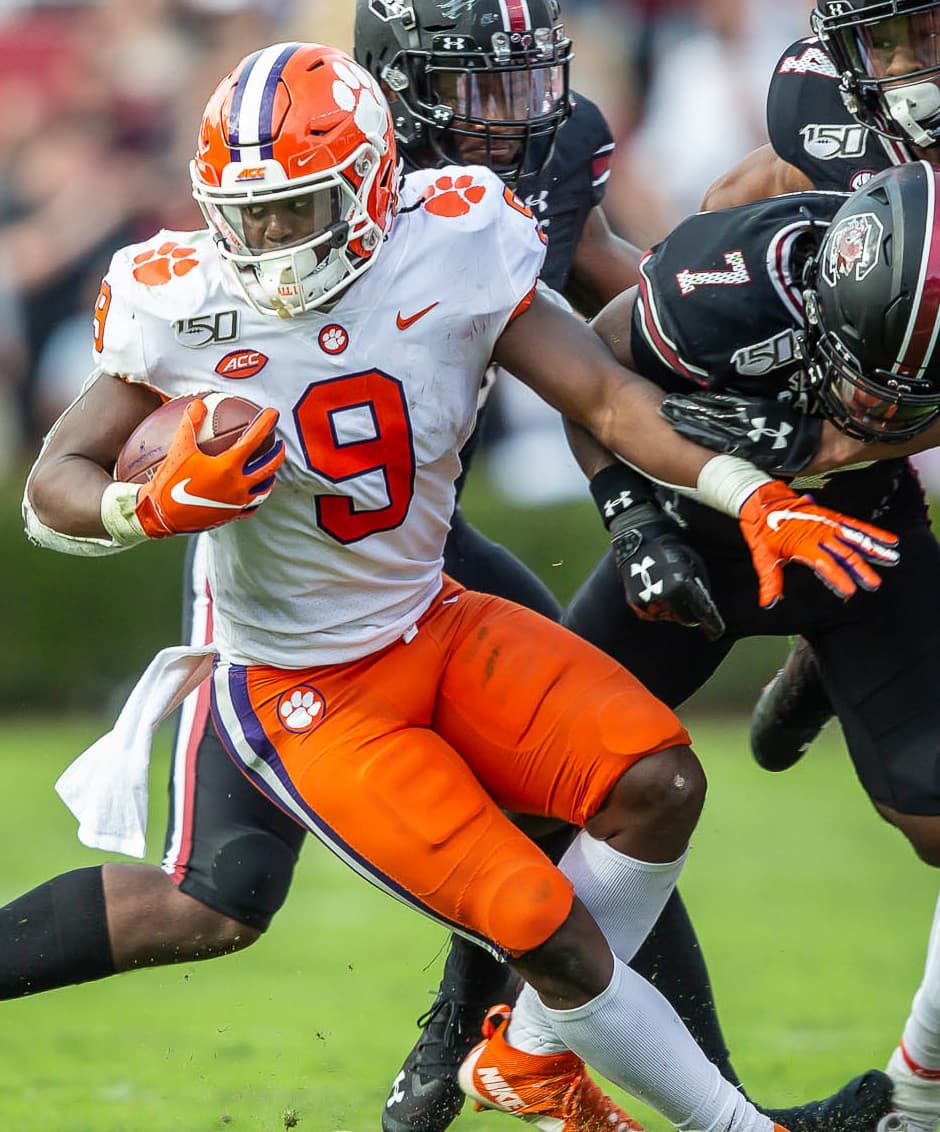
Travis Etienne Jr. was limited in practice this week with a hamstring injury, and the timing could hardly be worse for the fantasy managers who drafted him as a three-down back in his first season with New Orleans. Alvin Kamara has already passed him in touch share, and the Saints return home Sunday with a backfield that looks nothing like the one that was projected in August.
The specifics: Kamara led all New Orleans backs in touch share in Week 2, while Etienne's share dropped to roughly 18 percent after sitting near 27 percent in the season opener. Etienne has also been operating under restrictions on his practice reps. That combination, declining usage plus a soft-tissue injury, is the exact profile that turns a mid-round pick into a bench player.
How the Saints got here
Etienne signed with New Orleans in 2026 free agency on a multi-year deal reported to be worth roughly $52 million, coming home to Louisiana after five seasons in Jacksonville. The fantasy community priced him as the clear lead back in a offense that had spent years feeding one running back heavily, and the depth chart behind him, Kamara plus Kendre Miller and Devin Neal, read like a supporting cast.
The problem with that read was always Kamara. He is a back whose skill set overlaps almost entirely with Etienne's: both are receiving threats out of the backfield, both are better in space than between the tackles, and neither offers the clean early-down-versus-passing-down split that makes committees fantasy-friendly. When two backs do the same things well, the coaching staff is not forced to choose, and the result is a timeshare.
The usage trend is the warning, not the injury
It would be easy to write this off as an injury story that resolves when the hamstring does. That reading is too generous. Etienne's touch share fell in Week 2 in a game he played, which means the Saints made a choice about how to allocate carries rather than simply protecting a hurt player.
Hamstring injuries also have a specific and well-documented characteristic: they recur. A back who is limited in practice in September with a hamstring is a back who is likely to be limited again in October, and each absence gives the player behind him another week of trust from the coaching staff. That dynamic compounds.
The optimistic case is that Etienne gets healthy, the snap distribution normalizes, and a team that paid him $12 million a year uses him like a player who costs $12 million a year. That case is real. It is just not the way to bet in Week 3.
What to do in your league
**Kamara is a start in PPR formats.** He is expected to function as the passing-down back and the primary receiving option out of the New Orleans backfield, and the Saints play their home opener Sunday. Receiving work in a home game with positive expected game script is the most projectable fantasy input available at the position.
**Etienne is a flex play at best if he is active.** If your league has a deep bench, hold him, because the talent and the contract both point toward a larger role eventually. If you are managing a tight roster and need production now, he is droppable in shallow formats, which is a sentence nobody expected to write about him in August.
**Kendre Miller is the contingency worth knowing.** If Etienne misses time entirely, the early reporting suggests Kamara and Miller would split the work. Miller is a speculative add in deep leagues only, but he is the name to file away.
Betting angle
The New Orleans rushing attack is where this shows up on a betting sheet. A backfield split three ways is harder to model than a bell-cow situation, and that uncertainty tends to depress rushing prop lines across the board while inflating the receiving props of whichever back is getting passing-down work.
Kamara receiving yardage and reception props are the cleaner side of this. Etienne rushing props are the noisier side and should be avoided until his practice participation is full rather than limited. If Etienne is ruled out late, expect a sharp move on Kamara's numbers and relatively little movement on the game total, since the Saints' offensive identity does not change much when one similar back replaces another.
The Verdexed model take
The model's core objection to the preseason consensus on Etienne was never about talent. It was about opportunity concentration. Projections that gave him a bell-cow workload were extrapolating from his Jacksonville usage into a situation where an established, similarly skilled veteran was still on the roster and still capable.
What has happened through two weeks is the more common outcome, and it is a useful reminder for the rest of the season: when a team signs a free-agent running back without releasing the incumbent, the incumbent's role is the signal. Teams that intend to hand a job to a new player usually clear the depth chart first. New Orleans did not.
The model's rest-of-season projection for Etienne now sits meaningfully below his August draft cost, with the gap driven almost entirely by touch share rather than efficiency. The efficiency is fine. There just are not enough carries to go around.
What's next
Watch Friday's practice report closely. Full participation would move Etienne back toward a flex-worthy projection for Sunday. A second straight limited session, or a questionable designation, means Kamara is the only New Orleans back you can start with confidence.
Longer term, the question is whether the Saints ever fully commit to the player they paid. Coaching staffs generally do reward investment eventually, but they reward it more slowly than fantasy managers would like, and a recurring hamstring is the kind of thing that delays it indefinitely.