Travis Etienne Caught Seven Passes and Ran Nine Times, and the Saints Backfield Is Not What It Looked Like
By Verdexed Fantasy Desk
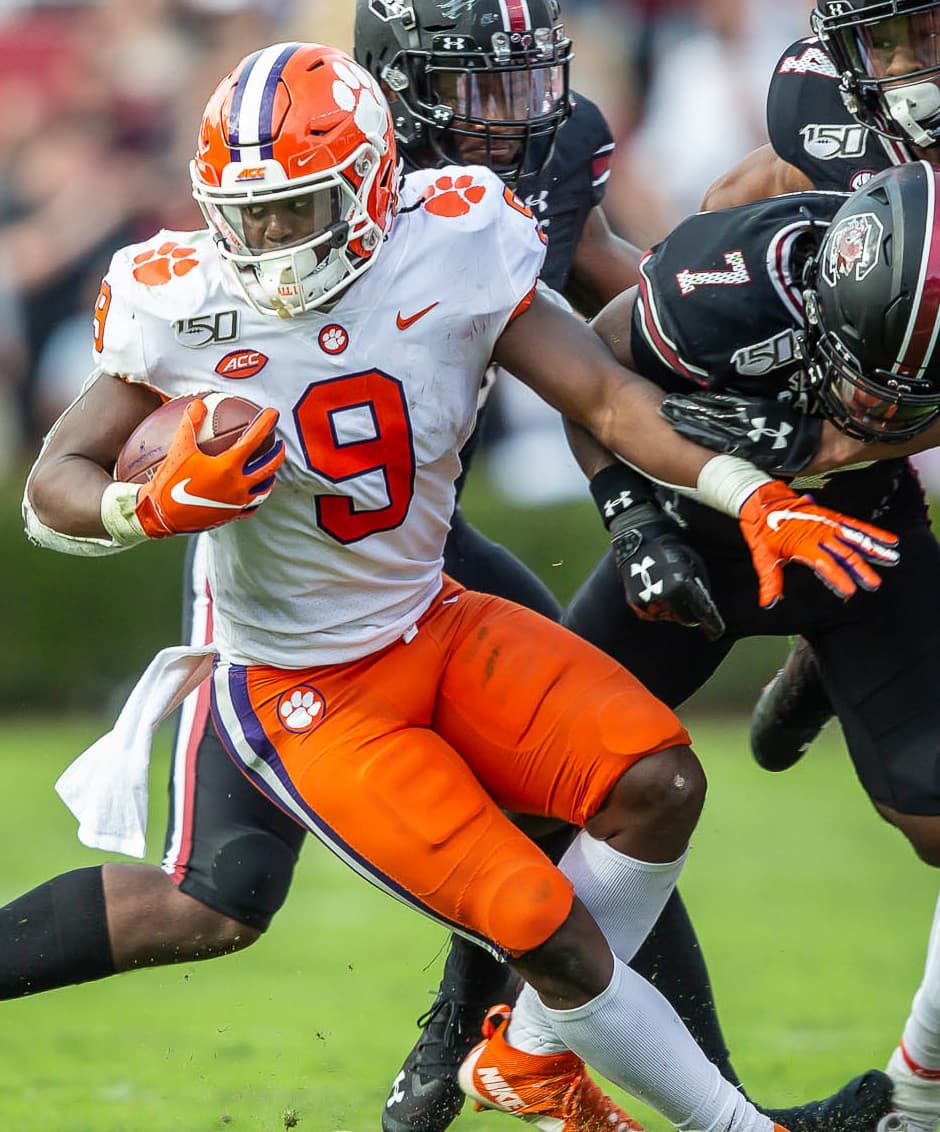
Travis Etienne Jr. made his New Orleans debut on Sunday with Alvin Kamara ruled out, and the usage was not what the fantasy community expected. Etienne ran the ball nine times for 46 yards and caught seven of nine targets for 32 yards in a 31-30 overtime loss to Detroit. The seven receptions were a career high.
Kamara had been listed as questionable with a knee injury, an MCL sprain that dates back to a joint practice with Dallas on August 18, and was downgraded to out in the hours before kickoff. Audric Estime was also unavailable. With the runway clear, Etienne got 16 touches, and only nine of them came on the ground.
The bell cow thesis did not survive contact
The summer case for Etienne was straightforward: a former first-round back with proven receiving chops lands in a backfield where the incumbent is aging and hurt, and inherits a full workload. Week 1 was the cleanest possible test of that thesis, and it produced nine carries.
Some of that is game script. New Orleans trailed and quarterback Tyler Shough attempted 56 passes in a comeback that forced overtime. A team throwing 56 times is not handing the ball off 20 times to anyone. But the distribution of the work is still informative: Kendre Miller and practice squad call-up CJ Donaldson were both active and both got touches, which means New Orleans was not committed to funneling everything through Etienne even with the depth chart thinned.
What the receiving work actually tells us
The seven catches are the genuinely encouraging part, and they are not purely a product of the 56-attempt script. Etienne has flashed this before, most notably with a 58-catch, 476-yard season on 73 targets in 2023, and the Saints used him as a real route runner rather than as a checkdown of last resort.
That matters because it is the usage that survives when Kamara returns. A back who is on the field for passing downs keeps a floor in PPR formats regardless of how the early-down carries get divided. A back whose value is entirely rushing volume does not.
Fantasy fallout
Etienne is a PPR flex, not a set-and-forget RB2. That is the honest assessment after one game, and it is a downgrade from where he was being drafted. In half-PPR and standard scoring, he is a bench player until the carry share proves out.
The Kamara timeline is the swing factor. An MCL sprain that has kept him out since mid-August is not a one-week issue, and New Orleans has been cautious enough with him that betting on a quick return is a bad idea. But when he comes back, he is going to take passing-down snaps, and Etienne's best fantasy attribute is exactly the thing Kamara does best.
Kendre Miller is worth a deep-league speculative add, not a meaningful waiver bid. He got work in a game where a team ran nine designed rushes with its lead back. That is not a role yet.
Tyler Shough changes the math
The other variable here is the quarterback. Shough threw 56 times for 410 yards in a comeback that forced overtime, and whatever that says about New Orleans as a football team, it establishes that this passing offense can move the ball when it has to.
That is relevant to the backfield in two directions. A quarterback who can sustain drives creates more red zone trips, which creates more short-yardage carries and goal-line opportunities. But a quarterback who is asked to throw 56 times is also a quarterback whose team is losing, and losing teams do not run the ball.
The version of this offense that helps Etienne most is the one where Shough is efficient enough to keep games close without being asked to carry them. That is a narrow window, and Week 1 landed on the wrong side of it.
For now, treat New Orleans as a pass-first offense with a committee backfield. Shough is a viable streaming quarterback in deeper formats given the volume, and the Saints' receivers are more interesting fantasy assets than the running backs are. That is an inversion of what the preseason boards suggested, and the sooner managers accept it, the better positioned they are to buy the right side of it.
The Verdexed angle
The model's read on the New Orleans offense is that Shough's 56-attempt game was an outlier driven by a two-score deficit, not a statement of philosophy, and that the Saints' neutral-script pass rate will settle well below what Week 1 implied. If that is right, the rushing volume in this backfield goes up from here, and the question is who gets it.
The projection that matters: with Kamara out, Etienne is forecast for a low-to-mid teens carry count in competitive game scripts with four to six targets. That is a usable flex line in PPR and a frustrating one everywhere else. With Kamara back, Etienne falls out of the weekly must-start conversation entirely.
What to do in your league
If you drafted Etienne expecting an RB2, do not sell him at a loss on one game. The receiving usage is real and the situation can still improve. But adjust your expectations now rather than after three weeks of flex-level production.
If you are shopping for running back help, the more interesting target is not in New Orleans. Look for a back on a team with a positive game script and a defined early-down role, because that is where carries actually come from. This backfield is a committee that happens to be missing a member, and committees do not get less crowded when the missing member returns.
Monitor the Kamara practice reports this week. If he is a full participant by Friday, Etienne's Week 2 outlook drops another tier, and the Saints backfield goes back to being a place where fantasy points go to die.