 NBA2026-09-08
The October 19 Extension Deadline Is the NBA's Last Real Offseason Date
By Verdexed NBA Desk
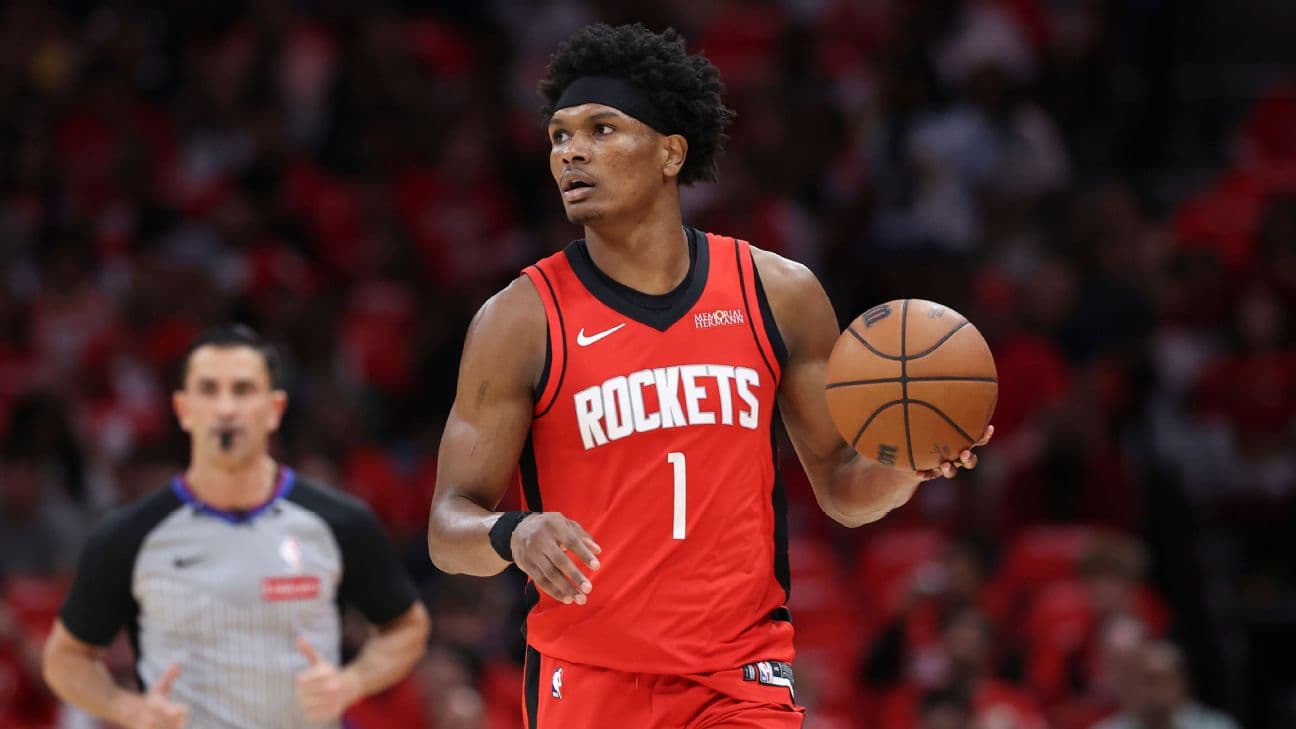
The NBA offseason has one significant date left on it. October 19 is the deadline for teams to finalize contract extensions before the regular season begins, and roughly two dozen players from the 2023 draft class remain eligible to sign through the final days of the offseason, including Amen Thompson, Ausar Thompson and Brandon Miller.
Extensions are usually treated as a business story rather than a basketball one. That framing is wrong for fantasy purposes. A rookie-scale extension is the single most reliable public signal a franchise gives about how it plans to use a player, and it arrives weeks before training camp produces any usable rotation information.
What has already been settled
The summer's headline deals set the market. San Antonio locked in Victor Wembanyama on a reported five-year rookie maximum extension worth roughly $252 million. Cleveland signed Donovan Mitchell to a four-year maximum extension in the range of $273 million. Phoenix extended Dillon Brooks on a three-year deal worth roughly $73 million running through 2029-30.
Nikola Jokic, by contrast, appears set to wait another year to sign a larger deal with Denver, a decision driven by collective bargaining math rather than by any uncertainty about his future.
None of those outcomes were surprising, which is the point. The remaining class is where the information is.
Why the 2023 class matters most
The 2023 draft class is entering the season in which it either gets paid or gets exposed. Rookie-scale extensions are negotiated on projection rather than production, and a team that hands one out is telling you it intends to build usage around that player. A team that lets the deadline pass without a deal is telling you the opposite, or at minimum that it wants another season of evidence.
Amen Thompson's situation in Houston is the clearest example. An extension there would confirm what Houston's rotation decisions have implied, that he is a foundational piece rather than a role player, which has direct implications for his minutes floor and his usage rate in fantasy leagues.
Ausar Thompson and Brandon Miller present the inverse question. Both are talented, both have had health or consistency questions, and both play for teams with reasons to be cautious. A deal signed before October 19 would meaningfully raise their fantasy floors. A deadline that passes quietly would signal a season in which their minutes are performance-contingent.
Fantasy fallout
The practical application is simple: track which extension-eligible players sign, and adjust your draft board in the two weeks between the deadline and opening night.
Extended players are safer picks. Teams do not pay a player and then bury him, and a fresh long-term contract functions as insurance against the kind of midseason benching that destroys a fantasy roster. That security is worth a round or two of draft capital in category leagues, where consistency of minutes matters more than raw ceiling.
Unextended players are higher variance in both directions. A player entering restricted free agency has every incentive to produce, and contract-year usage bumps are a genuine and repeatedly documented phenomenon. The risk is that a team without a long-term commitment is also a team that will trade the player at the deadline, and midseason trades are the most reliable way for a fantasy asset to lose value overnight.
The sharpest strategy is to target unextended players with clear starting roles in the middle rounds and avoid unextended players in ambiguous rotations entirely.
The Verdexed model take
Verdexed's model treats contract status as an input to minutes projection rather than to per-minute production, which is where most public analysis gets this wrong. An extension does not make a player better. It makes his minutes more predictable, and predictable minutes are what separate a reliable fantasy contributor from a frustrating one.
Applied to win totals, the model's read is that extension outcomes matter most for teams in the middle of the standings. A contender's rotation is set regardless. A rebuilding team's rotation is going to churn regardless. It is the teams projected between roughly 38 and 46 wins where a single extension decision reshapes the rotation hierarchy enough to move a season projection by a game or two.
The model also flags a second-order effect the market underprices. Teams that decline to extend a rotation player become deadline sellers in February, and deadline sellers underperform their preseason win totals in the final quarter of the season. Bettors who track the October 19 outcomes have a usable input for late-season team totals that will not be widely priced until January.
The restricted free agency overlap
The extension deadline is not the only contract date in the offseason's final stretch, and the interaction between them is where roster situations get genuinely unstable.
Jalen Duren's standoff with Detroit has been reported as carrying an October 1 deadline, which lands before the extension cutoff and creates a scenario in which one team's roster question resolves while others are still open. Players in unresolved restricted situations occupy a strange middle ground: they are on the roster in every practical sense, but their teams cannot make firm rotation commitments around them, and the players themselves have limited incentive to report early.
For fantasy purposes, that ambiguity is worse than a clear negative. A player who is definitely a bench piece can be drafted correctly. A player whose role depends on a contract resolution cannot be projected at all, and the standard drafting mistake is to price him at his upside because the downside is hard to picture.
The rule to apply: unresolved contract situations get a discount, not a premium, no matter how good the player is. If the situation resolves favorably before your draft, adjust upward then. Paying for the resolution in advance is how rosters end up with expensive players who do not play.
What's next
Between now and October 19, expect a run of announcements clustered in the final seventy-two hours, which is how extension deadlines have historically played out. Camp reporting in late September will telegraph most of them.
The actionable step for a fantasy manager: do not finalize a draft board before the deadline passes. Two weeks of patience buys you the single best public signal about role security that the league produces all year.