Shaedon Sharpe Is Out Six Months and Portland's Guard Room Was Already Overcrowded
By Verdexed NBA Desk
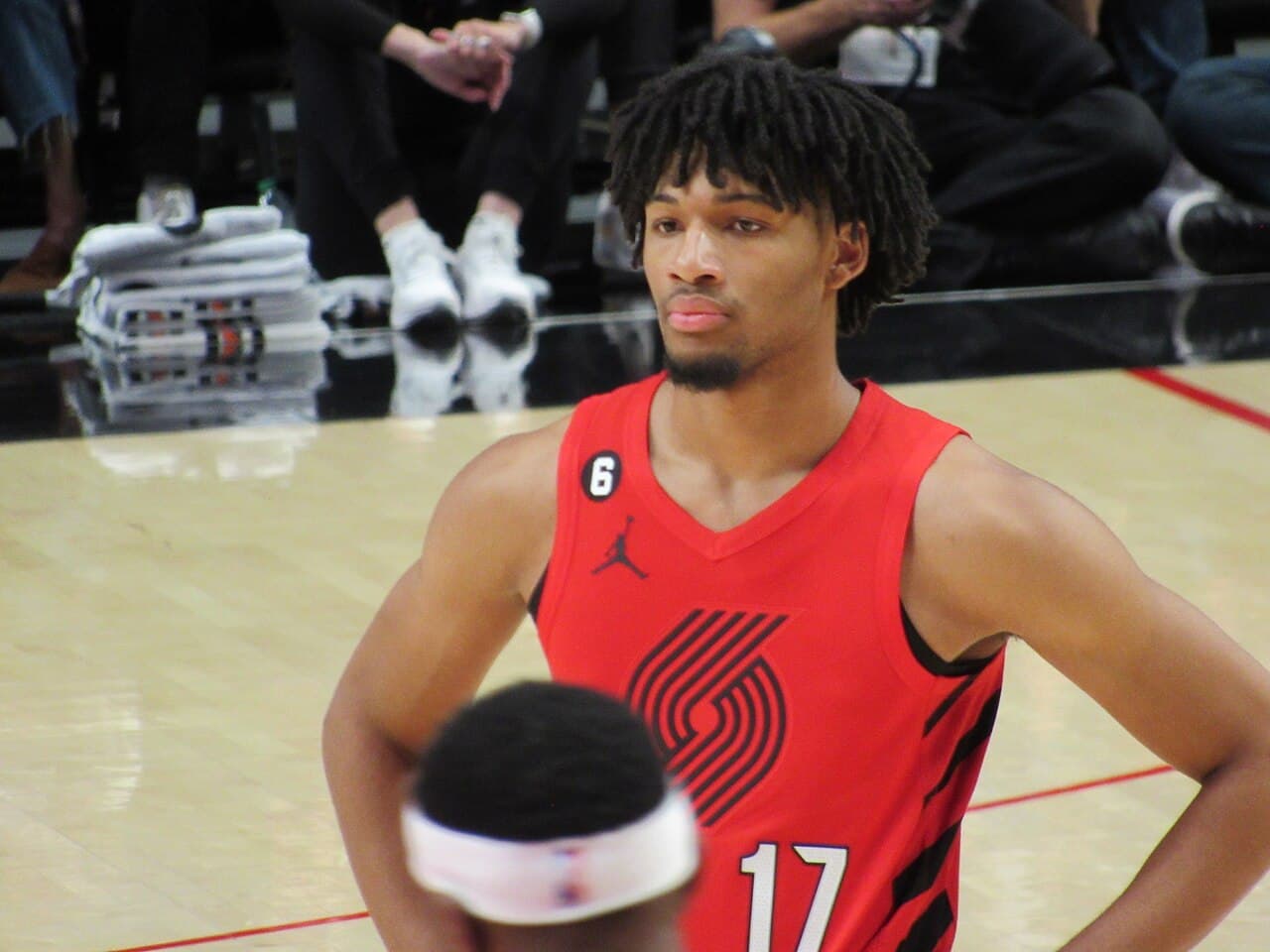
Portland will open training camp without Shaedon Sharpe, who tore the meniscus in his right knee during an offseason workout and underwent surgery performed by Dr. Kristofer Jones at the UCLA Department of Orthopedic Surgery and Sports Medicine. He will be reevaluated in six months, a timeline that points to a return in late February or early March at the earliest.
For a 23-year-old who averaged 20.8 points last season, that is most of a year gone. For fantasy managers entering draft season, it is a name to cross off entirely and a set of minutes to redistribute among a guard rotation that was already too crowded before the injury.
The injury and the timeline
A meniscus tear requiring a six-month reevaluation window is the repair version of the procedure rather than the trim, and the distinction matters. A trim gets an athlete back in weeks. A repair preserves the meniscus at the cost of a dramatically longer recovery, and six months is consistent with a repair.
The practical read for the 2026-27 season: Sharpe is unlikely to play meaningful basketball before March, and a player returning in March from a six-month knee recovery is not a player who plays 34 minutes a night for a team managing his workload. Treat him as unavailable for the season in redraft formats.
This is also the second consecutive season interrupted by a lower-body injury. Sharpe missed a large portion of last season with a stress fracture in his left fibula. Two significant leg injuries in two years is the kind of pattern that changes how projection systems and front offices weight a player's availability going forward.
The minutes have to go somewhere
Portland's backcourt is the most crowded room in the league, which is why the injury creates less opportunity than a 20-point-per-game absence normally would.
The Blazers traded for Ja Morant, and Damian Lillard is expected back in Portland's lineup this fall following an extended rehab. Jrue Holiday was among the team's best players last season. Scoot Henderson enters his fourth NBA season and is the name most frequently identified as the direct beneficiary of Sharpe's minutes.
That is four guards who can all play starter-level minutes, competing for what is functionally 96 minutes a night across two positions, before accounting for wings. Sharpe's absence turns an impossible allocation problem into a merely difficult one.
Fantasy fallout
Scoot Henderson is the player whose draft-day price moves most. He enters a contract-relevant season with a clearer path to minutes than he has had at any point in his career, and a fourth-year guard with that combination of opportunity and motivation is exactly the profile that outperforms an average draft position built on three underwhelming seasons.
The caution is that Henderson's path runs through Morant and Lillard, both of whom are better players when healthy. Henderson's value is therefore conditional rather than structural: he is a strong late-round pick whose ceiling depends on one of the veterans ahead of him missing time, which in a room with this injury history is more likely than not.
Ja Morant is the player to evaluate most carefully. A high-usage guard arriving in a new situation with a thinner perimeter rotation than expected should see his usage rate rise, and usage rate is the single best predictor of fantasy production at the guard position. The risk is games played, which has been the persistent issue with his profile.
Jrue Holiday is the steady one and the least likely to be affected. His fantasy value has always been built on defensive counting stats and efficiency rather than volume, and neither of those changes because a teammate is hurt.
The Verdexed model take
The model's read is that Portland's team-level projection barely moves on this news, while the individual projections move significantly. That is the signature of a deep positional group losing a member.
The reason is replacement level. When a team loses its only option at a position, the team's efficiency at that position collapses. When a team loses one of five viable options, the minutes shift to players who are nearly as productive per minute, and the team-level output holds. Portland is firmly in the second category.
Where the model does see a meaningful team effect is in variance. A rotation with four capable guards and one of them removed is a rotation with less insurance against the next injury, and this is a group whose members have missed substantial time in recent seasons. Portland's win total should be treated as having a wider distribution than most, with the downside tail driven by the possibility of another backcourt absence rather than by this one.
For season-long win total bettors, that wider distribution argues against taking a strong position in either direction until the rotation establishes itself in the first few weeks.
What to do in your draft
Do not draft Sharpe in redraft leagues. There is no version of a March return that produces enough games to justify a roster spot through five months of waiting.
In dynasty formats, this is a buy-low window, but a cautious one. A 23-year-old scorer with Sharpe's athletic profile retains substantial long-term value, and the acquisition cost from a frustrated manager will be lower this fall than at any point since he entered the league. The offsetting concern is the injury pattern. Two lower-body injuries in two seasons for a player whose game depends on explosiveness is a genuine risk factor, not just bad luck.
Move Henderson up your board by a round or two depending on format, and treat Morant's usage projection as the most likely place where Portland's redistributed possessions actually land.
What is next
Portland opens training camp in the coming days, and the first real information will come from how the coaching staff talks about the starting lineup. A team that names Henderson a starter is signaling a much larger role than one that describes an open competition.
Sharpe's reevaluation is roughly six months out, which puts the first meaningful medical update in late February. Everything before then is rehab progress reporting, which historically has almost no predictive value for return dates.