 NFL2026-07-21
Micah Parsons' ACL Recovery Could Sideline Green Bay Into October: The Betting and IDP Fallout
By Verdexed NFL Desk
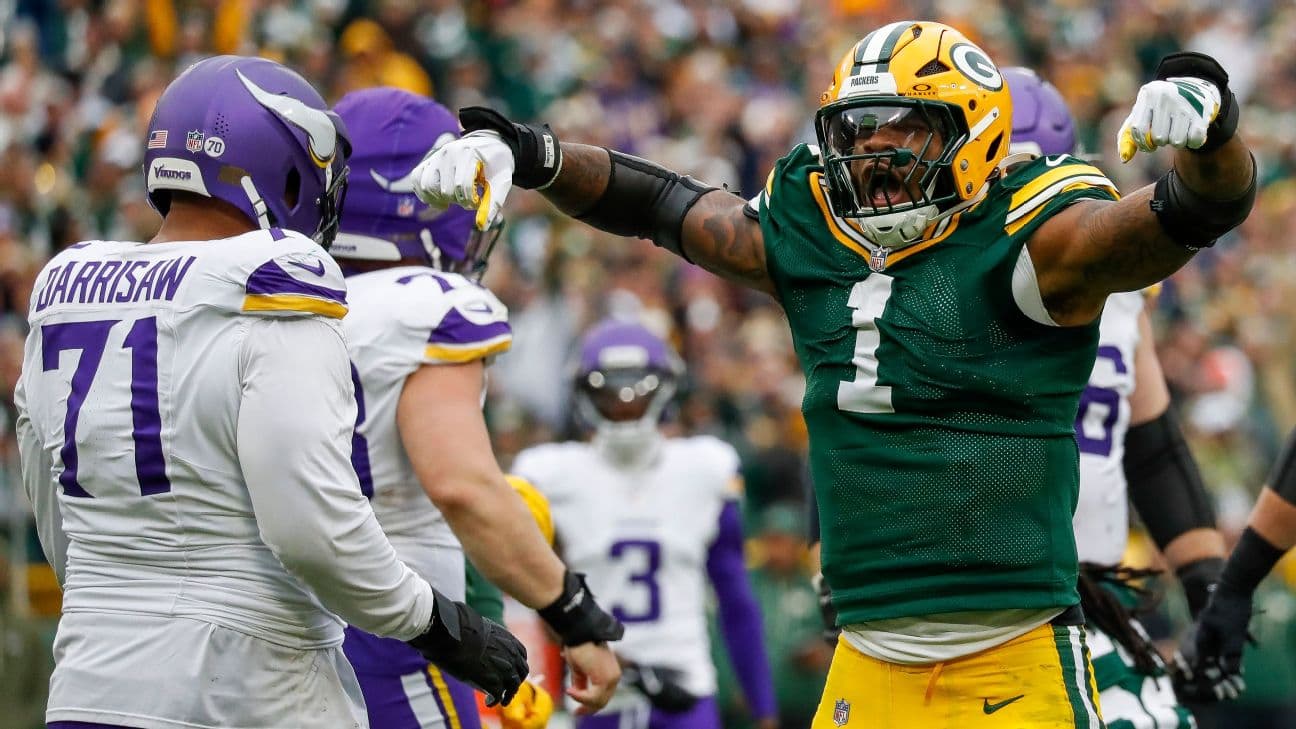
Green Bay Packers pass rusher Micah Parsons said he does not expect to make his 2026 debut until at least mid-October as he recovers from a torn ACL, a timeline that would keep the highest-paid non-quarterback in league history out for the opening stretch of the season. Parsons injured his left knee on December 14 against the Denver Broncos and underwent surgery on December 29, a procedure that also addressed a torn meniscus. The result is a recovery window that stretches deep into the fall and forces a rethink of Green Bay's defense, its season odds and the fantasy value tied to its front seven.
The injury and the timeline
Parsons tore his ACL late in the 2025 season and had surgery in late December, meaning the clock on his rehab started at the turn of the calendar. Green Bay is reported to follow a strict nine-month standard for ACL recovery, which pushes the earliest realistic return toward late September. Parsons himself has been more conservative in public, framing mid-October as the floor rather than the ceiling.
Because Parsons is expected to open the year on the physically unable to perform list, he would automatically miss at least the first four games. If the Packers use the full activation window, his first game back could land as late as Week 7. That is a meaningful chunk of the schedule without the player Green Bay traded two first-round picks and Kenny Clark to acquire, then signed to a four-year deal worth a reported 188 million dollars. Parsons has also been measured about rushing back, noting that returning early from an ACL, especially with additional cleanup work involved, rarely produces good outcomes. For planning purposes, treat any date before mid-October as optimistic and any Week 1 or Week 2 return as unlikely.
The IDP fantasy fallout
For IDP managers, this is a straightforward but painful adjustment. Parsons is a top-tier defensive lineman asset in leagues that reward sacks, tackles for loss, quarterback hits and pressures. Even in a 2025 season shortened by injury, he was among the most productive edge rushers in football before the knee gave out. Missing the first four to six weeks removes his highest-leverage early production and caps his ceiling for full-season formats. In redraft leagues, that turns him from a set-and-forget DL1 into a discounted, stash-and-wait target whose value is concentrated in the back half of the schedule.
The more interesting question for fantasy is who absorbs the snaps and the pass-rush opportunity while he recovers. Rashan Gary is the obvious beneficiary. With Parsons drawing the bulk of protection attention in 2025, Gary and the rest of the front ate cleaner looks. Without Parsons on the field, Gary sees more double teams and more offensive line focus, which can cut both ways: fewer free runs, but a larger share of the defense's total pass-rush snaps. Lukas Van Ness is the other name to watch, as a younger edge who could see expanded run in three- and four-man fronts. The Verdexed model treats Gary as the primary early-season IDP value in this room, with the caveat that his efficiency may dip even as his volume rises. Interior and off-ball contributors who benefit from Parsons' gravity are the group most likely to regress while he sits.
The pass rush and team defense without him
Parsons is not a rotational piece. He is the engine of Green Bay's pass rush and the reason the unit projected as one of the league's most disruptive fronts entering 2026. Removing him for a quarter to a third of the season changes the math on how the Packers generate pressure. Green Bay can lean harder on scheme, sending extra rushers and disguising pressure to manufacture what Parsons provides on his own, but blitz-heavy approaches expose the secondary and raise the variance of the defense week to week.
The practical read is that Green Bay's defense drops from elite to merely good during the recovery window. Sack production likely comes in more evenly distributed and lower at the top end, tackle opportunities shift, and opposing offenses face fewer true one-on-one pass-rush threats. That matters most against play-action and quick-game offenses that can neutralize a depleted front by getting the ball out fast. Expect opponents to attack the Packers through the air early in the season, particularly in matchups where Green Bay cannot win with four.
The Verdexed betting angle
The betting fallout runs through several markets. Start with the Packers' win total. If the number was set with an expectation that Parsons anchors the defense for a full season, a return no earlier than mid-October argues for shading toward the under until the market fully prices the absence. The first four to six weeks are the exposure, and Green Bay's early schedule strength should dictate how aggressively to lean.
Team and player prop markets are where the recovery creates the cleanest edges. Green Bay's team sack totals in individual games project lower without Parsons, making unders on team defensive sack props worth a look in tough matchups. On the flip side, opposing passing props, completion percentage and time-to-throw markets tilt friendlier to the offense against a Parsons-less front. For player props, Gary's season-long sack total gains appeal as snaps and pressure opportunity concentrate on him, though game-level pricing should account for the extra attention he draws.
The division race is the broader stake. The NFC North is not a place to spot points, and every game Parsons misses is a game Green Bay's ceiling is capped. His return date is effectively a live variable in the division market. If the Packers stay in contention through the first six weeks, the value flips: a healthy Parsons rejoining a team still in the hunt is a strong second-half and playoff-odds buy.
The Verdexed model take
The Verdexed model views Green Bay's defense as a two-phase season. Through roughly Week 6, it grades the unit as good but not dominant, with elevated week-to-week variance driven by blitz reliance and the loss of Parsons' individual disruption. From his return onward, it projects the defense back toward its ceiling, assuming a clean rehab and normal ramp-up.
That split shapes the season-odds read. The model is cautious on Green Bay's win total and division price at current levels while Parsons recovers, and it flags the Packers as a candidate to buy back into once the market overreacts to a slow start the roster was always likely to survive. The core thesis: the early-season discount is real, but it is temporary, and the recovery timeline is the single most important input to how Green Bay's number should move over the next three months.
What's next
The dates to watch are the start of training camp and the initial PUP designation, followed by any midseason activation window updates. Each step will sharpen the return estimate and move the associated markets. Until Parsons is practicing and a firmer timeline emerges, treat mid-October as the working assumption, fade Green Bay's early-season defensive ceiling in props and win total, and keep Parsons as a back-half IDP stash rather than an early-round anchor. The Verdexed model will update its Packers projections as camp reporting and the PUP timeline come into focus.