 NBA2026-07-21
LaMelo Ball Traded to the Timberwolves: The Fantasy Fallout for Minnesota's Backcourt
By Verdexed NBA Desk
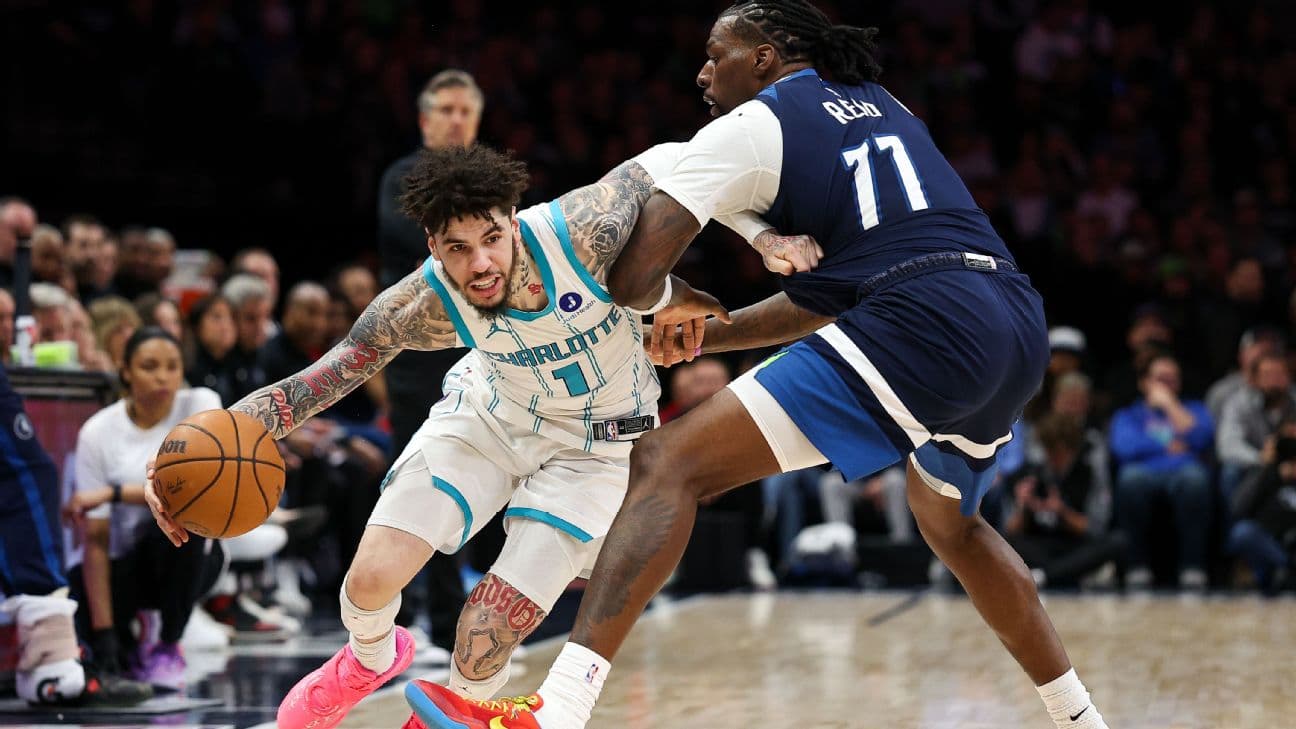
The Minnesota Timberwolves have officially landed LaMelo Ball, pairing the star guard with Anthony Edwards in a move that instantly reshapes the Western Conference and rewrites the fantasy value of nearly every player involved. The four-team deal, which also included the Charlotte Hornets, Chicago Bulls, and Brooklyn Nets, cleared NBA approval and is now final rather than merely agreed to. Charlotte sent Ball and wing Josh Green to Minnesota in exchange for center Naz Reid and a substantial package of draft capital.
For the first time in his career, Edwards has a genuine co-star and a lead playmaker beside him. For fantasy managers, that changes the math on both rosters, and the Verdexed model has already adjusted its win-total and player-ranking outputs to reflect it.
Inside the deal
The headline swap is straightforward: Ball to Minnesota, Reid to Charlotte. The Hornets, according to reporting from ESPN and NBA.com, received an unprotected 2033 first-round pick, first-round pick swaps in 2028, 2029, and 2030, and three second-round picks (2029, 2032, and 2033), along with additional pieces including the draft rights to Matteo Spagnolo and Mouhamadou Gueye. Minnesota also absorbed Josh Green, adding another rotation wing to the mix.
Ball was healthy and productive last season, posting 20.1 points, 4.8 rebounds, and 7.1 assists across 72 games for Charlotte. Availability had been the knock on him in prior years, so a full campaign at that level is exactly the profile Minnesota president of basketball operations Tim Connelly was chasing. The Timberwolves entered the offseason with a glaring hole at point guard, a need that grew more urgent after Donte DiVincenzo ruptured his Achilles in the playoffs.
One important piece of context: Julius Randle is no longer part of this picture. Minnesota had already traded Randle to Brooklyn earlier in the offseason ahead of the draft, a cap-driven move that cleared money and frontcourt minutes. Any analysis framing Randle as a returning Timberwolf is out of date. The Ball trade then shipped out Reid, leaving Minnesota's frontcourt anchored by Rudy Gobert and Jaden McDaniels.
LaMelo and Edwards: can two ball-dominant guards coexist?
The central fantasy question is whether a backcourt built around two high-usage creators produces two elite fantasy lines or two slightly diminished ones. Both Ball and Edwards are accustomed to carrying heavy offensive loads, and there is only one ball.
The optimistic read is that Ball's playmaking actually raises the floor for both. His assist rate is among the best at the position, and slotting him as the primary initiator should generate cleaner, higher-value looks. Ball's three-point volume is a real fantasy asset, and pairing him with a gravity-bending scorer like Edwards could keep his long-range attempts high while improving his efficiency.
The cautious read is the one fantasy managers should price in. Edwards has spent seasons as the offense's engine, and sharing initiation duties with Ball may trim his assist totals and shave a few field-goal attempts. His scoring should remain strong given his shot-making, but the gaudy all-around counting lines that made him a first-round fantasy fixture could compress slightly. Ball, meanwhile, may cede some of his own assist volume now that he is not the only creator on the floor. The Verdexed model treats both as clear top-tier fantasy assets, but flags modest usage overlap as the key variable to monitor through the first month of the season.
The ripple: Dosunmu, Gobert, and the supporting cast
The secondary effects matter just as much for deeper leagues. Ayo Dosunmu re-signed with Minnesota this offseason on a reported multi-year deal averaging roughly $22.4 million per season, and his role now shifts. With Ball handling primary ball duties, Dosunmu profiles more as an off-ball combo guard and defensive stopper than as a lead initiator. That likely caps his assist upside and makes him a streaming-tier fantasy option rather than a standalone starter, though his steals and efficiency keep him relevant in category leagues.
Rudy Gobert may quietly be one of the biggest beneficiaries. Ball is an elite lob and pick-and-roll passer, and Gobert's fantasy value has always leaned on rebounds, blocks, and high-percentage finishes. A creative table-setter should improve the quality of Gobert's looks and keep his field-goal percentage elite. His fantasy floor looks stable to slightly improved.
Josh Green adds wing depth and three-point shooting but arrives in a crowded rotation behind Edwards and McDaniels, limiting his standalone fantasy appeal outside of deep formats. The loss of Reid removes a valuable frontcourt scorer and floor-spacer from Minnesota's rotation, concentrating frontcourt minutes and touches around Gobert and McDaniels.
Charlotte's return and the rebuild fantasy angle
For the Hornets, this is a clear pivot toward the future, and that creates fantasy opportunity in the near term. Naz Reid is the most immediately relevant piece. Freed from the frontcourt logjam he faced in Minnesota, Reid should step into a larger role in Charlotte, with more minutes, more usage, and more shot attempts. His combination of interior scoring and three-point shooting makes him a strong bounce-back and buy-low target in fantasy drafts, and the Verdexed model nudges his projected usage upward accordingly.
Beyond Reid, a rebuild built around draft capital tends to funnel opportunity to younger returning players. With Ball's shot attempts and playmaking now gone, Charlotte's remaining guards and wings inherit a large share of vacated usage. That makes several of the Hornets' developmental pieces sleeper candidates in dynasty and deeper redraft formats, where volume often matters more than team wins. Fantasy managers hunting late-round upside should watch which Charlotte players absorb the on-ball reps in preseason.
The Verdexed model take
The Verdexed model reads this as a meaningful short-term upgrade for Minnesota and a long-term bet for Charlotte. On the Timberwolves' side, adding a healthy 20-and-7 lead guard to a roster that already features Edwards, Gobert, and McDaniels pushes the projected win total higher and shortens the team's Western Conference odds. The model does temper that optimism with fit risk: two ball-dominant guards and the defensive questions Ball brings mean the ceiling is high but the variance is real. That is why several outlets landed on a high-risk, high-reward grade, and the model's projection carries a wider confidence band than a typical star acquisition.
On the fantasy side, the model's rankings movement is concrete. Ball holds firm as a top-tier guard with a slight assist adjustment. Edwards stays elite but sees his projected assists and usage trimmed at the margins. Gobert ticks up on improved shot quality. Reid is the biggest riser on a rate basis, gaining projected usage in Charlotte, while Dosunmu slides toward streaming tiers. Charlotte's move drops its win total but raises the fantasy relevance of its returning core.
What's next
The questions now shift from whether the deal happens to how it functions on the floor. Training camp and preseason will offer the first real signal on the Edwards-Ball usage split, on how head coach Chris Finch structures the rotation around Gobert without Reid, and on whether Dosunmu settles into an off-ball role. In Charlotte, the watch is on how quickly Reid's usage climbs and which young pieces claim the on-ball reps a rebuild opens up.
The Verdexed model will refresh its win-total, conference, and fantasy projections as preseason usage data arrives. For now, the actionable takeaway is clear: treat Ball and Edwards as elite but slightly recalibrated, buy Gobert and Reid at a modest discount, and monitor the backcourt fit before betting the Timberwolves' ceiling.