 NBA2026-09-05
The Kawhi Leonard Trade Is Unfrozen and the Fantasy Fallout Runs Through Scottie Barnes
By Verdexed NBA Desk
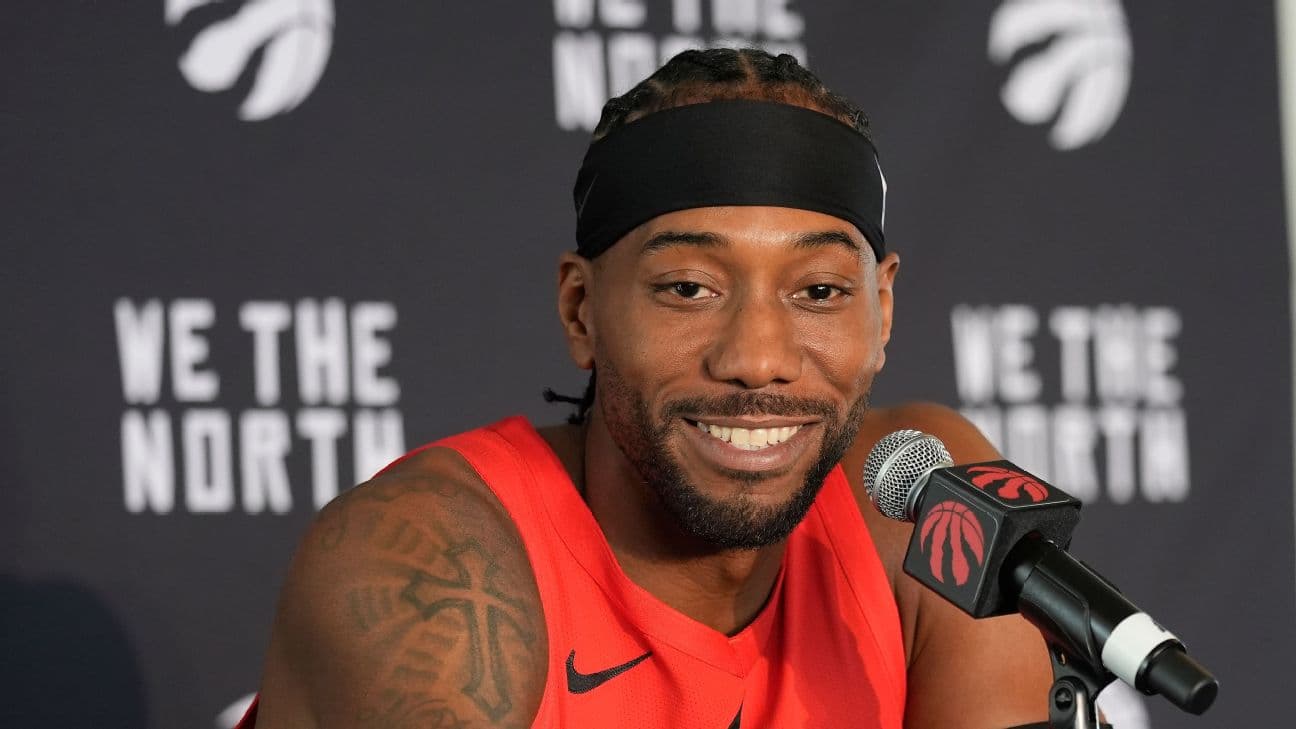
The NBA closed its salary-cap circumvention investigation of the Los Angeles Clippers and Kawhi Leonard, and the outcome cleared the path for a trade that had been on hold since July. Leonard will not be suspended and his contract will not be voided. He was assessed a $700,000 penalty for failing to reimburse the Clippers for personal expenses, and that is the extent of his discipline.
The organizational penalties were considerably heavier. The Clippers were fined $30 million and ordered to forfeit five first-round picks. Owner Steve Ballmer was suspended for one year, president of business operations Gillian Zucker was suspended for one year, and president of basketball operations Lawrence Frank was banned for six months. The league's independent investigation, conducted by an outside law firm, described a pattern of misconduct and multiple significant rules violations by a franchise that had previously been penalized for cap circumvention.
With that resolved, the Leonard trade to Toronto is expected to be finalized within days. Reporting has the Raptors sending Brandon Ingram, Gradey Dick, and a substantial package of draft capital, including unprotected first-round picks in 2031 and 2033, a 2027 first-round swap, and second-round picks, to Los Angeles.
Why this matters for fantasy now
Training camps open at the end of September and the season begins October 20. A trade of this size finalizing in the first week of September means fantasy drafters get to plan around it rather than react to it, which is the difference between a normal draft season and a chaotic one.
It also means the two rosters most affected have roughly six weeks to sort out roles before opening night, and both have significant sorting to do.
Kawhi Leonard in Toronto
Leonard was mostly healthy last season and finished as one of the more valuable players in fantasy basketball when he played. His production has rarely been the question. Availability has, and it remains the entire investment thesis.
The Toronto situation cuts both ways on that. On one hand, the Raptors have enough offensive talent that Leonard does not need to carry the possession load he carried in Los Angeles, which should reduce his minutes and usage burden and, in theory, help him stay on the floor. On the other hand, that same depth means a Leonard who plays 65 games produces a lower per-game line than a Leonard who plays 65 games as his team's only reliable creator.
The practical fantasy read: Leonard's ceiling drops slightly and his projected games played rises. For most formats, that is a net positive, because games played is the variable that has destroyed his fantasy value in past seasons. Draft him as a high-upside pick with real risk, priced below where his per-game production alone would put him.
The Toronto players who gain
Scottie Barnes, RJ Barrett, and Immanuel Quickley all project to benefit from this deal, which is a slightly counterintuitive conclusion when a team adds a former Finals MVP.
The logic is about who left rather than who arrived. Ingram is a high-usage on-ball creator, and Dick is a rotation wing who took possessions. Leonard replaces the creation, but he does so while playing fewer games than either departing player would, and Leonard's off-ball scoring profile is less possession-hungry than Ingram's.
The result is that in the games Leonard misses, and there will be some, Barnes inherits a much larger role than he would have with Ingram on the roster. Barnes is the specific name to target: a player whose baseline is already a strong fantasy contributor and whose contingent upside just increased substantially.
Quickley's gain is more about shot creation than usage. Playing next to a scorer who commands defensive attention without needing the ball creates open looks, which is the environment in which his efficiency holds up best.
Brandon Ingram in Los Angeles
Ingram is the player facing the most uncertainty. He moves from a defined role in Toronto to a Clippers roster that has lost its best player and is operating under organizational penalties that limit its flexibility.
The optimistic read is that Ingram becomes the clear first option in an offense with no one to compete with for possessions, which is the best usage environment of his career. The pessimistic read is that his efficiency has historically depended on the quality of the offense around him, and a Clippers team stripped of Leonard and five first-round picks is not going to be that offense.
Draft him as a volume play with efficiency risk. In points leagues, that is fine. In category formats where field goal percentage matters, be careful.
The Verdexed model take
Verdexed's projection system responds to this trade primarily through minutes and usage redistribution rather than through team-quality adjustments, and the largest single move in the model's output is Barnes.
The model's reasoning is about the shape of the distribution rather than the median. Leonard's projected games played carries the widest range of any high-usage player in the league, which means Barnes's projection is effectively a weighted blend of two very different roles. When the model runs that blend, Barnes's expected fantasy production lands above his consensus draft position, and his upside case, the one where Leonard misses 25 games, is a genuine first-round outcome.
On team quality, the model does not treat this as a large win for Toronto in the standings. Leonard is better than Ingram when available, but the availability gap and the pick capital sent out mean the model grades the trade as a modest short-term upgrade at a heavy long-term cost.
What to do in your draft
Target Barnes above his average draft position. Take Leonard only at a price that already discounts his availability, and never as a foundational pick. Approach Ingram as a mid-round volume bet in points formats and downgrade him in categories.
And watch the Clippers' front office situation, because a team operating with a suspended owner, a suspended business president, and a basketball president serving a six-month ban is not a stable organization for player roles. That instability is a fantasy risk that does not show up in any projection.