 NBA2026-09-02
The Kawhi Leonard Trade Is Still Frozen and Toronto's Season Is in Limbo
By Verdexed NBA Desk
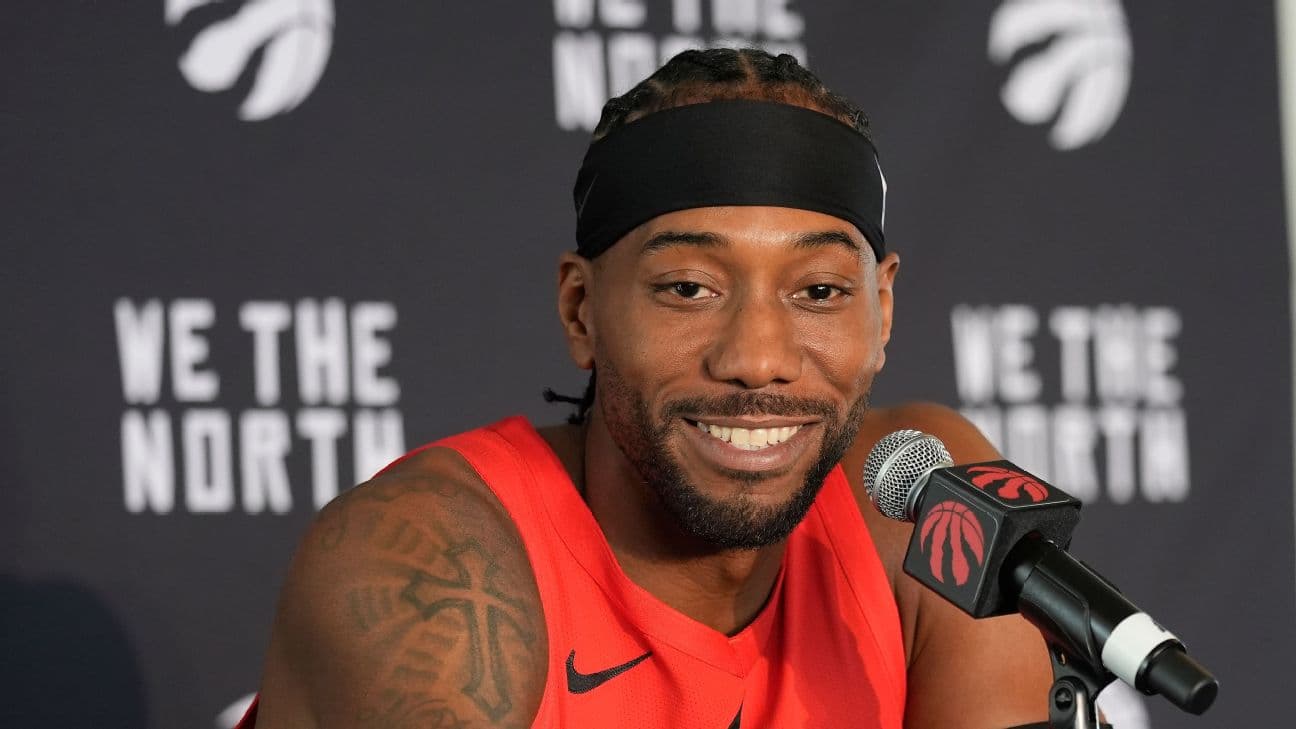
The trade that would send Kawhi Leonard back to the Toronto Raptors was agreed to on June 30. It is September 2, training camp opens in less than a month, and the deal is still not official, held up by the NBA's investigation into whether the Los Angeles Clippers circumvented the salary cap in their dealings with Leonard.
The framework has been reported consistently since the summer: the Clippers send Leonard to Toronto for Brandon Ingram, Gradey Dick, unprotected first-round picks in 2031 and 2033, a 2027 first-round pick swap and two second-round selections. Toronto has been working toward completing the transaction before the season begins. The league office controls the timeline.
What the investigation is actually about
The NBA has spent close to a year examining allegations that the Clippers routed additional compensation to Leonard through a sponsorship arrangement outside his player contract. That is a cap-circumvention question, and it is the category of infraction the league treats most seriously, because the salary cap is the mechanism the entire competitive structure rests on.
The practical consequence for the trade is straightforward. The league is not going to approve a transaction involving a player whose existing contract is the subject of an open investigation, because doing so would complicate any remedy the investigation might produce. Toronto and Los Angeles agreed on terms. The commissioner's office has to sign off, and it has not.
What it means for both rosters
Toronto has been building a roster around a player it does not yet have. That is an uncomfortable position for a front office at the beginning of September, when the veteran minimum market has thinned out and the remaining free-agent pool is what it is. Ingram and Dick are on the Raptors roster today and are being coached as though they will be there in October.
The Clippers are in the more precarious spot. Los Angeles has to plan for two entirely different seasons: one in which Leonard is the centerpiece of a veteran roster, and one in which he is gone and the team pivots. Those are not adjacent scenarios. They imply different rotations, different minute distributions, and different win totals.
Fantasy fallout
This is the single largest source of uncertainty on any fantasy basketball draft board right now, and it affects far more players than the two named in the trade.
For Toronto, the arrival of Leonard compresses usage across the entire wing rotation. Every Raptor whose fantasy value depends on shot volume takes a haircut in the version of the season where the trade closes, and gains meaningfully in the version where it does not. Drafting a Raptors wing in September means accepting a binary outcome you cannot handicap.
For the Clippers, the calculation runs the other direction. A Los Angeles roster that keeps Leonard is one where the remaining rotation players are complementary pieces. A roster that trades him and takes back Ingram and Dick is one where several players see a substantial usage bump.
The practical advice is the same one that applies to every unresolved situation this time of year: draft as late as your league will allow. Rosters are not final until opening night, and the players whose value swings hardest on this news are exactly the ones a manager should not be reaching for in an early September draft.
The betting angle
Win-total markets for both franchises have been sitting with wider-than-normal limits and softer-than-normal pricing all summer, which is what happens when books cannot confidently model a roster.
That is an opportunity for anyone willing to take a position on the resolution rather than on the basketball. If the trade closes, Toronto's win total is too low and Los Angeles's is too high. If it does not, the reverse. Books have been splitting the difference, which means both numbers are wrong in one of the two worlds and there is no number that is right in both.
Our model runs both scenarios separately and weights them by an estimated probability of completion. The blended output currently sits above the market on Toronto and below it on the Clippers, which is a function of how much value the model assigns to Leonard relative to the package going back.
The Verdexed model take
The larger point our simulations keep surfacing is that Leonard's projected availability, not his talent, is the variable that decides both teams' seasons. A version of this trade where Toronto acquires a healthy Leonard for 65 games is a substantial upgrade to the Raptors' playoff probability. A version where he plays 45 is roughly neutral against the assets surrendered.
That is a genuinely difficult forecast, and it is why the market has been slow to move even as the reporting has firmed up. Two unprotected first-round picks seven and nine years out is an enormous price for a player whose games-played projection is the most uncertain input in the entire model.
What's next
The league office sets the pace. Reporting out of Toronto has been cautiously optimistic that the transaction can be completed before the season starts, and the Raptors have publicly proceeded as though it will be.
For fantasy purposes, the date that matters is opening night on October 20, when rosters are locked and the ambiguity resolves one way or the other. For betting purposes, the date that matters is whenever the NBA closes its investigation, because the win totals will move within minutes and the pre-news number will be gone.