 NBA2026-08-27
Paul George Waived His Trade Bonus and Boston's Post-Jaylen Brown Roster Is Set
By Verdexed NBA Desk
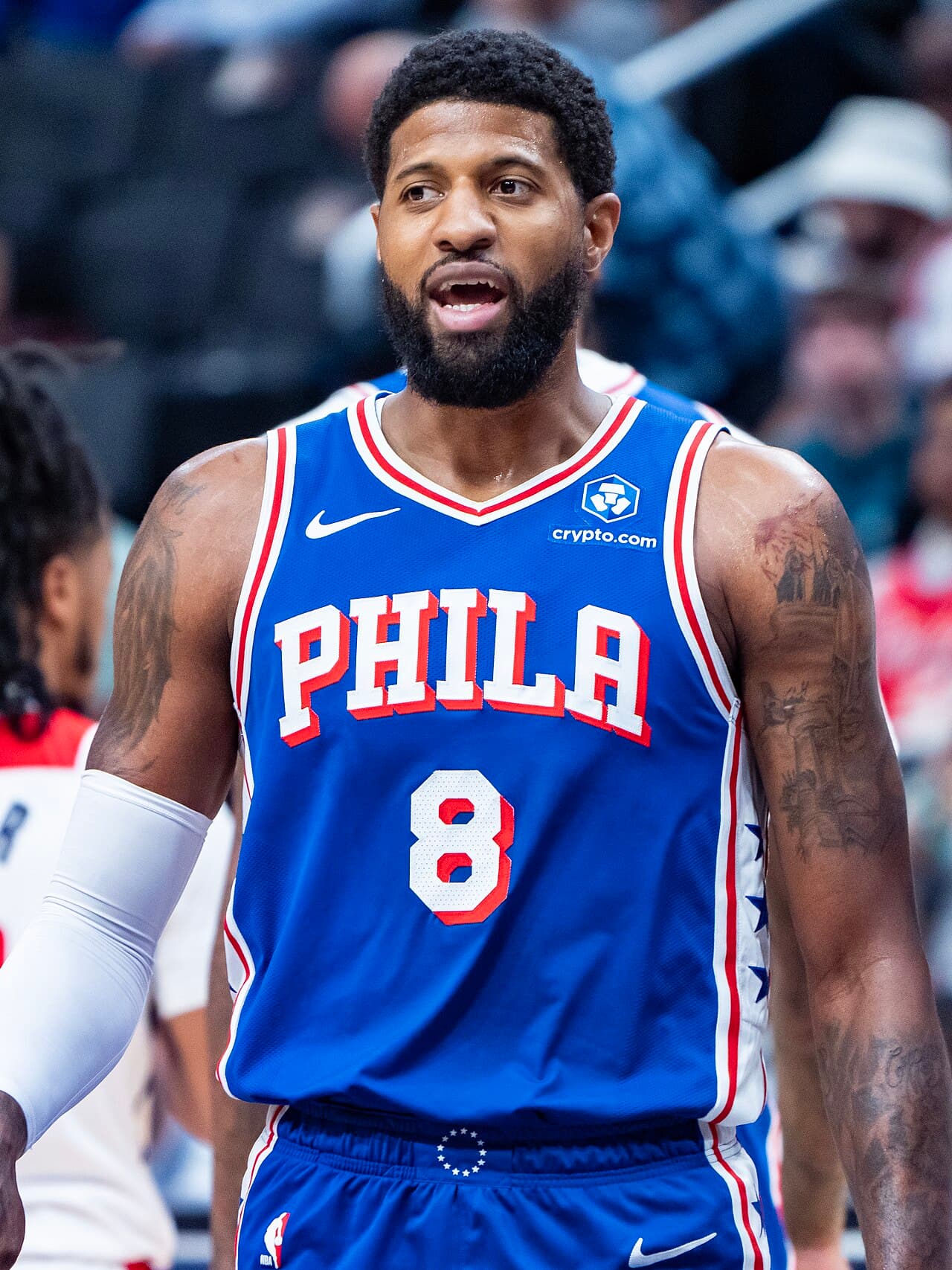
Paul George has waived the $3.9 million trade bonus he was owed after being dealt from Philadelphia to Boston, a piece of housekeeping that finalizes the cap picture on the summer's most consequential Eastern Conference trade. The Celtics sent Jaylen Brown to the 76ers for George, two first-round picks and two second-round picks at the start of July, ending Brown's decade in Boston days after he had been the centerpiece of a package for Giannis Antetokounmpo that never happened. Milwaukee sent Antetokounmpo to Miami instead.
George's cap hit remains in the mid-50-million range for 2026-27 and he holds a player option for the following season. He is 36 and coming off two disappointing seasons in Philadelphia, having played a combined 78 games there after signing a four-year, $212 million contract in free agency.
What Boston actually did
The Celtics traded a 30-year-old former Finals MVP and five-time All-Star, who was among the league's leading scorers last season, for a 36-year-old on a larger contract plus four picks. Framed that way it reads as a salary and asset play rather than a basketball one, and that is broadly the correct read. Boston is managing a cap sheet under the second apron, and the picks are the point.
That does not mean George is finished. He averaged roughly 17 points, five rebounds and three and a half assists last season, which is a useful starter's line even at the low end of his career range. What it means is that Boston's ceiling for this season is lower and its flexibility is higher, and fantasy managers should project the roster accordingly.
Philadelphia is now the story
The 76ers have assembled one of the most crowded usage situations in the league. LeBron James signed a two-year deal with Philadelphia in free agency, choosing the Sixers over Cleveland, Miami and a long list of other suitors and taking a substantial pay cut to do it. He joins Joel Embiid, Tyrese Maxey, Jaylen Brown and second-year wing VJ Edgecombe.
That is four players who have all been the primary offensive option on a playoff team, sharing one basketball. For fantasy purposes it is the single most important situation to get right in October drafts, because the usage distribution will determine whether Philadelphia produces four top-40 players or two.
The historical pattern with rosters like this is unambiguous: everyone's counting statistics come down, and the players who hold their value are the ones whose production does not require the ball. Embiid's rebounding and blocks are insulated. Maxey's assists may actually rise if he becomes the primary initiator with James off the ball. Brown, whose value has always been tied to shot volume, is the most exposed.
Fantasy fallout
Jaylen Brown should be drafted a round or more later than his last two seasons would suggest. He goes from being a co-alpha on a team built around him to being the third or fourth option in a room with LeBron James and Joel Embiid. His efficiency may improve. His volume will not.
Paul George is a bounce-back candidate on volume rather than on talent. In Boston he is likely to be the second or third option rather than the fourth, and a player with his career shooting profile getting more shots is a straightforward path to fantasy relevance. He is worth a middle-round pick and carries real games-played risk at 36.
Jayson Tatum is the biggest fantasy winner in the entire trade. With Brown gone, Tatum's usage rate should climb to a career high on a team with no other high-usage creator in his tier. He was already a first-round fantasy pick. He now has a credible case as the highest-usage player in the conference.
Derrick White and the rest of Boston's supporting cast all gain shot volume by simple arithmetic. In deep leagues, Boston's role players are systematically undervalued right now.
The Verdexed model take
Our projections move Tatum up to a top-three overall fantasy ranking on the assumption of a usage increase, and move Jaylen Brown out of the top 25 entirely. That is a larger swing than most published rankings have applied, and it reflects our model's view that usage share is the dominant driver of fantasy value for high-volume wings.
On Philadelphia, our simulation distributes usage more evenly than the market expects and produces no Sixer inside the top 15 in fantasy value. Embiid is the exception if he plays 65 games, which our model treats as roughly a coin flip.
On the betting side, the model has Philadelphia's win total as the most overpriced in the Eastern Conference. Star aggregation of this kind has a poor track record of converting to regular-season wins, particularly with an older roster, and our projection sits several games below the market number. Boston's win total, by contrast, our model has close to fair.
What to do in your league
Draft Tatum with confidence at the top of the first round. The Brown trade is the clearest usage-increase signal in the league.
Fade Jaylen Brown relative to his name value. Third options on star-heavy teams consistently disappoint in fantasy.
Take Paul George in the middle rounds and pair him with an insurance piece. The volume case is real and the availability case is not.
Be extremely careful with Philadelphia. Four players who have all been first options is the classic setup for a room full of fantasy disappointments, and the correct approach is to own at most one of them, at a discount, rather than to guess which one wins the usage battle.