 NFL2026-07-03
Micah Parsons Will Open 2026 on PUP: What the Packers Losing Their Pass Rusher Until Mid-October Means for Fantasy and Betting
By Verdexed NFL Desk
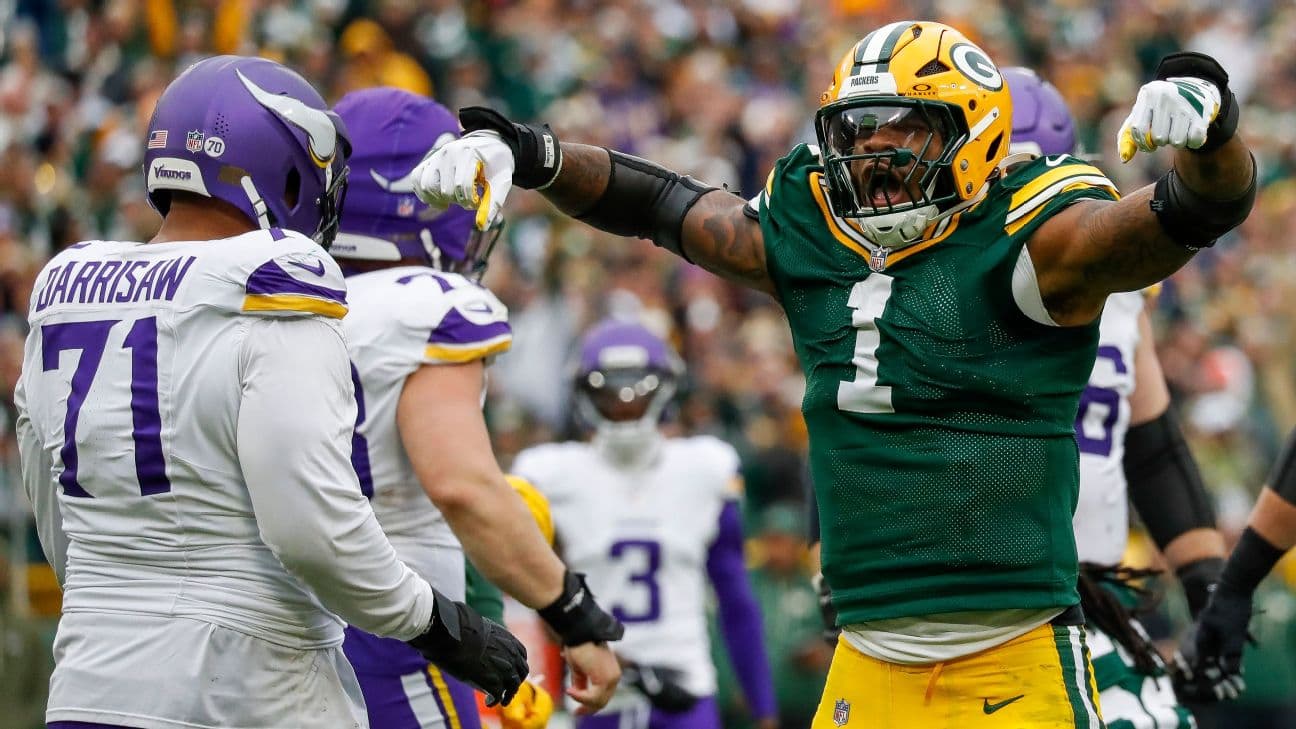
The Packers will start the 2026 season without their best defensive player. Micah Parsons, recovering from a torn ACL and a meniscus procedure, is targeting a return around the nine-month anniversary of his December 29 surgery, which lands at the end of September. He is expected to open the year on the PUP list, meaning he will miss at least the first four games and possibly more as Green Bay manages a star's long-term health over a quick return.
For IDP managers, bettors, and anyone modeling the NFC North, this is a foundational piece of information. A pass rusher of Parsons's caliber missing the opening month reshapes Green Bay's defense and its early-season outlook.
The timeline, precisely
Parsons suffered the knee injury in Week 15 of the 2025 season and underwent surgery on December 29 that included cleaning up his meniscus in addition to the ACL repair. He has said he will not consider returning until at least the nine-month mark on September 29, a date that sits just ahead of marquee October home games. Beginning the season on PUP means a minimum of four missed games before he is even eligible to practice, and he has signaled that he is prioritizing the stretch run and his long-term career over rushing back for a mid-October kickoff.
The language matters here. This is not questionable or day-to-day. PUP is a defined status with a defined minimum, and Parsons's own comments point toward caution rather than aggression. Plan for him to be out through at least the first quarter of the season, with real uncertainty about exactly when he ramps up after that.
Fantasy fallout: IDP and beyond
In IDP leagues, Parsons is an elite asset whose draft cost has to account for a lost month or more. He is not a fade, because his ceiling once healthy is among the highest at the position, but he is a discount-and-stash play rather than a set-and-forget every-week starter early in the year. Draft him as a player you will not use in September, and make sure your bench can absorb the wait.
The more actionable fantasy angle is who eats the snaps in his absence. Green Bay will need to generate a pass rush without its centerpiece, which means expanded roles for the edge rushers and interior linemen behind him. Any Packers defender who steps into a larger pass-rush role for the first month becomes a streaming IDP option, and the player who produces early could hold value even after Parsons returns.
There is a redraft ripple, too. Opposing offenses facing Green Bay in the first month get a slightly easier path, which can nudge up the fantasy outlook for quarterbacks, running backs, and pass catchers on Green Bay's early-season schedule. It is a marginal edge, but in tight start-sit calls it can tip the scale.
Why the cautious approach makes sense
Parsons's own framing is the most telling part of the story. He has emphasized that he is less concerned with being available for a game in mid-October than with being ready for the stretch run late in the season, prioritizing long-term career health over an early return. That is the mindset of a player, and a team, that intends to win in January, not to chase a symbolic Week 6 return.
For fantasy and betting, that philosophy is a gift because it removes guesswork. When a star and his team both signal patience, the smart money plans for the later end of the timeline rather than the earlier one. Managers who draft Parsons expecting an aggressive return are likely to be disappointed; those who build around a late-fall debut and a strong finish are reading the situation correctly. The nine-month benchmark is not a soft target the Packers are eager to beat. It is a floor they appear content to honor.
The Verdexed model take
Verdexed's model treats a premier pass rusher as one of the highest-impact individual pieces on a defense, and losing Parsons for the opening month measurably weakens Green Bay's ability to pressure the quarterback. Pass rush drives everything downstream: coverage, turnovers, and third-down defense all get harder when the front cannot win one-on-one. The model would soften Green Bay's defensive projection for the games Parsons misses and firm it back up once he is on the field.
For bettors, the edge is in the early-season schedule. Green Bay's opponents in the first four games face a diminished pass rush, which supports opposing team totals and passing props in those specific matchups. The market knows Parsons is hurt, but it does not always fully price the difference between his presence and absence in each individual game. Season win totals for the Packers should also be read through the lens of a slow defensive start followed by a stronger finish once their best player returns.
What's next
The key checkpoints are training camp, where the Packers will confirm the PUP designation, and late September, when Parsons's own nine-month timeline comes into view. Watch his public comments closely, because he has been transparent about prioritizing the back half of the season, and any hint of a faster or slower ramp will move the needle.
The playbook: draft Parsons in IDP as a stash, not an early-season starter; target the Packers pass rushers who inherit snaps as streaming options; give a small bump to Green Bay's early-season opponents in fantasy and betting; and expect the Packers' defense, and their spreads, to sharpen once their best player is back on the field in the season's second half.