 NFL2026-10-12
Marvin Harrison Jr. Is a Texan: What the Trade Does for C.J. Stroud, Nico Collins and Arizona's Receivers
By Verdexed NFL Desk
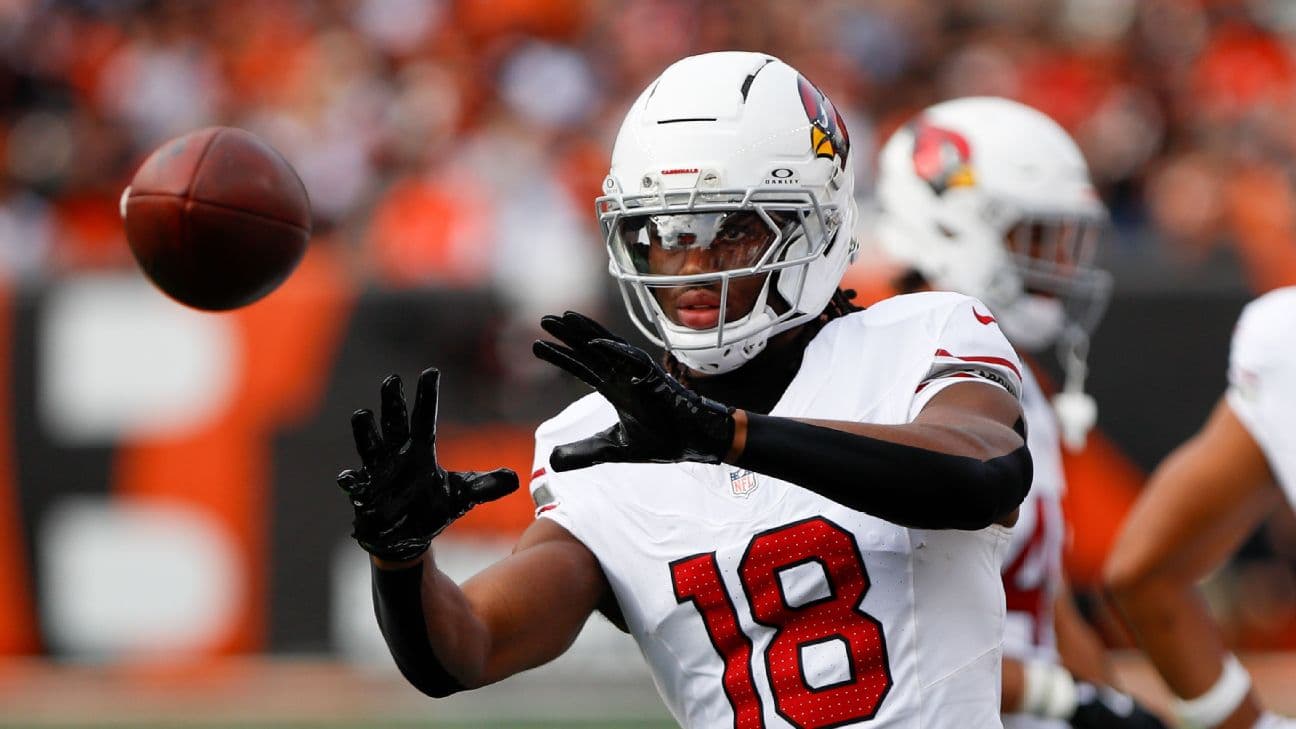
The Houston Texans completed their trade for Marvin Harrison Jr. on Sunday, with head coach DeMeco Ryans announcing the deal after Houston's 26-3 win over the Tennessee Titans. According to ESPN, the Texans sent a 2027 second-round pick and a 2027 sixth-round pick to the Arizona Cardinals for Harrison and a 2027 seventh-rounder. Harrison was inactive for Arizona's loss to Detroit while the deal was finalized.
For fantasy managers, this is the most consequential receiver move of the young season. Harrison goes from a target pecking order where he had fallen behind Michael Wilson to an offense run by his former Ohio State teammate, C.J. Stroud, with a defined role behind Nico Collins. For Arizona, it is an admission that the pairing of a former No. 4 overall pick and this coaching staff was not going to work.
How the deal came together
The trade talk built across the week. Reports earlier in the week had Indianapolis checking in, and by Saturday multiple insiders had the Cardinals finalizing a deal, with Houston as the leader. Arizona reportedly held firm on getting a second-round pick, and Pro Football Talk reported that the Cardinals waited to close in an effort to extract a little more. Cardinals coach Mike LaFleur said the move was made in the best interest of the club.
The terms, as reported by ESPN, break down simply.
| Team | Receives |
|---|---|
| Texans | Marvin Harrison Jr., 2027 seventh-round pick |
| Cardinals | 2027 second-round pick, 2027 sixth-round pick |
Some outlets initially described only the second-round pick, so the sixth-round swap is the one detail that varied in early reporting. The core of the deal, a Day 2 pick for a 2024 top-five selection, is consistent everywhere.
Why Harrison's start was so quiet
Harrison had five catches on 12 targets for 85 yards and a touchdown before the trade. That is a small sample for any receiver, and a startling one for a player drafted to be a franchise WR1. Two weeks ago, Wilson drew 17 targets in a single game while Harrison drew five, and the Cardinals' passing game never tilted back toward him.
Not every slow start is the player's fault. Usage is a coaching decision first. The fantasy question is whether Harrison's struggles were about role and fit or about talent, and the trade is the best natural experiment fantasy managers are going to get. In Houston he walks into a quarterback he already knows and a receiver room where the No. 2 job has been open.
Fantasy fallout in Houston
Marvin Harrison Jr. is the biggest winner. Yahoo Sports called him arguably the trade's top fantasy beneficiary and ESPN's analysts put him back in the WR4 conversation. That is the right floor framing: he should not be treated as a weekly WR2 until he earns it in this offense, but his target ceiling just rose. Fantasy Life noted that he was rostered in only 79 percent of Yahoo leagues before the deal, which means some shallow leagues have him sitting on waivers. If that is your league, he is the first priority this week.
Nico Collins keeps the top job. Collins has been Stroud's primary target and Harrison is more likely to absorb the targets that were going to Houston's secondary options than to cut into Collins' share. Keep starting him as usual.
C.J. Stroud gets a real boost. The Texans were 0-4 before Sunday and the passing game has been searching for a second reliable option. Two legitimate outside receivers make Stroud a stronger streaming option and a better hold in superflex.
Jaylin Noel, Kayshon Boutte and Dalton Schultz are the losers. Several fantasy outlets flagged all three for reduced target share. Schultz in particular slides from a low-end TE2 into a bench stash at best.
The Arizona side
Arizona's passing game now runs through Michael Wilson and Trey McBride. Wilson had already established himself as the primary outside target before the trade, and the departure of Harrison removes any lingering question about who the No. 1 receiver is. McBride's floor, already among the steadiest at tight end, gets a little firmer. The Cardinals visit the Rams in Week 6.
The broader read on Arizona is less friendly. Trading a former top-five pick for a second-rounder in October is a reset move, and a reset team can be a fantasy problem for its quarterback. Wilson and McBride benefit from concentration, but the overall volume ceiling of a struggling offense is the cap on both.
The Verdexed angle
The trade arrives with Houston at 1-4 and a Week 6 trip to London to face a 4-1 Jacksonville team at Wembley Stadium on Sunday morning. That matchup is where the market will first price Harrison's impact, and it is a tough spot for a debut: a short practice week, travel, and a new playbook. Expect Harrison to be eased into a package of routes rather than handed a full complement immediately.
For the model's view of Texans at Jaguars, check the NFL predictions page and the Week 6 picks once they publish. The bigger picture for bettors is Houston's season outlook. A team that started 0-4 needed more than one win to get back into the AFC South conversation, and adding Harrison is a signal that the front office believes it can still play for something this year.
What to do in your league
If Harrison is on waivers, claim him with a meaningful bid; the upside of a former top-five pick paired with a familiar quarterback is worth the cost in a bye-heavy stretch. If you roster him, hold rather than start in Week 6 unless you are thin, then reassess after the London game.
If you have been holding Schultz or Noel as depth, they are now drop candidates. Stroud managers can feel better about starting him in good matchups. On the Arizona side, Wilson moves up in rest-of-season rankings and is a fine sell-high candidate if another manager values him like a locked-in WR2.
The short version: Harrison's fantasy value went up the moment he left Arizona, and Collins' value did not go down. That combination is rare in a trade, and it is why this deal matters more for fantasy than most October moves.