 NFL2026-08-30
New England Traded a 2028 Seventh for Corey Kiner on the Weekend Backs Come Free
By Verdexed NFL Desk
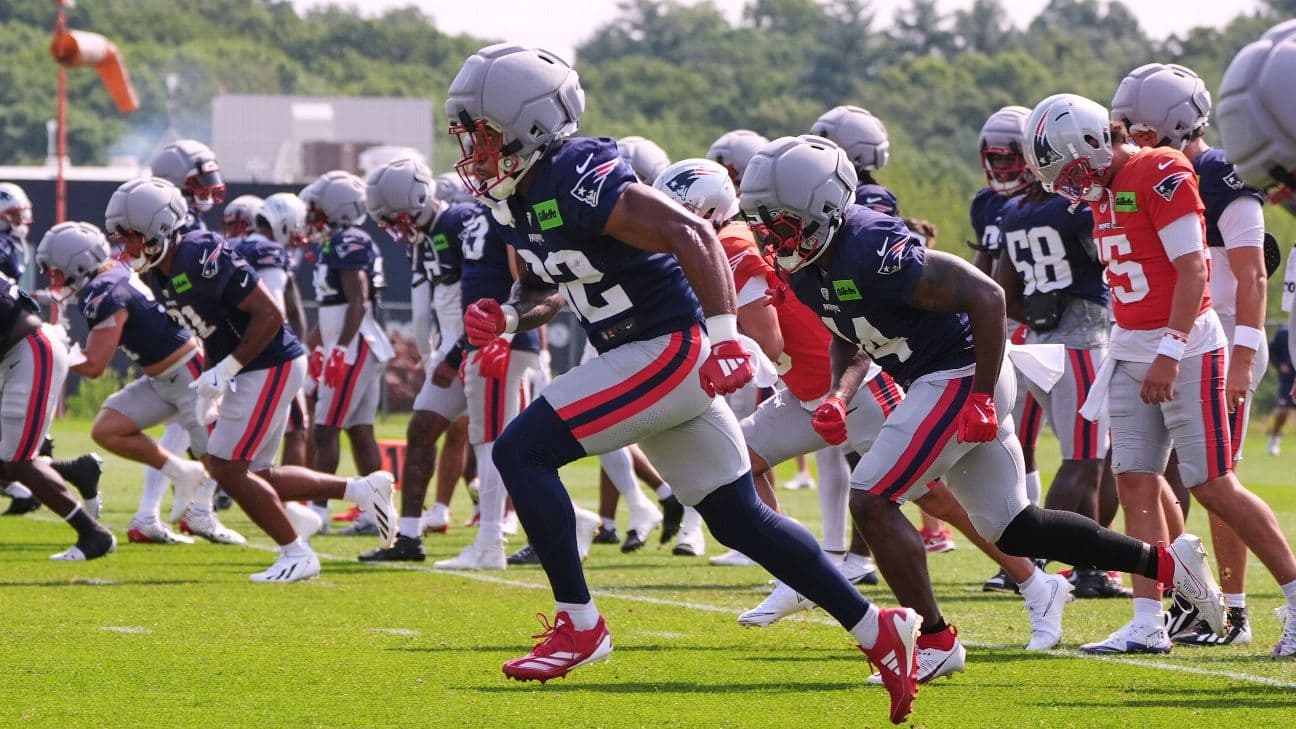
The Patriots acquired running back Corey Kiner from the Cardinals in exchange for a 2028 seventh-round pick, a deal reported Saturday as both teams worked toward the 53-man roster deadline. The unusual part is not the price. It is the timing. Arizona was planning to waive Kiner, which means New England spent a draft pick to guarantee it got a player who was about to be available to everyone.
That is a small transaction with a real signal attached. Teams do not trade picks, even distant seventh-rounders, for players they could claim off waivers unless they are worried about losing them. On a weekend when more than a thousand players hit the market, New England decided this specific back was worth removing from the queue.
Who Kiner is
Kiner is 24 and entered the league undrafted. He appeared in four games for Arizona last season, carrying 12 times for 58 yards, adding two receptions for 15 yards, and returning a kickoff 22 yards. That is a sample too small to draw conclusions from, and it is roughly what a fourth running back's rookie usage looks like.
He is projected as New England's third back, behind Rhamondre Stevenson and TreVeyon Henderson. Third-string running backs are not fantasy assets in standard leagues. They are, occasionally, the most valuable stash on a roster, because the position has the highest injury attrition in football and the shortest distance between depth and volume.
Why Arizona let him go
The Cardinals reshaped their backfield this offseason, adding a first-round pick in Jeremiyah Love and signing Tyler Allgeier, and they had already waived Trey Benson earlier in the week. That is a room with new investment at the top and no space at the bottom, and Kiner was the odd man out.
The Arizona side of this is the more fantasy-relevant one. A backfield that has churned this aggressively in a single offseason is a backfield where the depth chart has not been stress-tested, and where the rookie first-round pick carries both the highest ceiling and the least certainty. Cardinals backfield shares are worth monitoring through September rather than projecting confidently in August.
Fantasy fallout in New England
The Patriots backfield remains a two-man story. Stevenson is the established veteran, Henderson is the younger back with the higher ceiling, and the fantasy market has spent the summer trying to work out the split. Adding a third back for a seventh-round pick does not change that top-two structure.
What it does change slightly is the injury-contingency math. If New England had genuine confidence in its existing depth behind Stevenson and Henderson, it would have waited to see who cleared waivers. Paying a pick implies the team saw a gap. For fantasy managers, that is a mild argument that the handcuff value in this backfield is concentrated in the top two rather than distributed, and that both Stevenson and Henderson carry more of the room's total workload than a three-man depth chart suggests.
Henderson is the player whose value this touches most. If New England is comfortable with a thin third option, the implied workload for the top two goes up, which supports the higher end of Henderson's projection range.
Kiner himself is a deep-dynasty name and nothing more in redraft. He is worth knowing, not worth rostering, unless something happens ahead of him.
The Verdexed model take
Verdexed's model treats backfield depth as a variance input rather than a projection input. Adding a third back does not change the expected carry distribution between the top two in a meaningful way, but it does narrow the distribution of outcomes in the scenarios where one of them misses time, because the replacement is now a player with NFL snaps rather than an untested body.
Applied to New England, the model reads this as a marginal positive for the team's rushing projection and a marginal negative for the standalone value of any fourth back on the roster. It does not move Stevenson or Henderson enough to change a draft decision.
The more useful model note is on the Cardinals. Verdexed's system currently assigns the widest backfield projection range in the league to a handful of teams that overhauled the position in a single offseason, and Arizona is one of them. Wide ranges mean the market price is more likely to be wrong in both directions, which is where in-season fantasy value gets made.
What to do in your league
Nothing, in most leagues. This is a depth transaction.
In deep dynasty leagues, note Kiner as a player two teams have now valued enough to move assets around, and file him with the other young backs who are one injury from relevance.
In redraft, the actionable version of this news is on the Arizona side: watch the first two weeks of Cardinals backfield usage closely, because that room has more unresolved questions than New England's does.
The bigger pattern on cut weekend
Trades like this one are the most reliable signal available during cutdown weekend, and there were several of them across the league in the same 24-hour window, including a defensive tackle moving from Baltimore to the Giants for another 2028 seventh-round pick.
The pattern is worth understanding because it tells fantasy managers where teams see holes. A club that trades any pick for a player it could have claimed is a club that has identified a specific weakness and does not trust the waiver order to solve it. New England picks near the middle of the claiming order, which means roughly half the league would have had a shot at Kiner before the Patriots did.
For fantasy purposes, that translates into a simple heuristic: when a team pays for depth at a position, treat the players ahead of that depth as carrying slightly more workload risk than the depth chart suggests, and treat the position group as one the coaching staff is actively worried about. In New England's case, the group is running back, and Stevenson's history of usage fluctuations is the reason.
What's next
Both teams finalize rosters by Sunday evening. The Patriots open the season on Wednesday, September 9, in the league's first game, which means their Week 1 usage arrives before almost anyone else's and offers the earliest real data of the fantasy season. That is worth watching whether or not Kiner is active for it.