LeBron James, Jaylen Brown and the Fantasy Math on Philadelphia's New Starting Five
By Verdexed NBA Desk
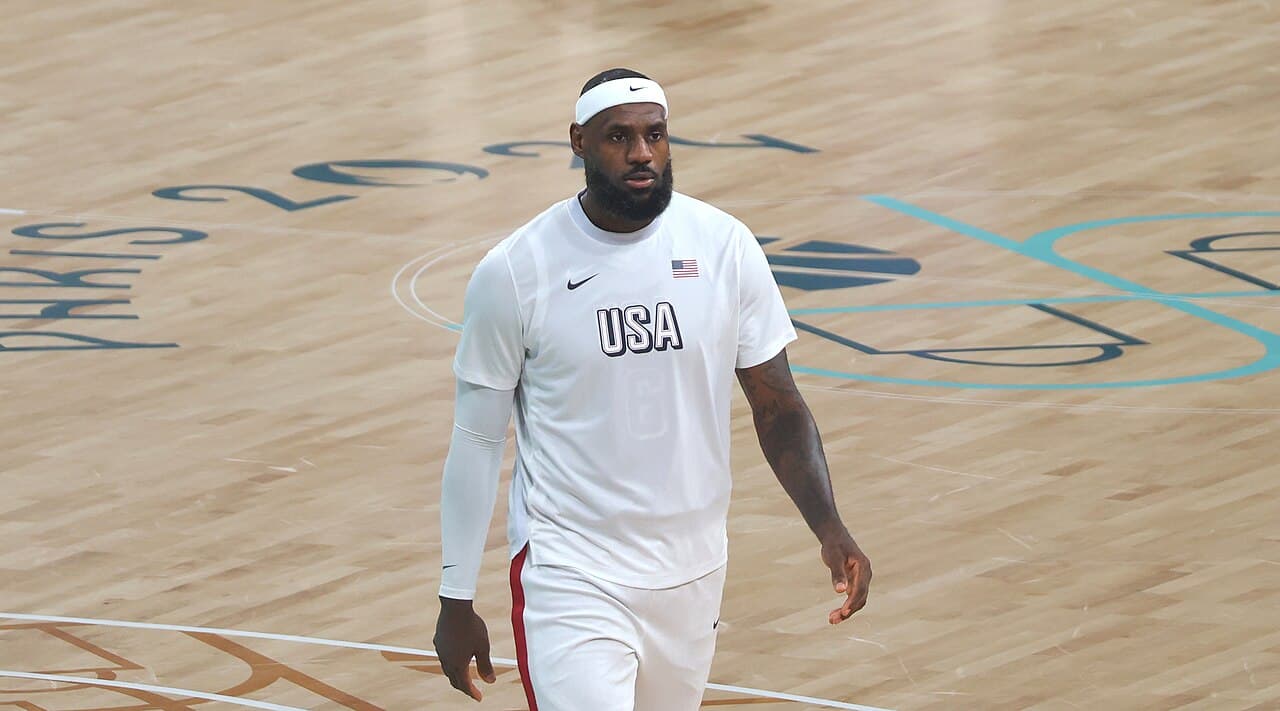
Philadelphia rebuilt its roster in a single offseason, adding Jaylen Brown and then LeBron James, and the projected starting five now reads Tyrese Maxey, VJ Edgecombe, Brown, James and Joel Embiid. James signed a two-year deal worth roughly $8 million with a player option for 2027-28, framing the move as the final one of his career.
For basketball purposes, that is one of the most talented starting fives in the league. For fantasy basketball purposes, it is a problem. There is exactly one ball.
The usage compression is the whole story
Every fantasy projection for a team that adds two high-usage stars runs into the same constraint. Possessions are finite, and adding scorers does not create more of them. It redistributes them.
Maxey was Philadelphia's best fantasy performer last season by a comfortable margin, and he should remain the most valuable Sixer in fantasy formats. But the shape of his production is likely to change. His scoring volume should decline as Brown and James absorb on-ball possessions, while his assist numbers should rise from the career-best mark of 6.6 per game he posted last season. In category leagues, that trade is closer to neutral than the raw points-per-game drop suggests. In points leagues, it is a modest downgrade.
Embiid is the more interesting case. The additions give Philadelphia the ability to manage his usage and his minutes, which lowers his ceiling in any given game but may raise his availability. Embiid's fantasy value has always been governed by games played rather than per-game production, and a roster that can win without him for stretches is a roster more likely to rest him. That cuts both ways, and the honest projection is a lower per-game output with a somewhat higher chance of a full season.
LeBron's own projection
James averaged 20.9 points, 6.1 rebounds and 7.2 assists per game in 2025-26. Those are still strong fantasy numbers, but they came as the primary creator on his previous team.
In Philadelphia, he will not be. Maxey, Brown and Embiid all require the ball, and James at this stage of his career is more valuable as an offensive organizer than as a volume scorer. The likely outcome is a decline in scoring, stable or slightly reduced assists, and a modest reduction in minutes as the season progresses toward a playoff run that the roster is clearly built for.
The additional risk is load management. A 40-something star on a team with championship expectations and three other players capable of carrying an offense is the single most likely candidate for scheduled rest nights in the league. That is a serious concern in weekly-lineup formats and a manageable one in daily-lineup leagues.
Draft him accordingly: a useful contributor whose per-game production justifies a mid-round pick, with a games-played projection that should be discounted more aggressively than most managers will discount it.
Jaylen Brown
Brown is the acquisition whose fantasy value changes least in absolute terms and most in variance. He arrives as a legitimate scoring option who will not be asked to carry the offense, and his efficiency should improve as a result of easier shot quality.
The projection is a slight decline in usage-driven counting stats offset by better shooting percentages. In category leagues that is roughly a wash. In points leagues it is a small downgrade.
The player nobody is talking about
VJ Edgecombe is the fifth starter in the projected lineup, and he is the Sixer whose fantasy outlook is hardest to pin down. A young player surrounded by four high-usage veterans has very little path to the ball, which caps his ceiling almost entirely.
That makes him a fade in redraft formats and a hold in dynasty, where the long-term outlook is unaffected by a two-year window of veteran dominance.
The Verdexed model take
Our projection system applies a usage redistribution adjustment when a team adds multiple high-usage players, and Philadelphia receives one of the largest such adjustments in the league this offseason. The net effect is that the sum of the Sixers' individual fantasy projections is well below the sum of what those players produced on their previous teams.
That is not a knock on the roster. It is the arithmetic of concentration. Teams that win a lot of games with balanced star production tend to be fantasy deserts, because no single player accumulates the volume that fantasy scoring rewards.
On the betting side, our model has Philadelphia's win total as one of the higher projections in the Eastern Conference, and the gap between the on-court projection and the fantasy projection is exactly the point. Bet the team. Fade the individuals relative to their name recognition.
What to do in your league
Draft Maxey as a top-tier fantasy asset and do not overthink the usage question. Draft Embiid with a heavier games-played discount than usual. Draft Brown at a small discount to his previous seasons. Draft James later than his name suggests and plan around rest nights.
The broader principle applies beyond Philadelphia. Superteams are consistently overdrafted in fantasy basketball because managers price stars by reputation rather than by projected touches, and the correction is to systematically fade every player on a roster that added significant usage in the offseason.
What's next
The schedule release is expected in mid-August, and it matters here more than usual. Philadelphia's back-to-back count and its distribution of nationally televised games will drive the load management projections for both James and Embiid, and those projections are the largest single input into their fantasy values.
Watch the preseason rotation reports as well. Which of Maxey and Brown finishes games alongside James will tell you more about the usage hierarchy than any depth chart.