Kyler Murray and J.J. McCarthy Are Splitting First-Team Reps in Minnesota
By Verdexed NFL Desk
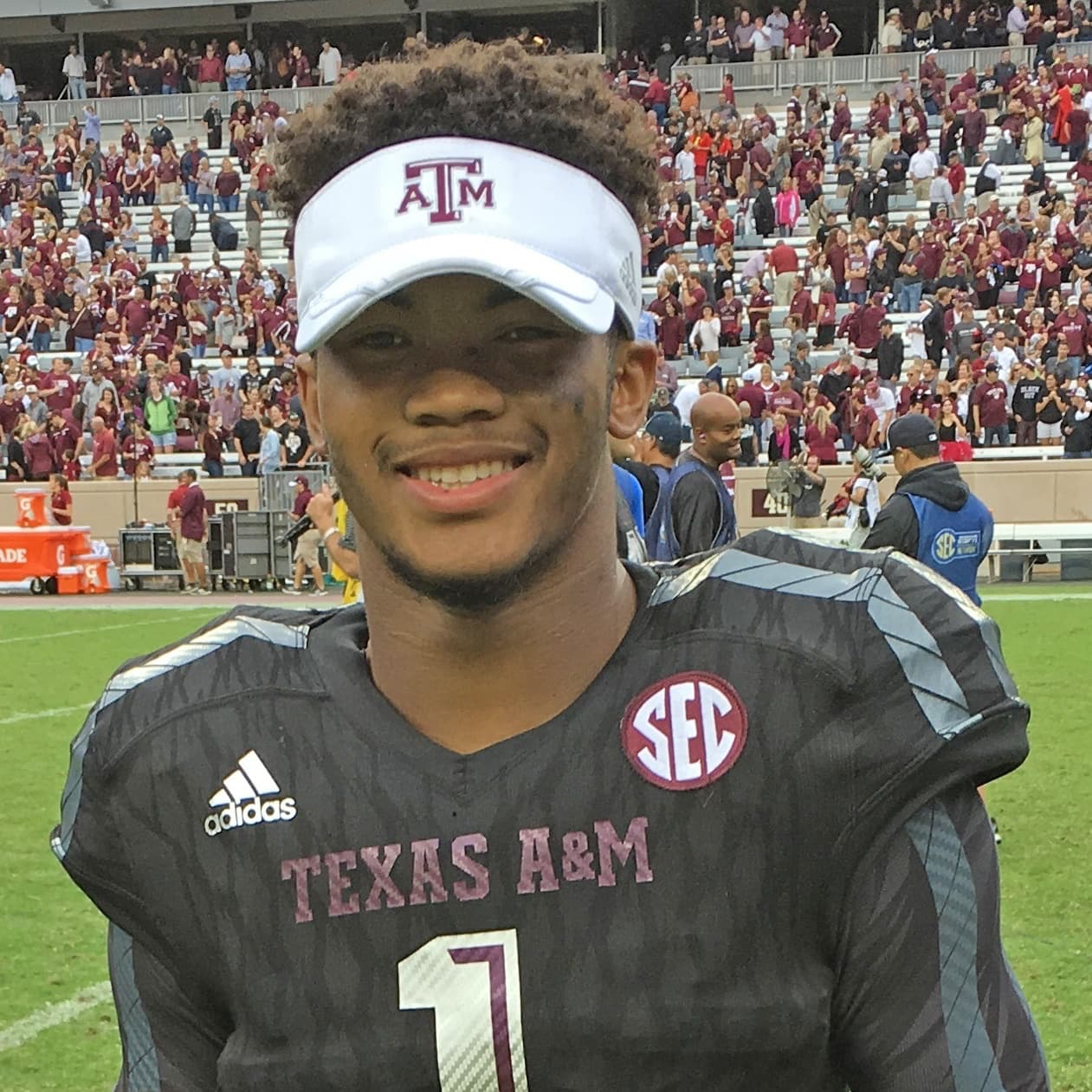
Kevin O'Connell has Kyler Murray and J.J. McCarthy taking reps with both the first- and second-team offense to open Vikings training camp, an arrangement that has held for multiple practices and that the head coach has explicitly declined to describe as a 50-50 split. Minnesota has a date in mind for naming a starter, per reporting out of Eagan, and has not shared it.
On the first day of team drills the rotation was close to literal. Murray took eight snaps, four with the ones and four with the twos. McCarthy took the next eight under the same terms. The two split first-team work again the following day. O'Connell's framing has been that once practices lengthen into move-the-ball periods, the rep counts stop being clean, which is a coach's way of saying the evaluation will be about situations rather than volume.
Two very different offenses
This is not a competition between similar players. Murray's version of this offense is a scramble-drill, off-platform, extend-the-play operation that generates explosive plays through improvisation and generates rushing production at the position. McCarthy's is a timing-and-rhythm offense that lives on structure, play action, and getting the ball out on schedule.
Both can work with this personnel. Justin Jefferson wins at all three levels and does not need a specific quarterback archetype. Jordan Addison is a separator who benefits from timing. Jauan Jennings is a possession piece who benefits from a quarterback willing to throw into contested windows. T.J. Hockenson at 29 remains the intermediate hub either way.
The difference shows up in the shape of the distribution. A Murray offense produces more high-variance weeks and more rushing touchdowns from the quarterback. A McCarthy offense produces more consistency and, historically for O'Connell's system, more predictable target concentration on the top receiver.
Fantasy fallout
For Jefferson, this matters less than the internet believes. Elite receivers survive quarterback changes because target share is a function of coaching and talent, not of who takes the snap. Draft Jefferson where you were already drafting him.
For Addison, it matters more. His production has historically been tied to schemed touches and rhythm concepts, both of which are more reliable in the McCarthy version. A Murray-led offense that spends more snaps off-script tends to funnel improvised targets to the primary receiver and the tight end rather than to the WR2.
Hockenson benefits modestly from Murray winning, because scramble drill is a tight end's friend and Murray has historically leaned on his tight ends in broken plays. Aaron Jones and Jordan Mason are close to neutral, with one caveat: a quarterback who runs takes goal-line carries away from the backfield, and Murray has been one of the more productive rushing quarterbacks in the league when healthy.
The player whose value moves most is the quarterback himself. Murray as a starter is a QB1 in superflex and a viable streamer in single-quarterback leagues because of the rushing floor. McCarthy as a starter is a bench quarterback in single-quarterback formats until he proves otherwise.
The Verdexed model take
The model currently treats this as closer to a coin flip than the public discussion does, with a modest lean toward Murray opening Week 1. The reasoning is not about talent. It is about the incentive structure: a team that signs a veteran starter in free agency has usually already decided something about its incumbent, and O'Connell's willingness to split first-team reps at all is itself information.
Where the model does separate the two is in team scoring. The Murray version projects a slightly higher point total with a wider variance band, driven by the rushing floor and by explosive-play rate. The McCarthy version projects lower on average but with a tighter distribution and a better turnover profile.
For Minnesota's season win total, that is close to a wash. For weekly totals, it is not. Games with Murray under center should be priced a half point to a full point higher than the same matchup with McCarthy, and the market has not fully separated those two worlds yet.
Betting angle
The most efficient way to trade this is the Vikings' Week 1 team total once the starter is announced, not before. Books will adjust quickly, but the first few hours after a naming tend to be the softest window, particularly if the announcement comes on a Tuesday when handle is thin.
Season-long, Jefferson's receiving yards prop is the one number that should not move on the announcement, and if it does, that is the mispricing. Addison's is the one that should.
What to do in your league
Do not draft a Vikings quarterback until the job is settled. In superflex leagues, hold a roster spot and be ready to add Murray the day the announcement comes, because his rushing production makes him a top-15 quarterback in that format almost by default.
Treat Addison as the swing piece. If your draft is before the announcement, discount him slightly relative to consensus. If your draft is after and McCarthy has won, buy him back. Jefferson and Hockenson are draftable at their current cost in either world, which is the useful thing about elite talent in an unsettled situation.
What decides it
Two things typically settle competitions like this one, and neither is training camp completion percentage. The first is the preseason, specifically the second game, when starters play long enough for a coaching staff to see a real drive against a real defense. The second is money, and Minnesota's cap structure will tell anyone paying attention which outcome the front office prefers.
The third factor, less discussed, is the defense. Brian Flores runs a pressure-heavy scheme that tends to give the offense short fields and turnover margin. A team that expects to win games in the 20-to-24 point range has less need for the high-variance quarterback and more need for the one who protects the football. That argues for McCarthy in a way the rep split does not.
O'Connell's public comments have been careful to the point of being uninformative, which is itself a signal that this is genuinely open. Coaches who have decided rarely bother to say the split does not need to be even.
What's next
Minnesota's preseason opener is the first meaningful checkpoint, and the internal date O'Connell referenced is the second. Until one of those passes, treat every camp report as noise weighted by the reporter, not as evidence.