Kyle Pitts Is the Centerpiece of Kevin Stefanski's First Falcons Offense
By Verdexed Fantasy Desk
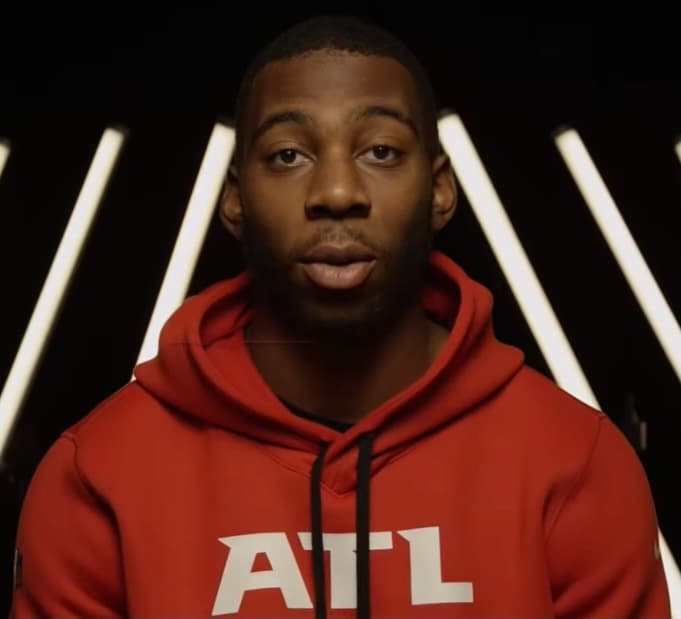
Kyle Pitts Sr. has drawn positive reviews through the first week and a half of Atlanta's training camp, and the timing matters more than the usual August practice buzz. Pitts is entering his first season in Kevin Stefanski's offense after the Falcons franchise tagged him in the spring and then converted the tag into a multi-year extension, and the combination of scheme fit and long-term security has moved his fantasy case in a direction it has not moved in years.
The tag itself was the tell. Atlanta's new leadership group used it as a runway to evaluate Pitts up close before committing, and what they saw led to a new contract rather than a one-year rental. That is a meaningful signal about how central the team expects him to be.
Coming off his best season
Pitts posted career highs in 2025, finishing with 88 receptions for 928 yards and five touchdowns on 118 targets across 17 games. That is a genuine TE1 workload, and it came in an offense that was not built around him.
The splits underneath that line are where the fantasy argument lives. With Drake London on the field, Pitts averaged well under 10 PPR points per game. In the five games London missed with a knee injury, Pitts averaged nearly double that. The gap is stark enough that it defines his projection: Pitts has been a target-share dependent player whose weekly output has been governed by how much attention the defense could afford to spend on him.
That is a scheme problem more than a talent problem, and it is exactly the problem a new coordinator can solve.
The Stefanski precedent
Stefanski's offenses have consistently featured the tight end position, not incidentally but structurally. Across his six seasons running the offense in Cleveland, his tight end finished first or second on the team in targets four times. He has spoken about valuing the position specifically for its alignment versatility: a tight end who can play in line, in the backfield, and detached forces a defense to declare its coverage before the snap.
The David Njoku comparison is the relevant one. Njoku produced fantasy-relevant seasons in that system through quarterback situations far less stable than what Atlanta has, and he did it on a franchise tag of his own. Pitts is a more gifted receiver than Njoku with a longer catch radius and better vertical speed. If Stefanski uses him the way he has used tight ends historically, the target floor rises regardless of what London does.
The quarterback problem
Here is the drag on the projection. Atlanta's quarterback situation is unsettled. Michael Penix Jr. is still working back from November surgery to repair his right ACL and has been given a multi-week timeline, which leaves Tua Tagovailoa as the operating starter for the opening stretch of the season.
That is not a disaster for a tight end. Tagovailoa has historically thrown accurately to the intermediate middle and has been efficient on timing throws, which is a reasonable match for the routes Stefanski asks tight ends to run. It does cap the ceiling on downfield production, which is where Pitts' most valuable fantasy weeks have come from.
The two-quarterback scenario also introduces mid-season variance. If Penix returns and takes over, the offense's air yards profile changes, and Pitts is more likely to benefit from that change than to be hurt by it.
Fantasy fallout
Pitts should be treated as a mid-range TE1 with a wider outcome distribution than most players at that tier. The floor is supported by volume that already exists: 118 targets in a system that did not prioritize him is a real baseline. The ceiling depends on whether Stefanski's usage patterns transfer and whether Atlanta's quarterback play stabilizes.
The counterargument that keeps him from the top tier is the London split. If the defense's answer to Atlanta's offense continues to be rolling coverage toward London while treating Pitts as a secondary concern, the 2025 pattern repeats and Pitts is a boom-bust weekly starter rather than a set-and-forget one.
At his current cost, that is an acceptable bet. Tight ends who go outside the top handful rarely come with a documented path to 120 targets.
The Verdexed model take
Our projections have Pitts above his consensus positional rank, and the gap comes almost entirely from the coaching change. The model applies a scheme adjustment based on historical target distribution by offensive play caller, and Stefanski's tight end usage is one of the largest positive adjustments in the system.
The quarterback adjustment cuts the other way and partially offsets it. The net result is a projection that lands Pitts in the back half of the TE1 tier with meaningful upside if Penix returns healthy and the offense opens up in the second half.
For best-ball purposes, that shape is ideal. Pitts' spike weeks have historically come in bunches, and a player whose upside is concentrated in specific game environments is worth more in formats that reward weekly ceilings than in formats that punish weekly variance.
What to do in your league
Draft Pitts as your TE1 if you are not paying up at the position, and be comfortable taking him ahead of the tight ends going in the same range on name recognition. Do not pay a premium for him. The London dependency is real and the quarterback situation is unresolved.
In dynasty, the extension changes his valuation more than the camp buzz does. A tight end in his prime with a long-term contract in a tight end friendly system is a hold at minimum and a buy if his manager has soured on him after several disappointing seasons.
What's next
The first checkpoint is preseason usage. Watch whether Pitts is aligned in line, detached, or moved around, because Stefanski's history suggests the answer will be all three and the versatility is what drives the target volume.
The second checkpoint is Penix. A quarterback timeline that holds means Atlanta's passing offense looks different by October than it does in September, and Pitts is the skill player most likely to benefit from that transition.