 MLB2026-08-29
Kevin McGonigle Has the AL Rookie of the Year Locked and the NL Award Is a Four-Man Fight
By Verdexed MLB Desk
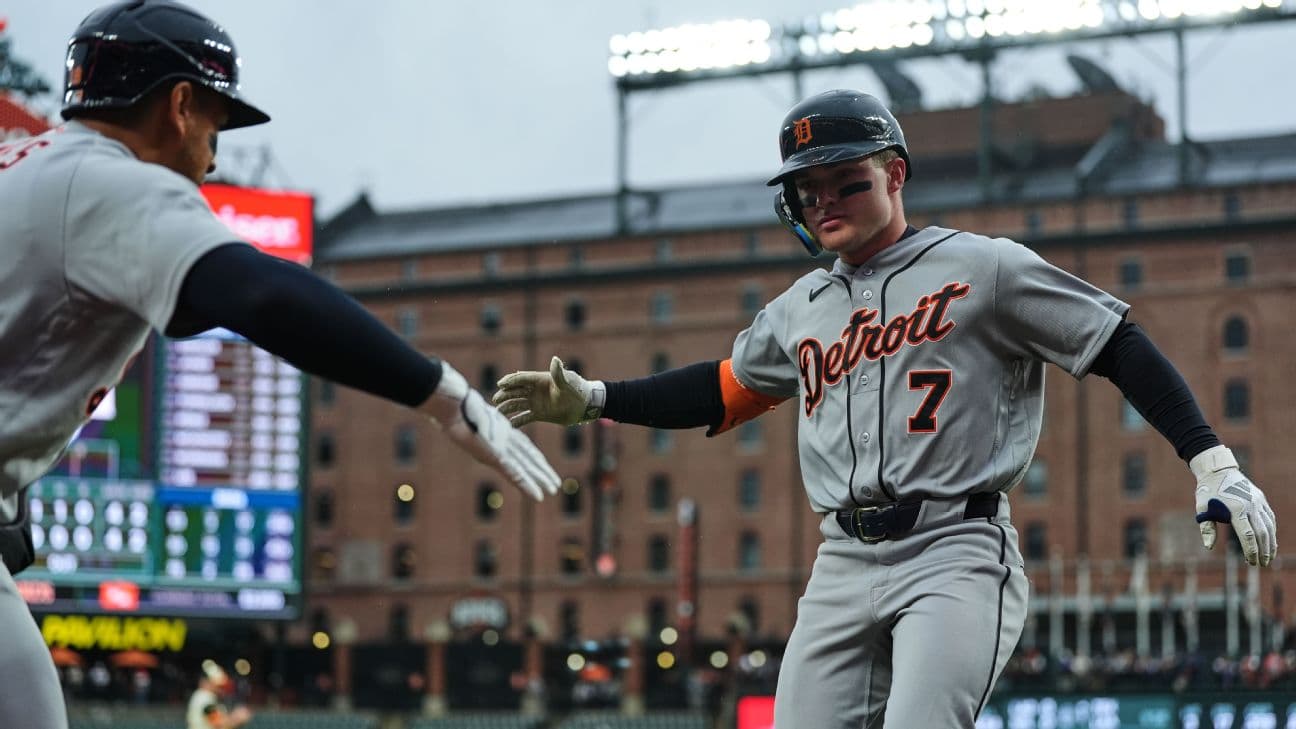
One Rookie of the Year race is over and the other one is genuinely open. Detroit shortstop Kevin McGonigle has pushed his American League odds out to the point where the market treats the award as settled, while the National League race has flipped in the last two weeks, with Cincinnati's Sal Stewart moving in front of St. Louis second baseman JJ Wetherholt at most books.
With roughly a month left, these are the two award markets where the remaining value is not in the favorite.
McGonigle turned the AL race into a formality
McGonigle made his major league debut in late March, won American League Rookie of the Month for April after hitting well over .320 in his first month, and never gave the job back. He has spent the season as Detroit's starting shortstop and has produced an OPS and a wRC+ that place him among the better hitters in the league, rookie status aside.
He is 22. He was an All-Star. He signed a long-term extension. The narrative and the production are pointing the same direction, which is what a runaway award race looks like.
Munetaka Murakami was the challenger for much of the first half, and the power was real: he reached 20 home runs inside his first 57 games. An extended absence cost him the counting-stat volume that award voters weigh most heavily, and the gap in games played has become impossible to close in a month.
Betting the American League award at current prices means laying an enormous number to win a small one. There is no edge in it.
The National League race actually moved
Wetherholt spent most of August as a solid favorite. That has changed.
Stewart has moved to the front of the market on the strength of his run production, and his RBI total leads the league among all National League hitters per the awards trackers. Wetherholt sits just behind him, close enough that the two are effectively coin flips at current pricing.
Behind them, Carson Benge has been the hottest rookie in the league since the All-Star break, hitting around .319 with a strong on-base mark and playing well-regarded defense for a club that has been winning. Nolan McLean rounds out the group as the long shot with a real case.
That is a four-man race with two clear leaders and two live outsiders, and it is the rare award market where the price movement over the last three weeks has been dramatic enough to create genuine disagreement.
How voters actually decide this
Two patterns are worth knowing before betting a rookie award.
The first is that counting stats win. Home runs and RBIs carry disproportionate weight in Rookie of the Year voting relative to their actual value, and rate-stat cases lose to volume cases more often than they should. That favors Stewart, whose RBI lead is exactly the sort of number that shows up on a ballot.
The second is that team success matters at the margin. A rookie on a team playing meaningful September games gets more national exposure, more highlight coverage, and more voter attention than an equally productive rookie on a club that is out of it. That is a real effect and it favors whichever of these four is still playing games that matter in late September.
Defensive value at a premium position is the third factor, and it is the one that most consistently gets underweighted. It is the strongest part of Benge's case and the reason he is the most interesting price on the board.
The Verdexed model take
Verdexed's approach to award markets separates two questions: who is having the better season, and who will be perceived as having the better season. Those are not the same question, and award betting is won on the second one.
On the first question, the model's read on the National League is closer than the market. Benge's combination of production since the break and defensive value at a valuable position gives him a stronger underlying case than a long-shot price implies.
On the second question, Stewart's RBI lead is the single most ballot-friendly number in the race, and the model expects that to hold up in voting even if the underlying performance gap is narrower than the counting stats suggest.
The conclusion the model reaches is that the two favorites are fairly priced against each other, and that Benge at a long price is the only position on this board with meaningful expected value. That is a small position, not a confident one.
In the American League, the model sees no path to anything other than McGonigle and no reason to bet a market with no path.
What it means for fantasy managers
Award races are noise for redraft leagues in the final month, but they matter enormously for dynasty valuations, and this is the week to act.
McGonigle's dynasty price is about to peak. A 22-year-old shortstop who wins Rookie of the Year and has already signed an extension is the most expensive kind of asset to acquire in the offseason. If you want him, the window to buy at anything resembling a reasonable price closes when the award is announced.
The same logic runs in reverse for whichever National League rookie loses. Second-place finishers in award races are systematically undervalued in dynasty markets the following spring, because the narrative attaches to the winner. Benge and McLean are the buys.
What is next
The regular season ends in late September and the awards are announced in November. Between now and then, the only variables that move these markets are playing time and team relevance.
Watch which of the four National League candidates is still in a race in the final two weeks. That, more than any statistical line, is what decides this one.