Kade Anderson Is 'In the Mix' for Seattle's Rotation and the Castillo Trade Opened the Door
By Verdexed MLB Desk
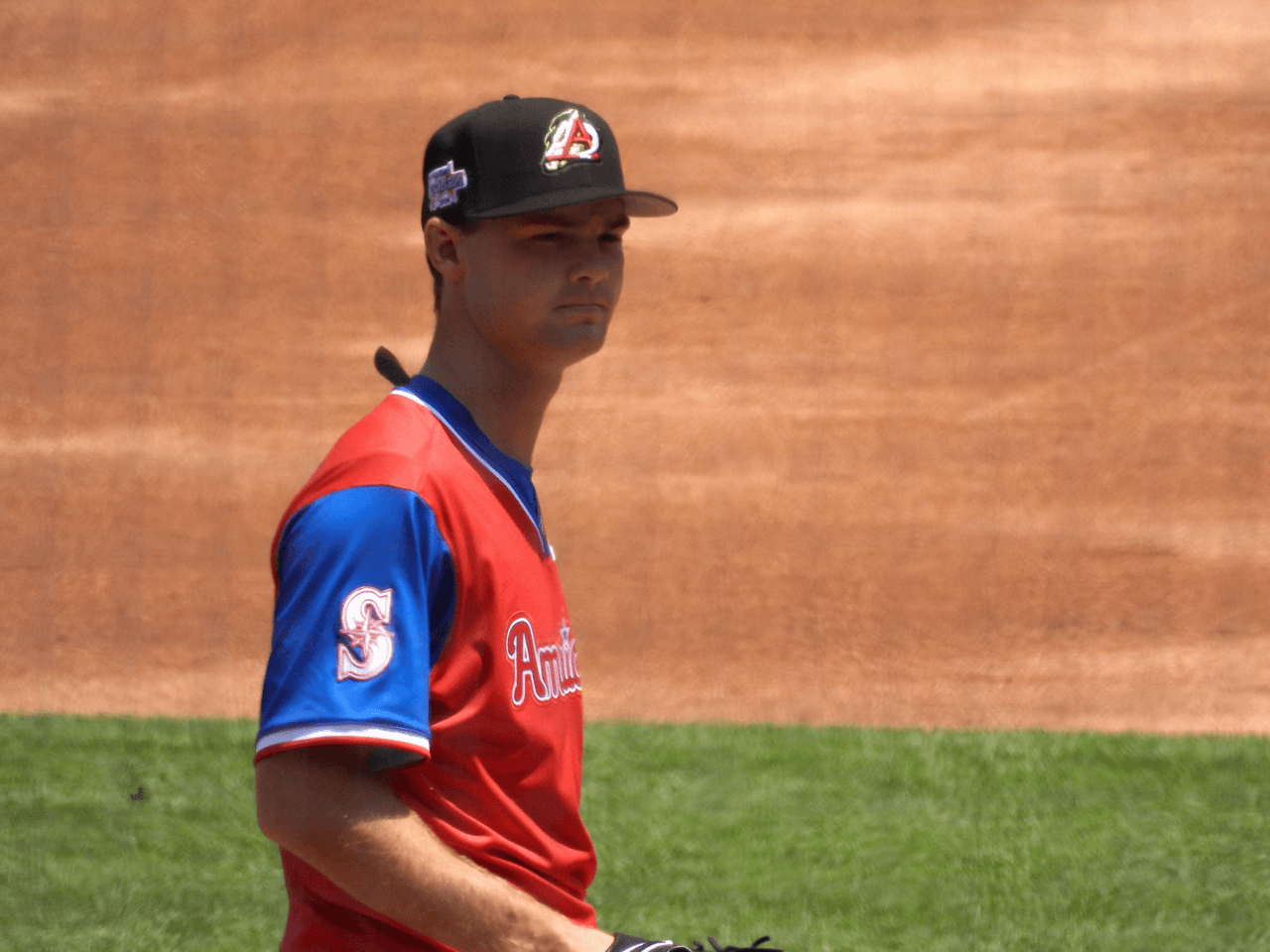
Seattle general manager Jerry Dipoto said Monday that Kade Anderson is in the mix for a spot in the Mariners rotation, and the timing is not a coincidence. Seattle shipped Luis Castillo to the Chicago White Sox over the deadline weekend, which removed a veteran starter from a rotation that had no obvious opening before it.
Anderson's minor league season makes the case on its own. Across 16 starts and 82 1/3 innings for Double-A Arkansas, the 22-year-old has posted a 1.20 ERA with a 119-to-12 strikeout-to-walk ratio. That is not a good pitching prospect line. That is a line that stops looking like development and starts looking like a player being held back for reasons unrelated to readiness.
MLB Pipeline named Anderson the game's No. 1 pitching prospect, and Seattle has three arms in the organization's top 10 by that ranking. The Mariners have built a reputation on pitching development, and they have earned it, which is exactly why the industry treats an Anderson promotion as a matter of when rather than whether.
The mid-August timing
The expected arrival window is mid-August, and the reason is service-time mechanics rather than performance. A player promoted late enough in the season retains rookie eligibility for the following year, which carries real value for both the club and the player under the current prospect-promotion incentive structure.
That is a useful thing for a fantasy manager to know, because it means the promotion date is largely predictable rather than performance-contingent. Seattle is not waiting for Anderson to earn it. He has earned it. The club is optimizing around a calendar.
The Castillo trade removed the roster obstacle. Seattle did not move George Kirby or Emerson Hancock at the deadline, so the rotation is not being torn down, but it did clear one spot, and a team that clears a spot and then publicly places its top pitching prospect in the mix has effectively announced its plan.
Fantasy fallout
Anderson is the highest-priority stash on any waiver wire that still has him available, and the case is stronger than the typical prospect add because of the environment he is walking into.
Start with the ballpark. T-Mobile Park is one of the most pitcher-friendly venues in baseball, and it suppresses home runs specifically. A young starter's most common failure mode in his first taste of the majors is giving up damage on mistakes over the plate, and Seattle's park is the best possible place to survive that learning curve.
Then the division. The American League West is not a murderer's row of offenses, and Anderson will draw a meaningful share of his starts inside it.
The strikeout-to-walk ratio is the third piece and the most important. Command translates upward more reliably than stuff does. A pitcher who has walked 12 hitters in 82 innings at Double-A is not going to walk the ballpark when he arrives, and pitchers who throw strikes get through lineups a second and third time in a way that high-strikeout, high-walk prospects do not.
The honest caveat is innings. Anderson is at 82 1/3 innings on the season, and organizations manage first-year workloads carefully. Seattle is likely to limit his outings, which caps his ceiling for wins and counting stats even if the rate stats are excellent. Managers should expect a five-inning starter more often than a seven-inning one.
The Verdexed model take
Our pitching projections translate minor league performance through a park-and-competition adjustment and then apply an organizational workload model. Anderson's translated line for the remainder of 2026 lands with an ERA in the mid-3.00s and a strikeout rate comfortably above league average, which would make him a startable fantasy option in every format from his first outing.
The adjustment our model makes that most public projections do not is on walk rate. Systems that regress minor league command heavily toward the mean underrate pitchers whose command is their carrying tool, and Anderson's profile is command-led. Our projection keeps his walk rate near the low end of the plausible range rather than pulling it to average, which is what produces the favorable ERA estimate.
Where the model is more conservative is on volume. It projects roughly six to eight starts for the remainder of the season, with an innings cap that limits per-start length. That is enough to help a fantasy team meaningfully in ratio categories and not enough to move the needle in wins or strikeout totals.
The net read: Anderson is a strong add for a team fighting for ERA and WHIP down the stretch, and a marginal one for a team that needs counting-stat volume.
Betting angle
The market to watch is Seattle team totals and first-five-innings unders in Anderson's starts once they begin. Books price rookie starters conservatively but not aggressively enough when the rookie is a command specialist in a pitcher's park, because the pricing models weight name recognition and major league track record heavily.
The first two or three starts are where the inefficiency lives. After that, the market catches up.
Seattle's playoff odds are the other angle. The Mariners traded a veteran starter at the deadline while keeping their core rotation intact, which reads as a lateral move rather than a sell. If the market treated the Castillo trade as a signal that Seattle was stepping back, and the club instead promotes its No. 1 pitching prospect into the vacancy, the playoff-odds line may be soft.
What to do in your league
Add Anderson now if he is available. Mid-August is close enough that a stash costs you two weeks of a bench spot, and the alternative is bidding against your entire league the day the promotion is announced.
In keeper and dynasty formats, he is a top-tier hold and should not be traded at anything resembling a normal prospect price. A No. 1 pitching prospect with elite command arriving in a pitcher's park is the archetype that produces multi-year fantasy aces.
In shallow redraft leagues, wait. A five-inning rookie with a workload cap is not worth a roster spot in a 10-team league where quality starters sit on waivers.
What's next
Watch for a Triple-A promotion first. Anderson has spent the season at Double-A Arkansas, and while Seattle could jump him straight to the majors, a brief Triple-A stop would be the conventional path and would signal the timeline precisely. Either way, the club has told the market what it intends to do. The only remaining question is the date.