J.K. Dobbins Is Expected to Play and Jonah Coleman Is the Stash That Matters
By Verdexed Fantasy Desk
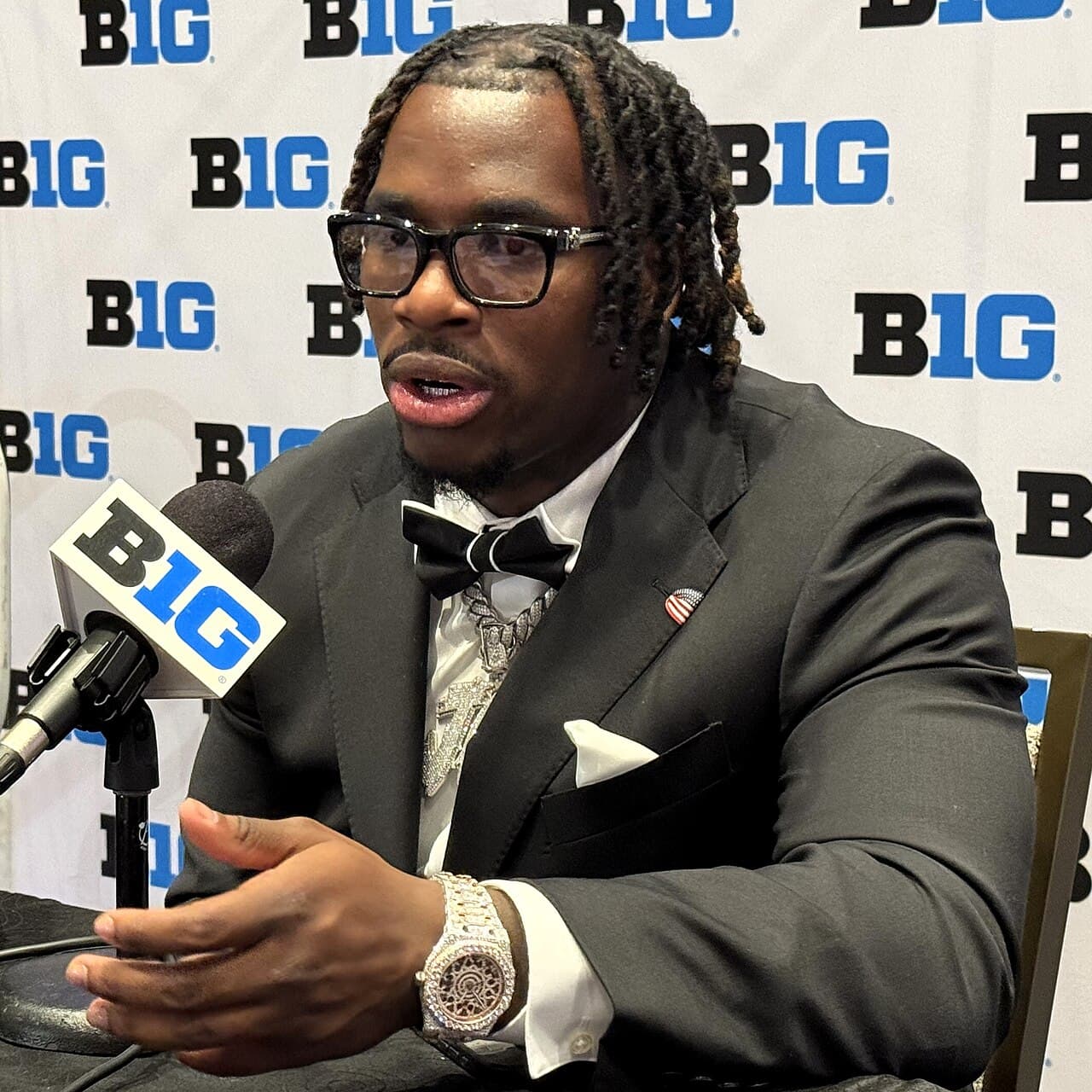
J.K. Dobbins left Denver's Week 2 game with a hamstring issue and was listed as questionable to return, but the reporting since has been consistently optimistic. Tom Pelissero indicated Monday that Dobbins is good to go, and the internal read in Denver is that the strain is slight enough that he should be available for Sunday night against the Rams. Rookie Jonah Coleman handled the work after Dobbins went down and finished with 10 carries for 39 yards and his first career touchdown.
For fantasy managers, this is the rare injury situation where both the starter and the backup are worth acting on, for different reasons and on different timelines.
Hamstrings are the injury that lies
The optimistic early report on a hamstring is the least reliable data point in football. Soft tissue injuries in the posterior chain frequently feel manageable in the forty-eight hours after they happen and then declare themselves when a player tries to accelerate at full speed in a Thursday practice.
That is not a prediction that Dobbins will miss the game. It is a warning about how to interpret Monday reporting. Teams and insiders both work from the same early information, and early information on hamstrings is systematically optimistic. The Wednesday practice participation report will tell you more than any Monday quote.
The other hamstring risk is the one that does not show up in availability. A running back who plays through a mild strain often plays a reduced snap count, cedes passing-down work, and does not get the goal line carries. That is the outcome fantasy managers should actually fear, because it produces a start that returns four points rather than a scratch that lets you pivot.
Why Coleman is worth a roster spot even if Dobbins plays
Coleman was a fourth-round pick this spring and has now shown the coaching staff he can carry a real workload. That matters in an offense where the coaching staff has historically been willing to ride whichever back is producing rather than protecting a depth chart.
The structural case is stronger than the one game. Dobbins has a long injury history, and running backs with long injury histories in high-volume roles do not typically complete seasons intact. Rostering the direct backup to a fragile lead back in an offense that supports fantasy production is one of the highest expected-value uses of a bench spot in September.
Coleman is also not the only back in the room, which is the honest counterpoint. Denver has other options, and a committee that splits work three ways produces nobody worth starting. But Coleman handled the load when the load was available, and that is the tiebreaker.
Add him in twelve-team leagues if he is available. In ten-team leagues he is a fine final bench piece and an easy drop if the situation clarifies against him.
The Sunday night matchup is not a soft landing
Denver hosts the Rams on Sunday night as a home underdog, which is a meaningful piece of context for the backfield projection. Home underdogs trail more often than they lead, and trailing teams abandon the run.
That flattens the ceiling for whoever gets the carries. A game script where Denver is chasing points turns the lead back into a pass-catching role, which favors whichever back is best in protection and in the route tree. If Dobbins is limited by the hamstring, that job is not automatically his.
For bettors, the relevant read is that Denver being a home underdog is not a statement about Denver so much as a statement about the Rams, who have been one of the more convincing teams through two weeks. The number should be respected rather than faded on home-field sentiment.
The Verdexed model take
Our projection engine treats a questionable running back with a hamstring designation as a three-outcome problem: full workload, reduced workload, or inactive. The reduced-workload branch is the most likely single outcome and the one that fantasy advice consistently ignores.
Applying that distribution, the model's projection for Dobbins sits below his healthy baseline even in a scenario where he is active, and the projection for Coleman sits above what a pure backup would earn because there is a real probability he handles the majority of the carries.
The practical translation is that Dobbins is a flex play rather than a confident RB2 this week, and Coleman is a bench stash with a live path to a start. In DFS, Coleman is a viable punt if Dobbins is ruled out or limited late in the week, and the leverage there is substantial because pricing will not adjust in time.
The broader running back picture in Week 3
The position took a beating in Week 2. Philadelphia is waiting on Saquon Barkley's stinger. Denver is waiting on Dobbins. Several other backfields are working through committees that have not resolved.
The league-wide effect is that replacement level at running back has fallen, which raises the value of every back with a defined role. If you have been sitting on a healthy committee back hoping for a trade, the market for him just improved.
It also means waiver budgets should be spent carefully. There will be more running back opportunities in the next three weeks than there are in a typical September, and managers who exhaust their budget on the first available body will regret it in October.
What to do in your league
Add Coleman. Start Dobbins only if he practices in full by Friday, and have a flex alternative ready if he does not. Do not trade for Dobbins this week, because you are buying a hamstring at a price that assumes it is nothing.
Check the Wednesday report, check it again Friday, and remember that the Sunday night kickoff means you will have information the rest of your league does not if you are willing to wait for it.