George Kittle Is on the PUP List and Jake Tonges Is the 49ers Tight End to Own
By Verdexed Fantasy Desk
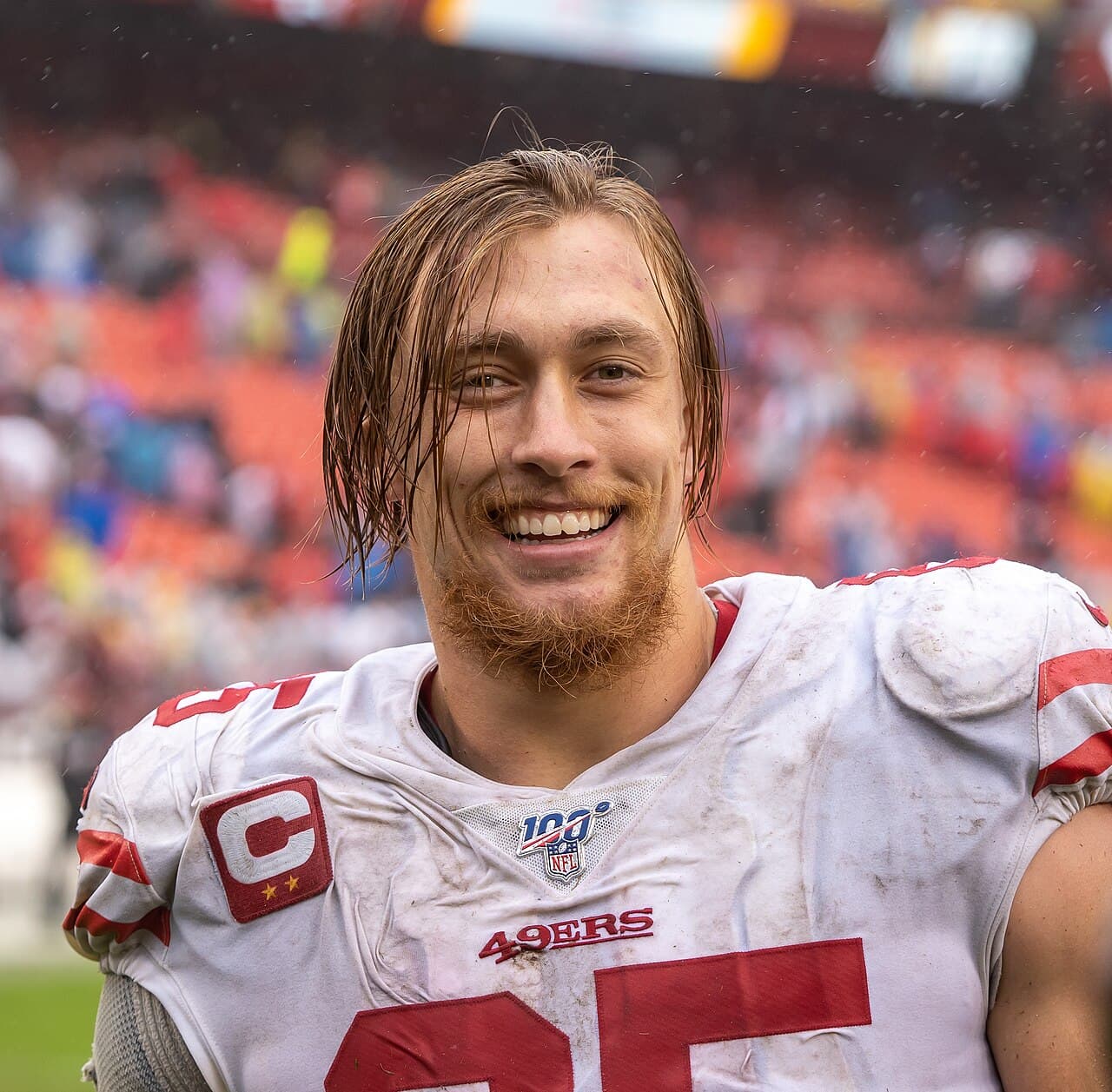
George Kittle opened training camp on the physically unable to perform list as he recovers from the Achilles tear he suffered in San Francisco's January playoff win, and that designation is the most important fantasy fact in the 49ers offense right now. Kittle has expressed optimism about being ready for the Week 1 game against the Rams in Australia. The calendar is less optimistic.
Achilles ruptures typically carry a nine-to-twelve month recovery for a player expected to cut, block and absorb contact. A January injury sits at the front edge of that range in early September. Kittle may well beat the timeline, but nobody should be drafting him as though he already has.
What PUP actually means here
Active PUP in training camp is a flexible status. A player on it can be activated at any point during camp without penalty and can return to practice the moment the team clears him. That is different from reserve PUP, which is applied at final roster cuts and forces a player to miss at least the first four games of the regular season.
The distinction is the whole story for Kittle drafters. If he comes off active PUP and practices before cutdowns, his Week 1 availability is a live question. If he is placed on reserve PUP at cutdowns, he is unavailable for a month and his draft cost becomes an anchor.
Nothing has been reported that resolves that yet, and San Francisco has no reason to announce its intentions early. Managers drafting before the final week of August are guessing.
Jake Tonges is the actual play
Tonges has already shown what he does with the job. In 2025 he caught 34 passes for 293 yards and five touchdowns across 17 games, and the distribution of that production is what matters: in the six games Kittle missed, Tonges caught 29 passes for 269 yards and three touchdowns. Across the other eleven games he managed five catches for 24 yards.
That is not a nuanced usage curve. It is a light switch. Tonges is a fringe roster-clogger when Kittle plays and a startable streaming tight end when he does not. San Francisco re-signed him this offseason, which signals the team views him as the legitimate next man rather than a camp body, and the rest of the room, which includes Luke Farrell and depth options, has not historically threatened for receiving work.
Farrell's presence does cap the ceiling somewhat, since he absorbs some of the inline blocking snaps that would otherwise go to Tonges and keeps him from simply inheriting the full Kittle role. But blocking snaps are not fantasy points. Routes are, and Tonges ran them at a healthy clip when given the opportunity.
Fantasy fallout across the 49ers offense
Kittle's absence does not only elevate Tonges. It redistributes targets into a receiver room that has been under stress all summer. Ricky Pearsall is out for the season following knee surgery, Mike Evans has been managing a quad strain, and Christian Kirk has missed practice time with a calf issue. A San Francisco passing attack short its All-Pro tight end and multiple receivers is a passing attack that funnels volume toward whoever is upright.
That argues for treating the 49ers pass catchers as a group whose individual projections are unusually sensitive to the injury report through the end of August. Anyone drafting a San Francisco skill player in mid-August is buying a share of an offense that has not yet settled its own depth chart.
The Verdexed model take
The model treats Kittle as a top-six tight end when active and a zero when not, and it currently assigns meaningful probability to him missing time. That combination produces a projection that lands him outside the position's first tier on a full-season basis despite elite per-game output, which is exactly the profile that fantasy managers systematically misprice. Injured stars get drafted on memory of their best week rather than on expectation across seventeen.
Tonges profiles as the highest-value late-round tight end on the board in the specific scenario the model considers most likely: Kittle misses at least the opener, and Tonges opens as the starter in a game San Francisco is likely to throw in.
What to do in your league
If you draft Kittle, draft Tonges. This is one of the cleanest handcuffs available at the position, because the correlation is near total and the acquisition cost is a final-round pick or a minimum waiver bid. Owning both converts a volatile investment into a stable one.
If you do not draft Kittle, Tonges is still worth a speculative late pick in twelve-team leagues and a firm one in anything deeper. Tight end is the position where a single startable streamer in the first month can decide a fast start, and Tonges is available at a price nobody has to think about.
The date to circle is the final roster cutdown. If Kittle is not on the practice field by then, San Francisco has a decision to make, and the reserve PUP designation would turn Tonges from a stash into a set-and-forget starter for the first quarter of the season.
The historical base rate
Achilles ruptures in tight ends have a poor recent track record for immediate return to form. The position demands both the explosive push-off of a receiver and the anchoring strength of a lineman, and the tendon governs both. Players who return inside nine months have generally needed several games to reach their pre-injury effectiveness, and their yards after catch numbers have been the last thing to recover.
Kittle's game is built on yards after catch more than almost any tight end of the last decade. That is the specific skill most likely to lag, which means the realistic optimistic scenario is not Kittle returning in Week 1 as himself. It is Kittle returning at some point in September as a diminished version who improves through October.
Draft accordingly. The player who justifies a premium tight end price probably does not exist until midseason, and the manager who plans for that will be better positioned than the one hoping for an immediate return.