 NFL2026-08-27
George Kittle Is Off the PUP List and the Fantasy Tight End Board Is Wrong
By Verdexed Fantasy Desk
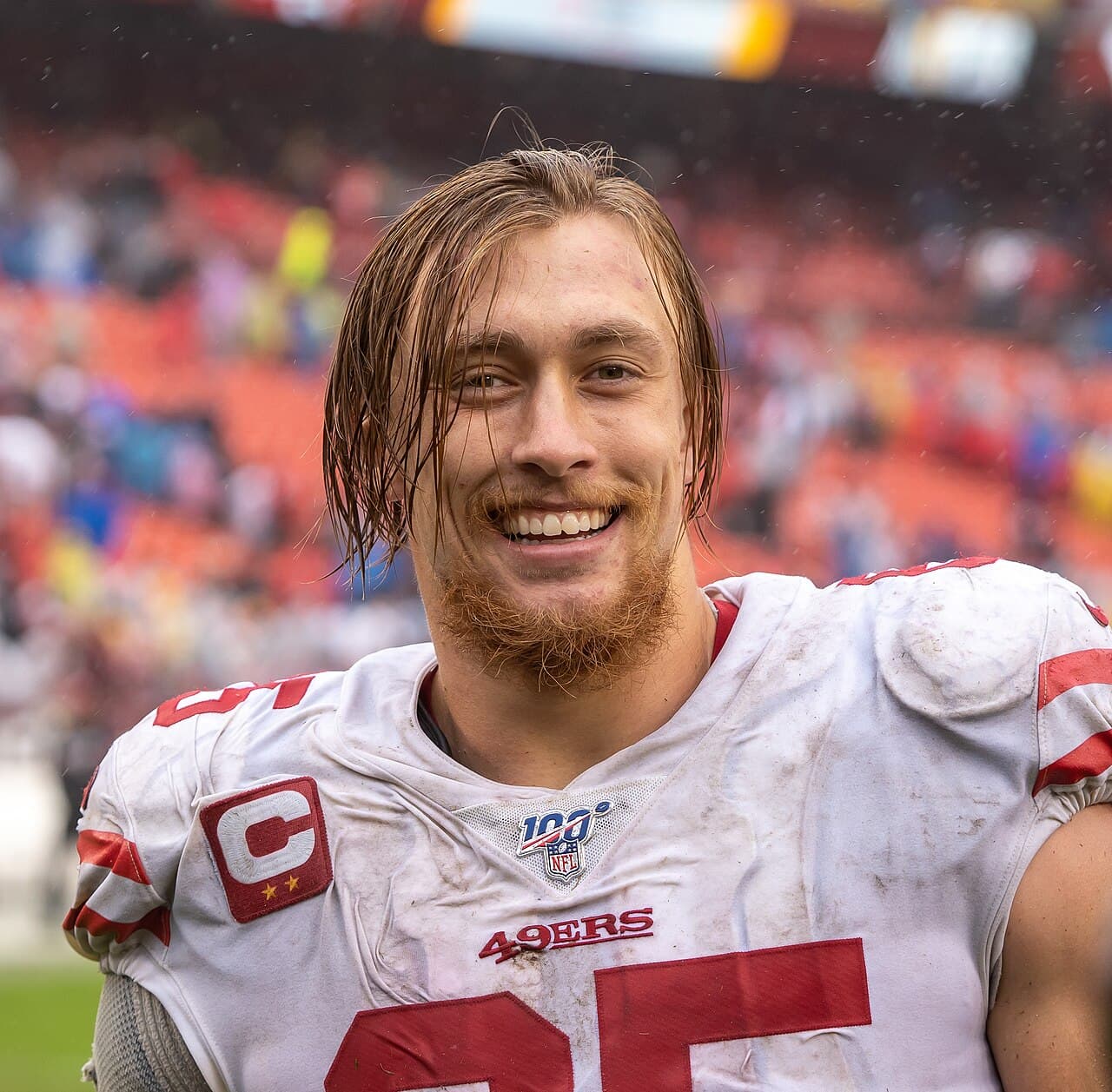
The San Francisco 49ers activated George Kittle from the physically unable to perform list on Sunday, August 23, clearing the tight end to practice with his teammates for the first time since he tore his right Achilles in the wild-card round win over Philadelphia. Christian McCaffrey returned to practice around the same time. With the 49ers opening the season against the Rams on September 10, the most important fantasy consequence is simple: Kittle is available to play in Week 1, and a large share of drafters have not updated for it.
Head coach Kyle Shanahan had signaled the move was coming, telling reporters he expected Kittle back sooner rather than later. Reports before the activation described Kittle as ahead of schedule in his rehab.
What the activation actually means
The distinction between the preseason PUP list and reserve PUP is the whole story here, and it is the thing casual drafters get wrong every August. A player who remains on PUP when rosters are set must miss a minimum number of regular-season games. A player activated before that deadline carries no such restriction. Kittle is now simply a member of the roster who can practice, be listed on the injury report like anyone else, and play whenever the team says he is ready.
That does not guarantee he suits up on September 10. The 49ers could still bring him along carefully, limit his snaps early, or hold him a week. But the four-game floor that was baked into a lot of Kittle projections through July is gone, and the range of outcomes has shifted meaningfully in his favor.
Kittle is 32, which is the honest counterweight. Achilles ruptures are the injury that most reliably erodes explosiveness in players on the wrong side of 30, and the tight end position asks for exactly the kind of push-off athleticism that the injury compromises. Anyone drafting him should assume some athletic decline even in a best-case return.
Why the tight end board is mispriced
The fantasy tight end position is defined by scarcity. There is a small group of players who see genuine target volume, and then there is a long tail of touchdown-dependent options who win you one week in five. Kittle, when healthy, has been in the first group for most of the last decade, and he has done it with efficiency numbers that lead the position.
The Achilles pushed him out of that tier in most preseason rankings, and reasonably so when nobody knew whether he would play in September. Now that he has been activated, his cost has not moved as fast as the news. In drafts happening this week, he is frequently the fourth, fifth, or sixth tight end off the board behind players with lower ceilings and no meaningful discount.
There is also the roster context. Ricky Pearsall is out for the season following knee surgery, which removes a receiver San Francisco expected to start. Deebo Samuel returned to the 49ers on a one-year deal this summer and gives Shanahan a familiar chess piece, but he is 30 and has been away for a season. McCaffrey is back but carries his own availability questions. In an offense with that much uncertainty at the skill positions, the tight end who Shanahan has trusted more than any player on the roster becomes the most reliable target earner by default.
Fantasy fallout
Kittle should be drafted as a top-five tight end with a top-two ceiling if the Achilles allows something close to his previous movement. That is an aggressive stance and it requires accepting a real chance of a slow start.
The correct structural approach is to pair him. If you take Kittle in the middle rounds, spend a very late pick on a streaming tight end with a defined Week 1 role so that a cautious September for San Francisco does not cost you two games. That combination costs you almost nothing and buys the upside.
Deebo Samuel is the other 49ers name worth attention in the late rounds. He is familiar with the offense, San Francisco has said he will factor into the return game under the dynamic kickoff rules, and Pearsall's absence opens a share of targets. He is a bet on scheme fit rather than on raw production.
The Verdexed model take
Our projections have Kittle in the top four at the position on a per-game basis and in the top six on a season-long basis once a games-played discount is applied. The gap between those two rankings is the entire investment thesis: you are buying a top-tier weekly asset with an availability tax attached.
The model's San Francisco team projection is more optimistic than the market's, primarily because it weights offensive scheme continuity heavily and San Francisco has more of it than almost any team in the league. Shanahan's offenses have consistently produced above-expectation efficiency regardless of personnel, and the model treats that as a real and repeatable effect rather than noise.
On the betting side, our board sees the 49ers' season win total as fairly priced but flags their Week 1 game against the Rams as one of the more mispriced totals on the opening slate, with the model projecting above the market number.
What to do in your league
Move Kittle up your board. If your rankings still have him outside the top six tight ends, they are stale by four days.
Do not pay a premium price. The right cost is a round or two later than where healthy Kittle would go, which in most drafts means the sixth or seventh round rather than the fourth.
Handcuff the pick with a cheap streaming tight end rather than reaching for a second real one.
Watch San Francisco's first official injury report in the week of September 7. A full practice participation for Kittle is the last confirmation anyone needs, and after that his price is gone.