 NBA2026-09-09
Fantasy Basketball Shooting Guard Tiers for 2026-27: Jaylen Brown Changed Conferences and the Position Got Deeper
By Verdexed NBA Desk
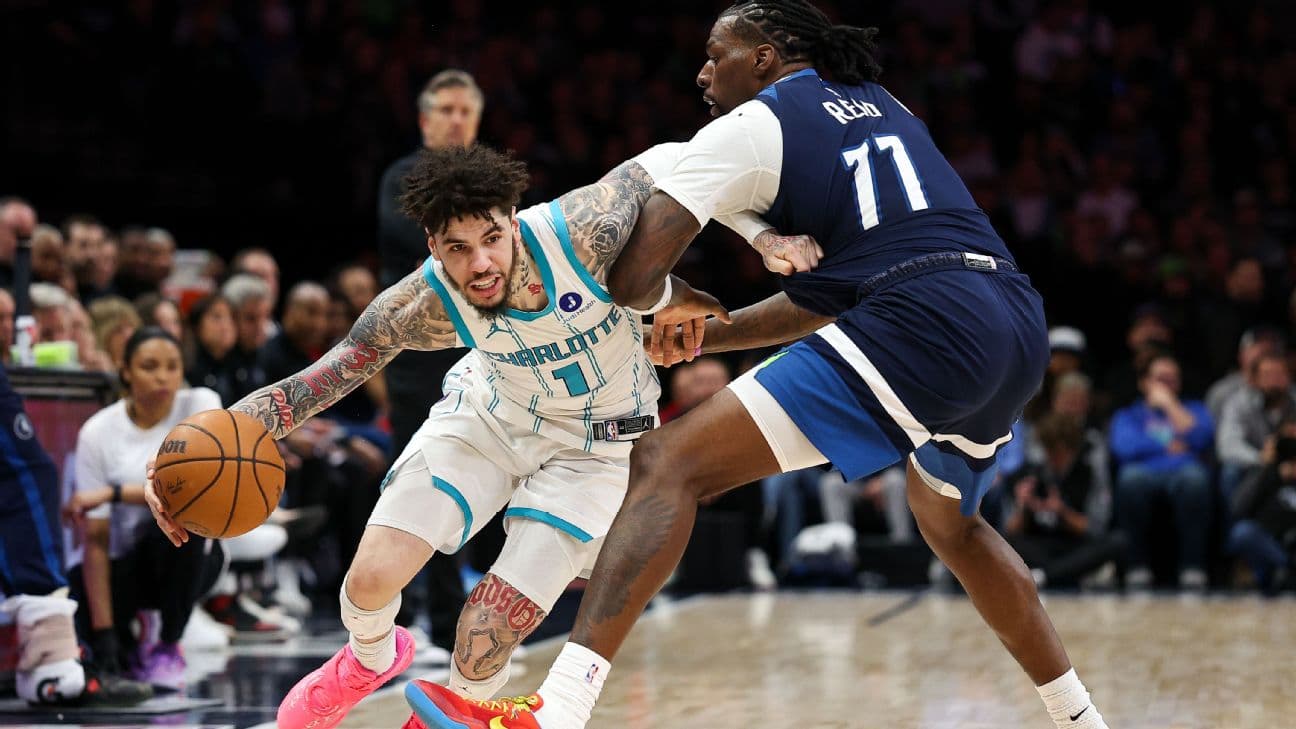
Shooting guard was the position most disrupted by the 2026 offseason, and the reshuffle created something the position has lacked for years: real depth in the middle rounds.
Four of the top dozen options at the position changed teams. One changed roles without changing teams. One is still unsigned with training camp two weeks away. The result is a board where the top is thin, the middle is unusually deep, and the difference between the seventh-best shooting guard and the fifteenth is smaller than it has been in a long time.
Here is how the position sorts for 2026-27 drafts.
Tier 1: The one you draft in the first round
Anthony Edwards stands alone. He did not move over the summer, and Minnesota's offseason additions of LaMelo Ball and Jonathan Kuminga change the shape of the roster around him without meaningfully threatening his usage.
The Ball addition is the interesting wrinkle. Minnesota has been searching for a long-term answer at point guard alongside Edwards for years, and acquiring a high-usage lead guard solves that at the cost of some possessions. The likely effect is a small dip in assist rate for Edwards and a small improvement in his efficiency, which is close to a wash in most scoring formats.
Draft him where his name says to draft him and do not overthink the fit.
Tier 2: The high-usage scorers with question marks
Jaylen Brown headlines this group after being traded from Boston to Philadelphia in the summer's most consequential swap for fantasy purposes. He joins Tyrese Maxey, VJ Edgecombe and LeBron James in a lineup with four players who need the ball.
That is the concern and it is a legitimate one. Brown's fantasy value has always been built on volume scoring with modest peripheral production, and volume scoring is the first thing to go when a team adds two ball-dominant creators. He remains a top-five shooting guard because the floor is high, but the ceiling is capped in a way it was not in Boston.
Devin Booker is in this tier for the opposite reason. He stayed in Phoenix and signed an extension reported at $132 million running through 2030, which settles his situation entirely. Stability is worth something at a position where almost nobody has it.
Donovan Mitchell rounds out the tier. He remains in Cleveland and is extension eligible, and his production profile has been remarkably consistent across roster changes.
Tier 3: The role-change bets
Tyler Herro went to Milwaukee in the Antetokounmpo trade, and this is the single largest usage opportunity created by the offseason. Herro was a high-usage scorer in Miami playing next to a two-time MVP. He is now a high-usage scorer on a rebuilding team with no one above him in the pecking order.
That is the fantasy profile that wins leagues. Rebuilding teams give minutes and shots to their best available scorer without much regard for efficiency, and Herro has never needed permission to shoot. He is the biggest riser on the board and he should be drafted ahead of his name value.
Anfernee Simons signed with Philadelphia and lands in the same crowded backcourt as Brown, which is a downgrade in opportunity from what he had. He is a bench-scoring specialist in fantasy terms now.
Austin Reaves is the stability play in this tier, back with the Lakers on a deal reported around $185 million after LeBron James departed for Philadelphia. Reaves inherits a substantially larger share of the offense than he has ever had, and he is the second-best usage bet at the position behind Herro.
Tier 4: The situational plays
Coby White re-signed with Charlotte and steps into a lead guard role vacated by LaMelo Ball's departure to Minnesota. That is a genuine opportunity spike, and White has produced when given volume before.
Klay Thompson signed with Miami and fills the shooting need around Antetokounmpo. He is a three-point specialist in fantasy terms, valuable in category leagues that reward makes and close to unrosterable in standard formats.
Cam Thomas remains unsigned with camps opening in under three weeks, which makes him the position's biggest unknown. He is a high-volume scorer whose fantasy value depends entirely on landing somewhere with minutes. He should not be drafted until he signs, and he should be watched closely once he does.
Shaedon Sharpe tore his meniscus over the summer, which resolved Portland's guard logjam in the least desirable way. He is a late-round stash rather than a target.
The Verdexed model take
Verdexed's model ranks the position by projected usage share adjusted for teammate quality, and the output diverges from consensus in two places.
Herro grades out significantly higher than his draft position, driven by a projected usage jump on a roster with no competing option. The model treats the Milwaukee rebuild as a feature rather than a bug for fantasy purposes.
Brown grades out lower than consensus for the mirror-image reason. The model penalizes players joining rosters with multiple established creators, and Philadelphia now has more offensive initiators than any team in the league.
Reaves sits between the two and represents the best combination of certainty and opportunity at the position. He has a defined role, a settled contract and no competition for touches.
What to do in your draft
Take Edwards in the first round if he falls to you and do not reach for the tier below him.
Wait on the position after that. The middle tiers are deep enough that the eighth-best shooting guard in the eighth round is better value than the fourth-best in the fourth round.
Target Herro and Reaves specifically. Both are usage bets with clear paths, and both are likely to be drafted on last season's production rather than this season's role.
Leave Cam Thomas off your board entirely until he signs somewhere. An unsigned player two weeks from camp is a lottery ticket, and lottery tickets belong on the waiver wire, not in your draft.