 NBA2026-09-07
Fantasy Basketball Forward Tiers for 2026-27: Giannis Leads a Thin Top Group
By Verdexed NBA Desk
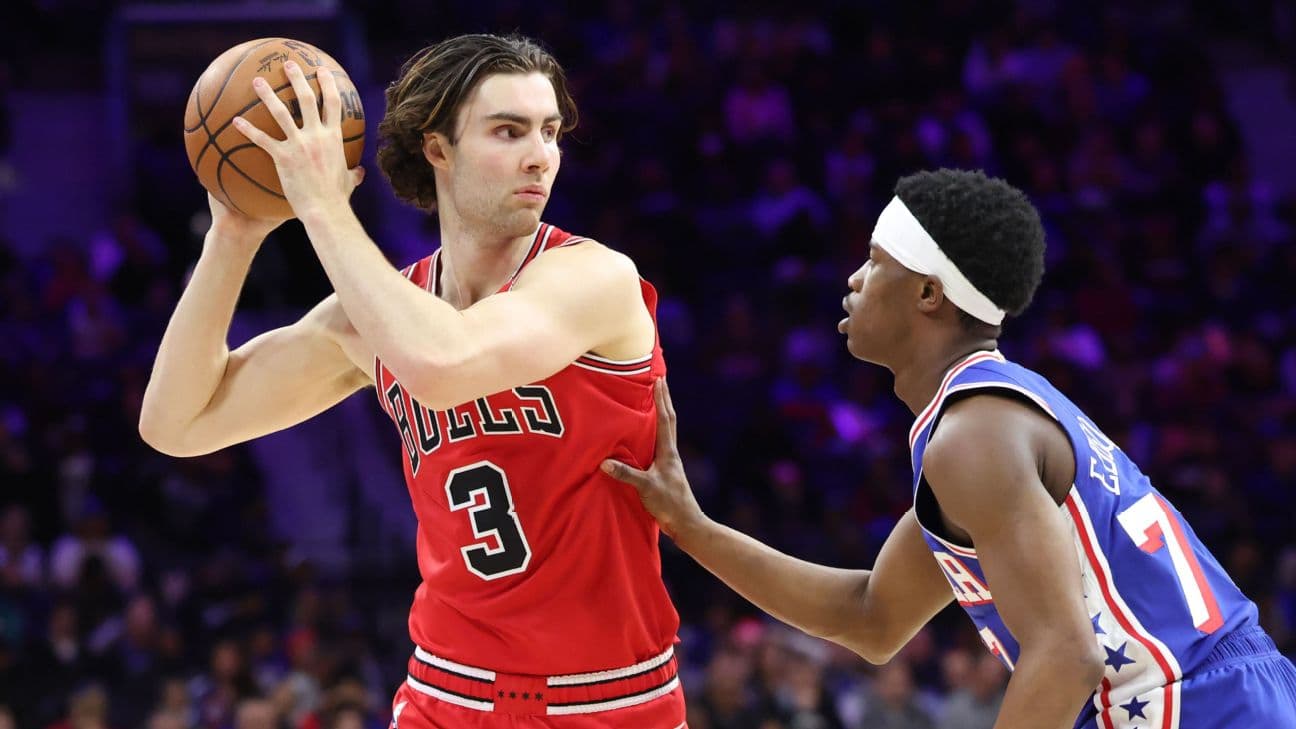
Fantasy basketball drafts open in a few weeks, and the forward board is where the 2026-27 season is won or lost. The two most valuable players in the sport, Nikola Jokic and Victor Wembanyama, carry center eligibility on most platforms, which strips the top of the forward pool and leaves a very small elite group followed by a long, flat middle.
Here is how the position breaks into tiers, and where the gaps between them actually matter.
Tier 1: the one who belongs alone
Giannis Antetokounmpo is the first forward off the board in every format. He moved to Miami this offseason after spending his entire career in Milwaukee, and the fantasy read on the move is that very little functionally changes. His production has never been scheme-dependent, because the scheme has always been him.
The free throw percentage remains the one category he actively damages, and it is a real cost in nine-category leagues at his volume. Managers taking him in the first round should plan the rest of the draft around punting that category rather than trying to repair it with three specialists.
What the move to Miami does change is the shooting around him. A frontcourt star surrounded by better spacing sees fewer bodies in the paint, which historically has meant marginally better efficiency rather than more volume.
Tier 2: the recovery cases and the ascending ones
Jayson Tatum returns from an Achilles tear suffered late in the 2024-25 postseason and is expected to be at full strength this season. That is the single largest source of uncertainty near the top of the board.
Achilles recoveries have historically been the least forgiving in basketball, and the modern medical record is better than the old one without being clean. The fantasy question is not whether Tatum is still an elite player. It is whether the version available in November matches the version available in March, and the honest answer is that early-season managed minutes are more likely than not.
The correct approach is to draft him at a small discount to his talent, not a large one, and to expect the first six weeks to underperform the last twenty.
Jalen Johnson is the ascending name in this tier and the one most likely to finish above his draft slot. His profile is the ideal fantasy shape: a forward who accumulates across every category rather than concentrating in one, with rebounds, assists and defensive counting stats attached to real scoring volume. The risk with him has always been availability rather than production.
Kevin Durant remains a top-five forward on a per-game basis and a diminishing one on a per-season basis. He is the clearest example of the age tax in this draft: nobody doubts the nightly line, and everybody should doubt the games played.
Tier 3: the useful middle
This is where most rosters actually get built, and where the difference between the fifth and fifteenth forward selected is smaller than the ADP gap implies.
The players in this range fall into two archetypes. The first is the high-usage scorer whose value depends on shooting efficiency holding up, which makes him a category-league risk and a points-league asset. The second is the do-everything connector who scores less but contributes across five or six categories, which inverts the equation.
Build deliberately. A roster that takes three of the first archetype in a row will win points and lose percentages, and no waiver claim in December fixes that. A roster that takes three of the second will be competitive everywhere and win nothing.
Tier 4: the eligibility arbitrage
The most underused edge on draft day is positional eligibility, which varies by platform and shifts within a season based on where a player actually lines up.
Several of the most valuable mid-round players in this class carry dual forward and center eligibility, and on platforms that require a center, that flexibility is worth roughly a full round of draft capital. Check the specific eligibility rules in your league before the draft rather than assuming last year's designations carried over. Rotation changes in the summer move these designations more than most managers realize.
The Verdexed model take
Our projections show the forward position with the steepest drop after the first tier of any position on the board this season, and the flattest middle. That combination argues for a specific strategy: either pay for the top of the position in the first round, or wait deliberately and take three forwards in the middle rounds rather than one in the fourth.
The worst outcome the model identifies is the manager who spends a second- or third-round pick on the fifth-best forward. That player is priced on name recognition and produces at a level available two rounds later, which is the most common way a competitive draft turns into a mediocre roster.
The model is also more cautious than consensus on players returning from major lower-body injuries, applying a games-played discount that consistently proves too small rather than too large in retrospect.
Betting angle
The futures markets tied to this group are the award prices. Wembanyama opened as the MVP favorite and the forward candidates sit behind him, which creates value in the specific case of a healthy Tatum, whose price reflects the injury rather than the player.
Season-long player props, where available, are the cleaner expression. A forward returning from an Achilles tear will have his scoring and rebounding numbers set against his pre-injury baseline, and the market has historically been slow to price the early-season minutes restrictions that follow those recoveries.
What to do in your draft
Take Giannis first among forwards and punt free throws. Take Tatum if he falls past his talent level and plan for a slow start. Target Johnson at his price and above it.
Then wait. The middle of this position is deep enough that the eighth-best forward and the fifteenth-best forward will finish within a handful of ranking spots of each other, and the picks saved are better spent on the positions where the drop-off is real.