CeeDee Lamb, George Pickens and the Jake Ferguson Problem in Dallas
By Verdexed Fantasy Desk
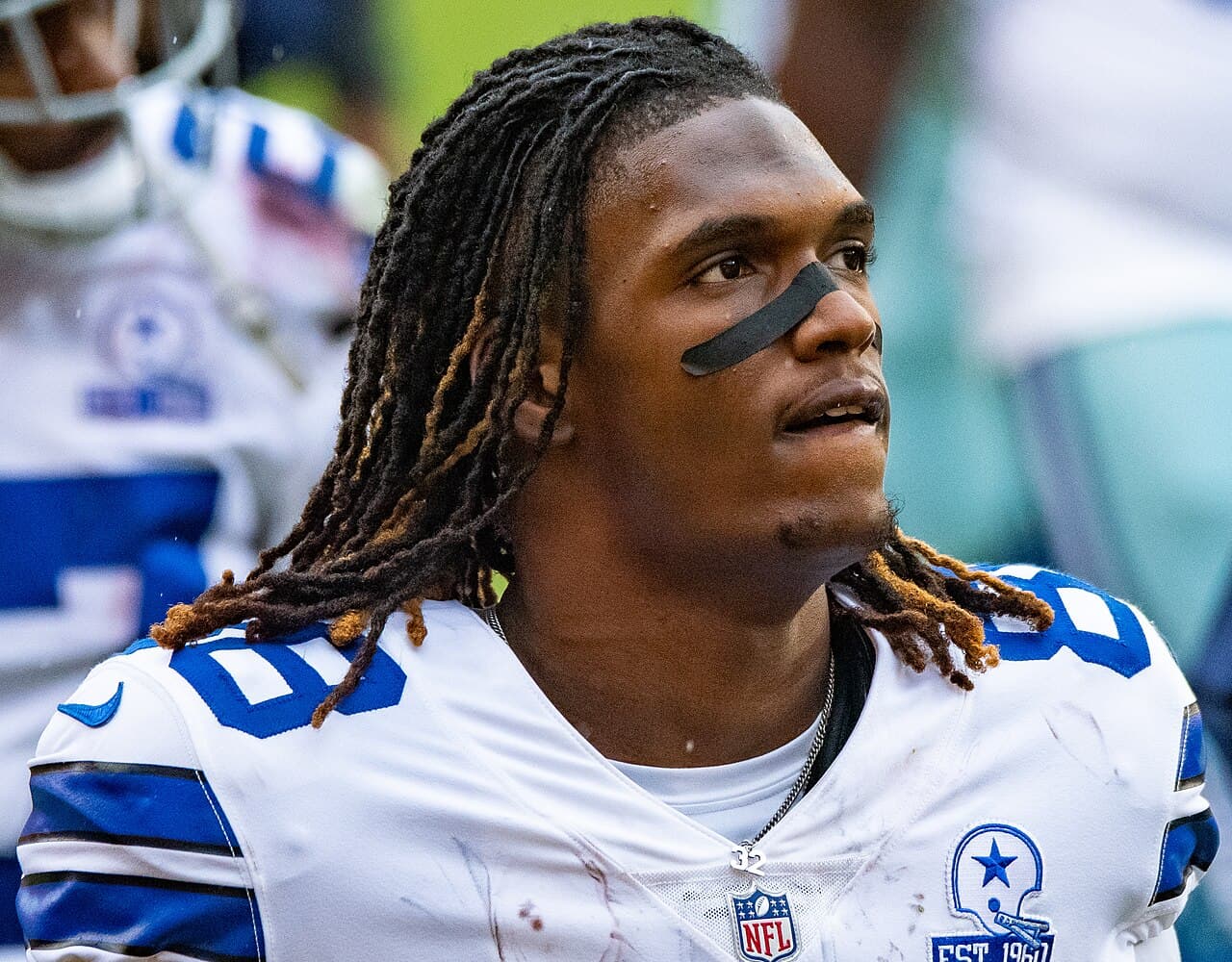
Dak Prescott has looked sharp through the first stretch of Cowboys camp, the left tackle competition has been resolved in favor of Tyler Guyton getting the first-team reps, and Jake Ferguson has been heavily involved in the passing work, including red-zone periods. For fantasy managers, none of that is the important part. The important part is that Dallas is returning an entire receiving corps from a season in which the offense threw the ball more than it should ever expect to again.
The Cowboys fielded one of the worst defenses in modern NFL history in 2025. Bad defenses create pass volume, pass volume creates fantasy points, and fantasy points create ADP. Every Dallas skill player is currently priced on a foundation that the roster has spent the offseason trying to demolish.
The two-alpha problem
Dallas enters 2026 with two receivers who cleared 1,000 yards in the same season, which is rare and genuinely valuable. It is also the source of the tension in their draft prices.
CeeDee Lamb averaged 14.4 points per game last season, a steep fall from the 23.8 that made him the overall WR1 in 2023. The drop had two causes: injuries, and George Pickens' arrival taking targets that used to belong to him. Strip the injury games out and Lamb averaged 16.5 points with a 28 percent target share and 2.29 yards per route run, numbers that belong to a top-five receiver.
Pickens finished as the PPR WR5 in his first Dallas season. The eye-opening split is what happened when Lamb was absent: in four games where Lamb played fewer than 10 snaps, Pickens averaged 24.2 points per game. That is a No. 1 receiver's production, unlocked by the No. 1 receiver being unavailable.
Both of those facts are true, and together they describe a ceiling problem. Lamb is a top-five talent whose best fantasy outcomes historically required target monopoly. Pickens is a top-five producer whose best outcomes required Lamb's absence. Drafting both at their current prices is a bet that Prescott can support two WR1 seasons in an offense that will probably throw less.
Which one to draft
The answer depends on where you are picking.
In the first two rounds, take Lamb. His floor is anchored by a proven target share, elite efficiency and a role that does not depend on anyone else getting hurt. If his ankle issues are behind him, the path to an overall WR1 finish is intact, and that outcome is not available at Pickens' price.
If you are picking in the range where Pickens goes, take him without hesitation. He is the better value relative to cost, because the market is still discounting him as the second option in his own offense despite a WR5 finish. Second options who finish top five are usually mispriced the following year.
What you should not do is take both and call it a strategy. Stacking two receivers from an offense whose pass volume is likely to fall is a correlated bet in the wrong direction. If you want Dallas exposure at two roster spots, pair one receiver with Prescott and let the touchdowns cover you either way.
The Ferguson problem
Jake Ferguson caught 82 passes for 600 yards and eight touchdowns last season, good for TE11 on a per-game basis, and is being drafted around TE11 to TE13 near the middle of the 10th round. On the surface that is a fair price for a fair player.
Underneath, the profile is thinner than the finish. Among 54 qualifying tight ends, Ferguson ranked 16th in target share at 16 percent, 20th in receiving yards per game at 35.3, 43rd in yards per route run at 1.26, and 18th in first-read share. Those are the numbers of a complementary piece, not a fantasy starter.
What carried the season was red zone usage. Ferguson finished second among tight ends in red-zone targets, behind only Trey McBride, and tied for third in touchdowns. That is a real and repeatable role, and it is also the most volatile input in fantasy football. Touchdown-dependent tight ends are excellent when the touchdowns come and unplayable when they do not.
The camp reports showing Ferguson working in the red zone with Prescott support the role. They do not solve the volume problem. With Lamb and Pickens both healthy, Ferguson has almost no path to being more than the third option, and third options on teams that throw less do not usually repeat eight-touchdown seasons.
The Verdexed model take
Our projection has Dallas' pass attempts falling from last season, driven almost entirely by an expected improvement in the defense off a historically bad baseline. That is the single most important input on this offense, and it is the one fantasy prices are slowest to incorporate.
Inside that smaller pie, the model concentrates share rather than distributing it. Lamb projects to reclaim close to his 2023 role when healthy, Pickens holds roughly the same share he had last year, and Ferguson absorbs the shrinkage. Our tight end projection puts Ferguson closer to TE14 than TE11, which makes his current price a small overpay rather than a disaster.
Prescott is the player the model likes most relative to cost. He has averaged 277 passing yards per game in healthy seasons across the last three years, well above the roughly 230 league average, and quarterback pricing rewards volume less efficiently than receiver pricing does. Fewer attempts hurt him less than they hurt his third pass catcher.
On the betting side, the Cowboys' team total and Prescott's passing yardage prop are both built on last year's volume. Our numbers land under both. The Dallas win total, at 8.5 with the over favored, is closer to fair.
What to do in your league
Draft Lamb early if the price is right and the ankle news stays quiet. Draft Pickens happily wherever he falls. Let someone else pay TE11 prices for Ferguson, and take him a round or two later if the room lets him slide, because the red-zone role is genuine even if the volume is not.
The cleanest Dallas position is Prescott at his quarterback price, in an offense that still has two receivers who can win a game by themselves. Just do not build your roster on the assumption that Dallas throws 40 times a week again.