 NFL2026-09-01
Cade Klubnik Won the Jets' QB2 Job and Geno Smith's History Makes That Matter
By Verdexed NFL Desk
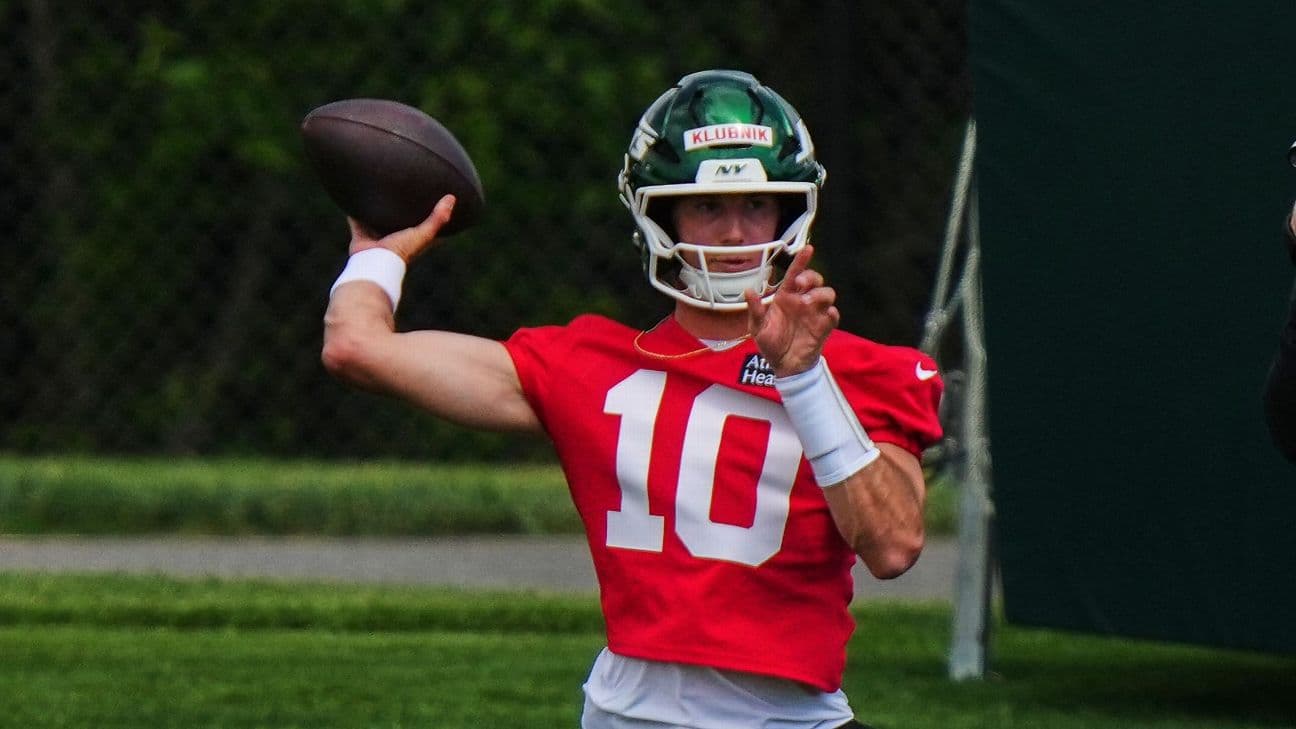
The Jets have settled their quarterback room, and the resolution says as much about how they see the position long term as it does about September. Cade Klubnik, a fourth-round rookie out of Clemson, has won the backup job behind Geno Smith after a preseason strong enough to convince the staff he can handle it. New York released Bailey Zappe and waived Brady Cook, who was promptly claimed by Miami, leaving Klubnik as the unambiguous No. 2.
That is a real decision, not a default. Teams that are uneasy about handing a rookie the emergency job keep a veteran around for exactly that reason, and the Jets chose not to.
What the preseason actually showed
Fourth-round quarterbacks do not typically win the No. 2 job in their first camp. The standard path is a redshirt year on the roster or the practice squad while a veteran holds the clipboard. Klubnik skipping that step means the coaching staff saw enough command of the offense to trust him with a live-fire scenario.
The reporting around the decision has framed it as a job the Jets want him to grow into, which is the honest version. He is the backup because he earned it relative to the alternatives, not because he is ready to start. Those are different things and the distinction matters for how you value him.
Why this is a fantasy story and not just a roster note
Geno Smith is the reason. Smith is a veteran quarterback whose career has included multiple stretches as a starter and multiple stretches as a backup, and quarterbacks in his age range miss time at meaningfully higher rates than the league average. Any offense whose fantasy value flows through a single quarterback in that profile carries a tail risk that fantasy drafters systematically underprice.
The Jets' skill-position group is where that risk lands. Garrett Wilson's target share and Breece Hall's receiving work are both quarterback-dependent in ways that do not survive a drop-off at the position. Adonai Mitchell's projection as the secondary receiver depends entirely on an offense that can support two productive pass-catchers. Under Frank Reich's play-calling, the structure of the offense should hold if the quarterback changes, but structure and execution are not the same thing.
If Smith misses time and a rookie fourth-rounder takes over, every one of those projections comes down.
The Verdexed model take
Our quarterback-continuity model measures the projected points-per-game gap between a team's starter and its next man up, then weights it by the probability of a starter absence based on age, injury history, and pressure rate faced.
The Jets grade in the wider half of the league on that gap. Smith is a competent NFL starter and Klubnik is an unproven rookie, which is a large delta by itself. The probability weighting pushes it further, because Smith's profile is not one of a quarterback who reliably plays 17 games.
The practical output is that the model discounts New York's pass-catchers slightly relative to consensus rankings, and discounts the team's win total more than the market does. That is not a bet against Smith. It is a statement about what happens in the branch of the tree where he is unavailable, and about how little the market prices that branch.
Betting angle
Jets season win totals should be evaluated with the backup situation explicitly in the model. A team starting a fourth-round rookie for even three games loses more expected wins than the market typically bakes in, because Week 1 win-total pricing effectively assumes a healthy starter for the full season.
The in-season application is more useful. When a starting quarterback is questionable and a rookie backup is the alternative, the market underreacts on the side and overreacts on the total. The historically better exposure in those spots is the opposing team's defense in fantasy and the under on the affected team's team total.
Dynasty and superflex value
This is where Klubnik is genuinely worth something today. A rookie quarterback who wins a backup job in his first camp has cleared a bar that most fourth-round quarterbacks never clear, and superflex managers pay real prices for quarterbacks who might start.
The path is visible. If Smith misses time this season, Klubnik gets live starts as a rookie, and rookie starts are the currency dynasty markets value most. If Smith stays healthy all year, Klubnik enters next offseason as an in-house option on a cheap contract for a team that will have to decide about the position again.
In one-quarterback dynasty leagues, he is a hold-if-rostered, not an add. In superflex, he is worth a late rookie pick or a low-end waiver claim.
What to do in your league
For redraft, do nothing with Klubnik. He is not startable and will not be until something changes.
Do adjust how you hold Jets skill players. Wilson and Hall are still starters in any format, but they are players you should be slightly more willing to trade at consensus value than to acquire at it, because the downside branch of their season is worse than the ranking suggests.
Keep Klubnik on your watch list. The moment Smith appears on an injury report with anything more serious than a routine designation, Klubnik becomes a superflex waiver priority and every Jets pass-catcher becomes a sell.
What's next
Week 1 is the first real data point on whether the Jets offense is built well enough to survive a quarterback change. Watch how much of the passing game is structured, quick-game, and schemed open versus how much depends on the quarterback creating. The more of the former, the smaller the drop-off if Klubnik ever has to play.