 NFL2026-07-12
Brian Thomas Jr.'s Target Competition: The 2026 Fantasy Question Facing Jacksonville's WR1
By Verdexed Fantasy Desk
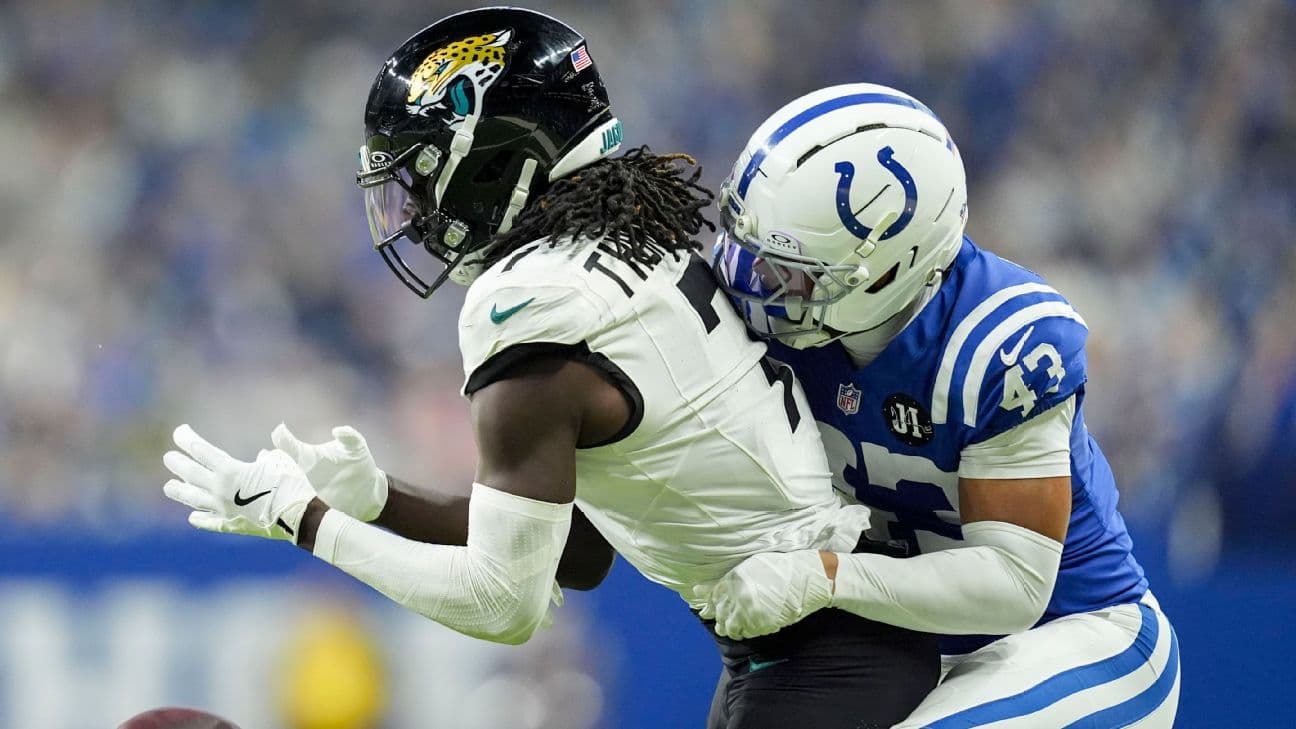
Brian Thomas Jr. is one of the more polarizing wide receivers on the 2026 fantasy board, and the debate comes down to a single word: competition. The Jaguars receiver has the talent of a high-end fantasy WR1, but the target tree around him has grown crowded, and that tension is the reason his ADP has settled in the WR3 range rather than the top tier his ceiling suggests. Sorting the ceiling from the risk is the key to valuing him correctly.
The talent is not the question
Thomas established himself early as a big-play threat with the physical tools to win at all three levels. When a receiver flashes that kind of ceiling, the fantasy community rightly treats him as a potential league-winner. The film and the traits point to a player capable of a top-10 finish at the position if the volume and quality of targets are there. That is the bull case, and it is a legitimate one.
The issue is not whether Thomas can produce; it is whether Jacksonville's passing distribution will let him command the target share his talent warrants. Elite fantasy receivers are made by volume as much as by ability, and volume is precisely the variable in question here.
The crowded target tree
The complication is the supporting cast. Thomas faces substantial target competition from a group that includes Parker Washington, tight end Brenton Strange, and potentially Travis Hunter, whose two-way role adds another mouth to feed in the passing game. That is a meaningful cluster of pass-catchers competing for the same throws, and it introduces real week-to-week variance into Thomas's projection.
When a passing offense spreads the ball across several capable options, even a talented WR1 can see his target share compressed. That does not cap his ceiling on any given week, when he can win with a long touchdown, but it does lower his floor and make his production streakier. For fantasy managers, streaky is the enemy of a reliable weekly starter, and it is why the market has him priced as a boom-or-bust WR3 rather than a set-and-forget WR1.
How to value him
The right way to approach Thomas is as a high-ceiling, medium-floor pick whose value depends heavily on how Jacksonville's target hierarchy sorts out in camp. If the beat reporting through August points to Thomas consolidating the alpha role and the competition settling into clear complementary spots, his stock rises toward the WR2 tier and he becomes a strong value. If camp confirms a genuinely committee passing game with Hunter carving out a real receiving role, the variance concern is validated and the WR3 price is appropriate.
This is a situation to monitor rather than to lock in early. The target competition is the swing factor, and target competition is exactly the kind of storyline that clarifies once padded practices and preseason usage reveal the pecking order.
The Verdexed model take
Our projections treat target share as the dominant input for receiver value, and Thomas is a case study in why the same talent can produce wildly different fantasy outcomes depending on distribution. The model outputs a wide range for him: a top-12 ceiling if he commands a clear alpha share, and a low-end WR3 floor if the offense truly spreads the ball. The median projection lands in the WR2-to-WR3 border, which tracks with his current ADP but comes with more upside variance than most receivers in that range. The takeaway is that Thomas is priced fairly for his median but offers a bigger payoff than his cost if the target competition breaks his way.
The camp signals to watch
Because Thomas's value hinges on target share, the training-camp reporting out of Jacksonville is unusually important for his draft stock. The specific signals to track are which receiver draws first-team reps in three-receiver sets, how the offense deploys Travis Hunter given his two-way responsibilities, and whether Thomas is featured in the red zone and on high-value routes. A receiver who commands the alpha role in camp usage is a very different fantasy asset than one splitting a target tree four ways.
Hunter is the biggest swing variable. If his defensive workload limits his offensive snaps, the passing-game math opens up for Thomas considerably. If Jacksonville commits to featuring Hunter as a full-time receiving weapon, the competition intensifies and Thomas's floor drops. Managers should treat the preseason as a live information window rather than drafting blind, since a clearer picture of the pecking order could meaningfully move Thomas up or down the board before Week 1. The talent gives him a high ceiling; the camp reports will tell you how likely he is to reach it.
What to do in your draft
Draft Thomas as an upside WR3 and treat any consolidation of his role as a bonus rather than the expectation. He is a fine pick at his current cost for managers who want ceiling in the middle rounds, but he should not be your only high-variance receiver, since stacking boom-or-bust profiles can leave your lineup exposed on the weeks the touchdowns do not come. Pair him with a higher-floor target hog to balance the roster, and keep a close eye on the Jacksonville depth chart through camp. If Thomas separates as the clear WR1, you will have bought a top-15 receiver at a discount. If the committee holds, you got a boom-or-bust flex at a fair price. Either outcome is a reasonable bet at his ADP; the key is going in with clear eyes about which range you are drafting.