 NFL2026-08-27
Breece Hall Is Tracking Toward Week 1 and His Draft Price Never Fully Recovered
By Verdexed Fantasy Desk
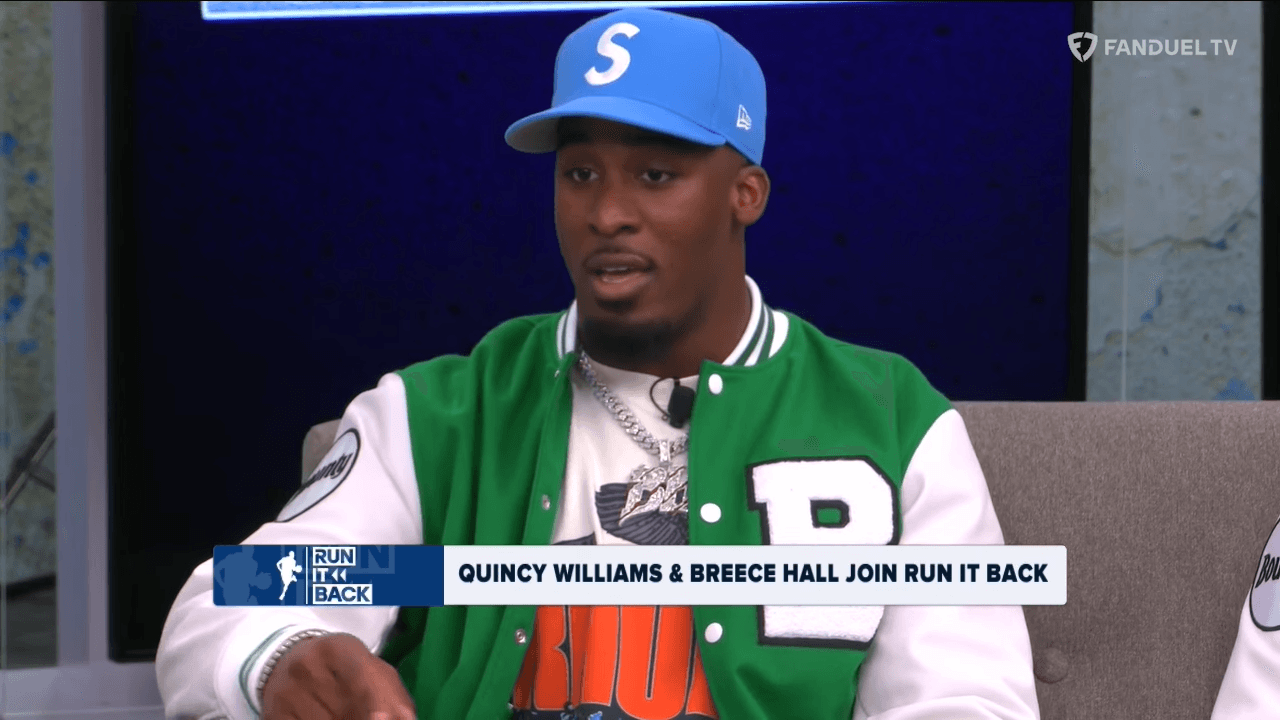
Breece Hall is on track to play in Week 1, and fantasy managers who let him slide down their boards after a mid-August scare are about to find out how much that panic cost them. Hall strained his groin at Jets practice on August 17, going down untouched after making a catch, and head coach Aaron Glenn told reporters the next day that the timeline was two to three weeks with the expectation Hall would be ready for the season opener. Reports out of Jets camp this week described Hall doing side-field work, running, cutting, and changing direction without visible restriction, and the team has continued to point at Week 1.
New York opens on the road against Tennessee on September 13, which gives Hall more than two additional weeks from the most recent positive update. That is a comfortable margin for a soft-tissue injury with a two-to-three-week label attached to it.
Why the injury spooked the market
Two things made this one land harder than a typical camp groin. The first is that it was non-contact. Hall was running free after a reception, in what should have been a walk-in touchdown in a drill, and he simply pulled up. Non-contact soft-tissue injuries carry an implicit re-injury tax in the minds of drafters, and reasonably so.
The second is Hall's own history. He tore his ACL as a rookie and has spent the seasons since answering questions about whether the explosiveness came all the way back. Any lower-body news attached to his name gets read through that lens, fairly or not.
Neither concern is nothing. But the actual reporting has been consistently benign. Glenn described it as not a big deal, gave a specific and short timeline, and has not walked any of it back. The Jets held Hall out of preseason work, which was always going to happen with a back they franchise-tagged in March and then signed to a multi-year extension in May. Teams do not risk that kind of investment in exhibition games.
The backfield behind him
This matters because the Jets have real depth, and the fantasy question is how much of Hall's workload actually leaks if he is limited early.
Braelon Allen sits second on the depth chart. He is the bigger back, the short-yardage and goal-line option, and his 2025 season ended early with an MCL sprain. Isaiah Davis is third and has been the most efficient of the three on a per-touch basis, posting a yards-per-carry figure that ranked among the best in the league for backs with a meaningful sample. Kene Nwangwu is on the roster largely for return work.
That is a functional room, and it is the reason Hall's ceiling has a cap on it even when he is healthy. The Jets have shown a willingness to give Allen the goal-line work and to spell Hall with Davis in obvious rest situations. Hall is the clear lead back, not a bell cow in the purest sense.
Fantasy fallout
Hall's value case is built on receiving work. He is one of the few backs in the league who runs routes from the slot and out wide with any regularity, and in PPR formats that is the difference between an RB2 floor and an RB1 floor. He also rushed for over 1,000 yards last season, the first Jet to do so since Chris Ivory in 2015, which speaks to the volume the team is comfortable handing him.
The risk is not usage. It is game script. If the Jets spend the season trailing, Hall's receiving role protects him better than it protects most backs. If they are competitive, Allen eats the touchdowns. Either way, Hall is a high-floor, moderate-ceiling RB2 with a real path to RB1 finishes in PPR.
Allen is the handcuff worth actually rostering, particularly in leagues that award points for touchdowns generously. Davis is a deeper stash whose efficiency argues for a larger role than the depth chart currently gives him, and he is the back who would benefit most if Allen's knee becomes a recurring issue.
The Verdexed model take
Our projections have Hall inside the top 15 running backs with a reception total in the high-40s to low-50s range, and a touchdown projection that sits below what his rushing volume alone would suggest because of Allen's goal-line presence. That combination makes him a better value in full PPR than in half or standard, and the gap between formats is wider for Hall than for almost any other back in his tier.
The market has him going roughly where it had him before the injury, which is to say the discount has largely closed among engaged drafters. In slower or more casual leagues, though, the groin note is still sitting on his player page and still costing him picks. That is the arbitrage.
Our model also flags the Jets' Week 1 matchup in Nashville as one of the softer early-season environments for a pass-catching back, which strengthens the case for starting Hall confidently in Week 1 rather than treating him as a wait-and-see.
What to do in your league
Draft him. If Hall is available at the turn in the second round, that is a value relative to his projected volume and his receiving role. Do not draft him in the first, because the goal-line split and the injury history both cap the ceiling.
Pair him with Braelon Allen if you can get Allen in the double-digit rounds. That is the cleanest handcuff-plus-standalone combination in the AFC East, because Allen has independent touchdown value even in weeks Hall plays a full complement of snaps.
Watch the Jets' first two injury reports of the regular season. If Hall shows up as a limited participant in early September, the two-to-three-week label was optimistic and Allen's price will spike immediately. Nothing reported so far suggests that is where this is heading.