Bijan Robinson Signs a Record Extension and Ends His Falcons Hold-In
By Verdexed NFL Desk
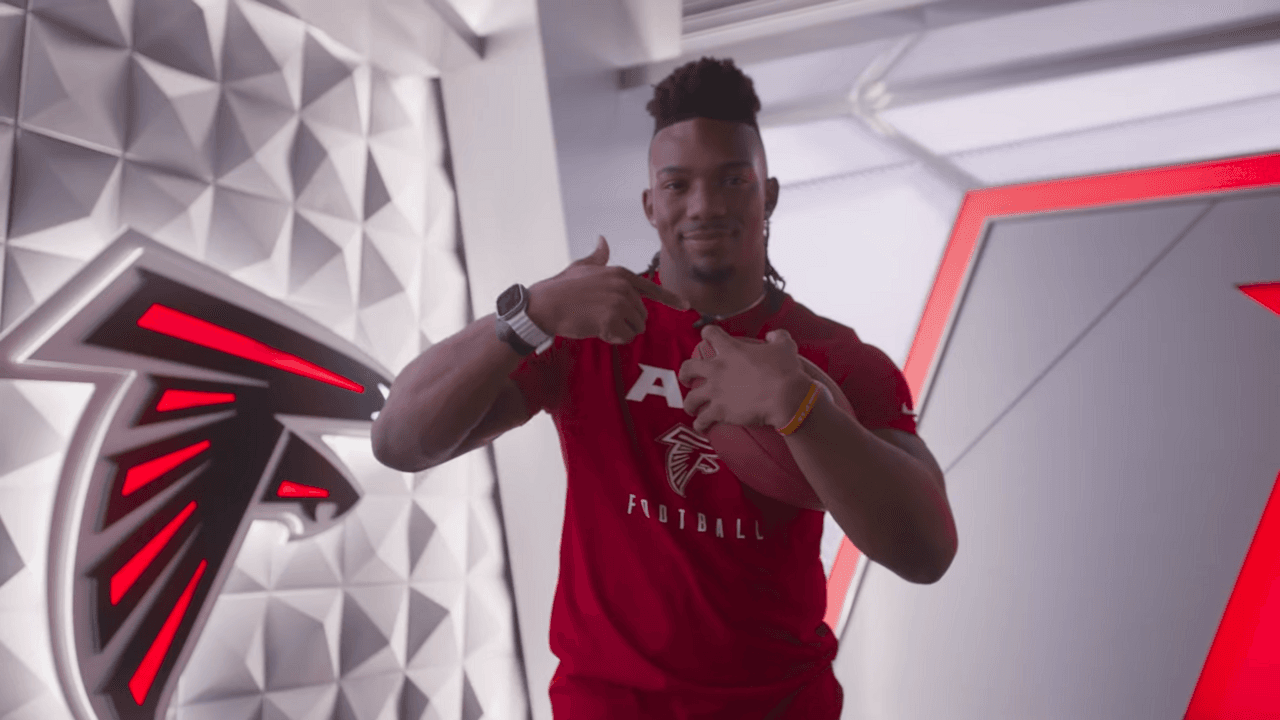
The Atlanta Falcons and Bijan Robinson agreed Tuesday on a three-year extension worth up to $75 million, a deal that makes him the highest-paid running back in the NFL and ends the hold-in that had kept him out of team drills for the opening week of training camp. For fantasy managers who had been staring at a top-three back with an unresolved contract and a red flag next to his name, the flag is gone.
The reported structure carries a base value of roughly $66.75 million with a position-best average annual value of about $22.25 million, which clears the previous benchmark held by Saquon Barkley. The guarantee is the more meaningful number: approximately $51 million guaranteed with $37 million paid at signing, reported as the most guaranteed money ever committed to a running back on a second contract. Robinson is now under Atlanta's control through 2030.
Why Atlanta paid, and paid early
Robinson is 24 and was the eighth overall pick in the 2023 draft, which means the Falcons were not up against a deadline in the way teams usually are when they hand out record money at the position. They had a fifth-year option available and a player with no leverage beyond his own willingness to stand on the sideline. They paid anyway, and the reason is on the stat sheet. Robinson led the NFL in yards from scrimmage last season with 2,298 and finished fourth in rushing with 1,478 yards.
That scrimmage-yardage crown is the tell. Atlanta is not paying for a two-down grinder. It is paying for a back who absorbs receiving work, who does not come off the field in obvious passing situations, and whose usage is insulated from game script in a way most running backs are not. The last several record-setting running back contracts have gone to players with exactly that profile, and the market has been consistent about it: pass-game equity is what gets a back paid in the current NFL.
The timing also matters for a franchise that just absorbed a hard hit. Edge rusher Jalon Walker was carted off Tuesday's practice with what has been reported as a torn ACL, and Atlanta's quarterback situation remains unsettled with Michael Penix Jr. still working back from ACL surgery. Locking in the one genuinely elite offensive piece before the season starts is the kind of move a team makes when it knows the rest of the roster carries volatility.
Fantasy fallout
The practical fantasy effect is smaller than the headline suggests, and that is the point. Robinson was already going near the top of drafts. What the extension removes is tail risk: the possibility of a holdout that stretched into September, a soft ramp-up that cost him early-season volume, or a player operating on a rookie deal in a contract dispute with an organization he was publicly frustrated with. All of that is now off the board.
Draft him where you were going to draft him, but draft him with more conviction. The specific gain is in the first three or four weeks of the season, the window most vulnerable to a delayed camp. Robinson should be fully integrated by the preseason and available for a normal workload in Week 1.
The secondary read is on Atlanta's backfield depth. Any handcuff value behind Robinson just got thinner. A team that commits $37 million at signing to a running back is not building a committee, and it is not looking for reasons to rest him. Late-round Atlanta backs are contingency-only lottery tickets now, not workload speculation.
What this does to Jahmyr Gibbs
The most immediate ripple runs to Detroit. Jahmyr Gibbs has also been holding in at Lions camp while seeking a new deal, and Robinson's contract just reset the ceiling of what a young, receiving-capable, first-round running back can command. The two are close comparables in age, draft pedigree and role, and agents do not ignore a fresh data point that large.
For fantasy purposes, the read on Gibbs is now the opposite of the read on Robinson: his situation got marginally more uncertain, because the number he is now negotiating against went up. That does not mean he misses time. Most of these situations resolve. But if you are ranking the two backs and everything else is close, the one who has already signed is the one with the cleaner runway to a full August.
The Verdexed model take
Our projection system treats running back value as a function of expected touches, target share and offensive environment, and contract resolution feeds into the availability component of that model rather than the efficiency component. Robinson's per-touch projection does not move. His projected games played and projected early-season workload both tick up, and for a player whose value is built on volume, that is the input that matters.
The more interesting model question is Atlanta's offensive environment. Our team projections have carried a wide band on the Falcons because the quarterback outcome is genuinely unresolved. If Tua Tagovailoa opens as the starter, which is the direction camp reporting points, the offense profiles as a higher-completion, shorter-throw operation, and that tends to be good for a back who catches passes out of the backfield. If Penix takes over later in the season with a healthy knee, the passing game gets more vertical and Robinson's target share likely dips slightly while his touchdown equity rises.
Both branches keep Robinson in the elite tier. That is what separates him from most backs whose value swings hard on the quarterback under center.
Betting angle
Atlanta's win total and its skill-position player props both carry more information now than they did 48 hours ago, but in different directions. Robinson rushing and scrimmage-yardage over/unders should be treated as live markets rather than settled ones: books that had priced in any camp-absence risk now have a cleaner player to model, and any lingering discount is worth taking on the over side.
The team total is a murkier bet. Losing Walker for what looks like the season damages a pass rush that was already the roster's thinnest area, and a defense that cannot get off the field creates more offensive possessions but also more negative game scripts. Historically, negative script has been good for Robinson's receiving volume and bad for his goal-line opportunities. Approach Falcons game totals as leaning up and Falcons team wins as leaning down until the quarterback picture firms.
What to do in your league
If you hold a top-five pick, Robinson stays where he was, and the case for taking him over the field is stronger than it was last week. If you were hoping the contract noise would push him down a slot or two in your draft room, that discount has evaporated, so plan accordingly.
If you are in a dynasty league, the extension is straightforwardly good news: cost certainty through 2030 on a 24-year-old who has already led the league in scrimmage yards is close to the best structural outcome available at the position. Hold, and if a manager in your league is spooked by the general aging curve at running back, that is a manager worth calling.
And keep an eye on Detroit. The next running back contract in this cycle is the one that tells you whether Robinson's number was a ceiling or a new floor.