 NFL2026-07-23
Alvin Kamara Restructures to Stay in New Orleans: The Saints Backfield Is Now a Two-Man Fantasy Puzzle
By Verdexed Fantasy Desk
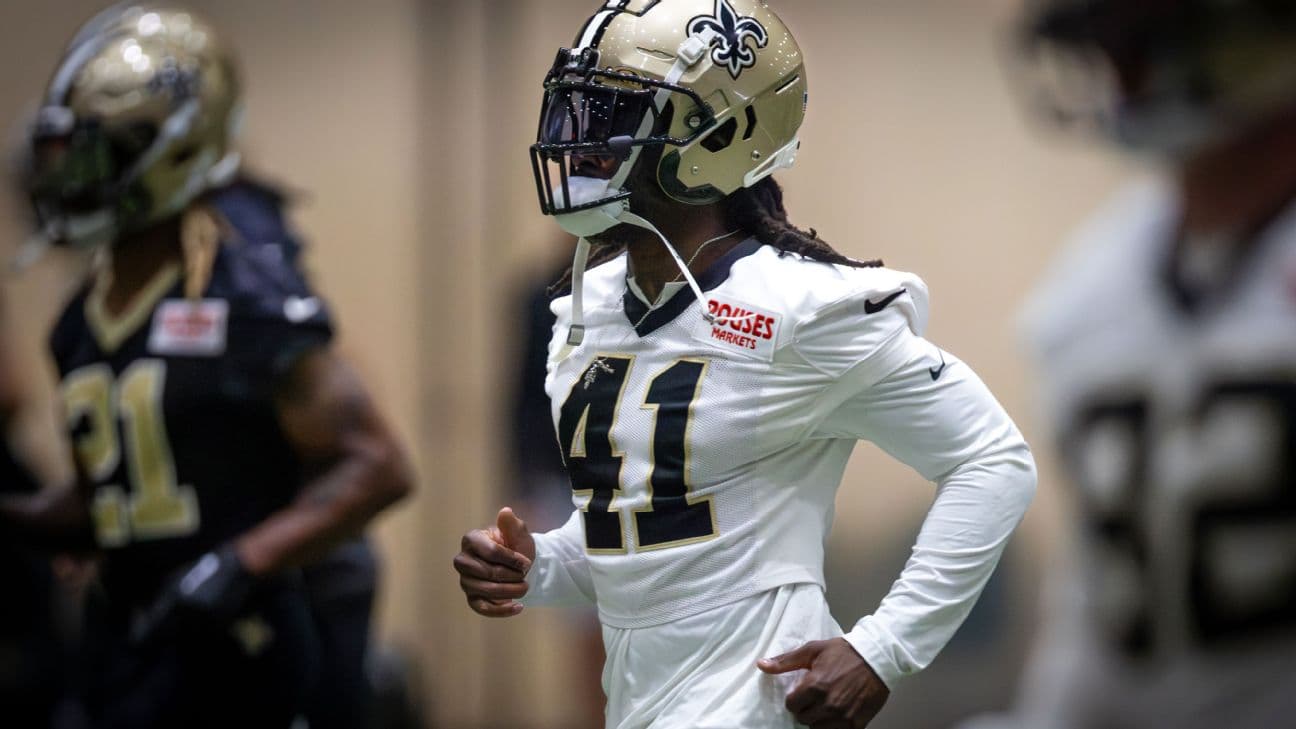
Alvin Kamara agreed to a restructured contract to remain with the New Orleans Saints, ending the offseason's uncertainty over his future and reshaping a backfield that already added Travis Etienne. The reworked deal reportedly pays Kamara around 6 million dollars for 2026 with incentives that can push it higher, and his agent framed the goal as Kamara retiring a Saint. For fantasy managers, the resolution turns a murky situation into a defined, and crowded, two-man committee.
The context matters. New Orleans brought in Etienne this offseason, a back who eclipsed 1,000 rushing yards in three of his four seasons in Jacksonville, and for a stretch it looked like Etienne might inherit the lead role while Kamara's status hung in limbo. The restructure changes that calculus. Both backs are now in the building, and the Saints will have to divide a finite number of touches between a productive newcomer and a longtime franchise cornerstone.
What the deal means
Kamara taking a reworked, incentive-laden deal signals a player prioritizing his preferred landing spot over maximizing his salary, and a team keeping a respected veteran in the fold rather than moving on. It does not, however, guarantee him the workhorse role he held in his prime. A backfield with two capable backs almost always produces a committee, and the presence of Etienne caps the ceiling on Kamara's volume even with the contract settled.
The incentive structure is a tell. A deal built on reachable bonuses rather than guaranteed money suggests a role that is meaningful but not assured, which aligns with a committee outlook. Kamara remains a factor, particularly in the passing game where he has long excelled, but the days of him commanding the vast majority of the backfield touches may be behind him.
The fantasy fallout
A two-man committee is the least favorite phrase in fantasy football, because it drags down the value of both backs relative to a clear lead. Etienne arrives as the newcomer with recent 1,000-yard production and a three-down profile, which positions him as the likelier early-down and volume back. Kamara's value tilts toward the passing game, where his receiving role gives him a PPR floor even in a reduced rushing workload.
That split shapes how to draft them. Etienne becomes the higher-upside rushing option whose value depends on securing the early-down and goal-line work, while Kamara profiles as a PPR-friendly complementary back whose receiving usage props up his floor. Neither is a set-and-forget RB1 in this arrangement, and drafting both off the same roster is a hedge, not a cheat code.
The battle to watch in camp
The key question training camp will answer is the touch distribution: does Etienne earn a clear lead-back workload, or do the Saints lean on a truer split that keeps Kamara heavily involved? Goal-line work and passing-down snaps are the two swing categories that will determine which back has the higher weekly ceiling. Managers should watch the preseason usage and the beat reports for any signal on how the staff plans to divide the labor.
The passing-game role is Kamara's insurance policy. Even in a committee, a back who catches passes carries a stable PPR floor that a pure early-down runner does not, which is why Kamara's ADP should not crater simply because Etienne arrived. Volume in the passing game is stickier than goal-line touches, and that is the piece of this backfield Kamara is most likely to retain.
The age and workload backdrop
Context matters when projecting an aging back sharing a backfield. Kamara has absorbed a heavy career workload, and the arrival of a younger, fresher Etienne gives New Orleans a natural reason to manage his snaps and protect him over a full season. That is not necessarily bad news for his fantasy value; a reduced but consistent role, weighted toward the passing game, can be more sustainable than a bell-cow workload that risks wearing him down. The Saints have every incentive to keep Kamara effective by using him efficiently rather than exhaustively.
Etienne, for his part, arrives with fresh legs and a recent track record of 1,000-yard production, which is exactly why he profiles as the early-down and volume back. The most likely equilibrium is Etienne handling the bulk of the rushing load with Kamara carving out a receiving-heavy complementary role, an arrangement that suits both players' ages and skill sets. Managers should draft to that equilibrium rather than hoping either back reverts to a workhorse.
The Verdexed model take
Verdexed's model reads the New Orleans backfield as a genuine committee and splits the projected touches accordingly, giving Etienne the edge in early-down and rushing volume while crediting Kamara with the bulk of the receiving work. The system caps both backs below true RB1 volume, which lowers their standalone ceilings but preserves Kamara's PPR floor through his passing-game usage. The model treats Etienne as the higher-variance, higher-ceiling piece and Kamara as the safer, receiving-anchored option.
The biggest swing variable in the model is goal-line usage, which it flags as undecided until camp. Whichever back secures the short-yardage and goal-line work gains a meaningful touchdown-equity bump. For bettors eyeing New Orleans rushing props, the committee structure argues against loading up on either back's individual yardage totals until the split becomes clear.
What to do in your draft
Draft Etienne as the higher-upside back whose value spikes if he wins a clear lead role, and draft Kamara as a PPR-anchored complementary piece with a dependable floor. Do not pay RB1 prices for either until camp clarifies the touch split. If you can get Kamara at a discount driven by committee fears, his receiving role makes him a sturdier value than his ADP might suggest.
The actionable read is to monitor the goal-line and passing-down usage through the preseason, because those two categories decide the ceiling of this backfield. The contract question is settled; the touch-share question is the one that now matters for fantasy, and it will be answered on the practice field over the next month.