 NHL2026-07-24
Wild Add Blake Coleman and Olli Maatta: The Fantasy Angle on Minnesota's Reshaped Forward Group
By Verdexed NHL Desk
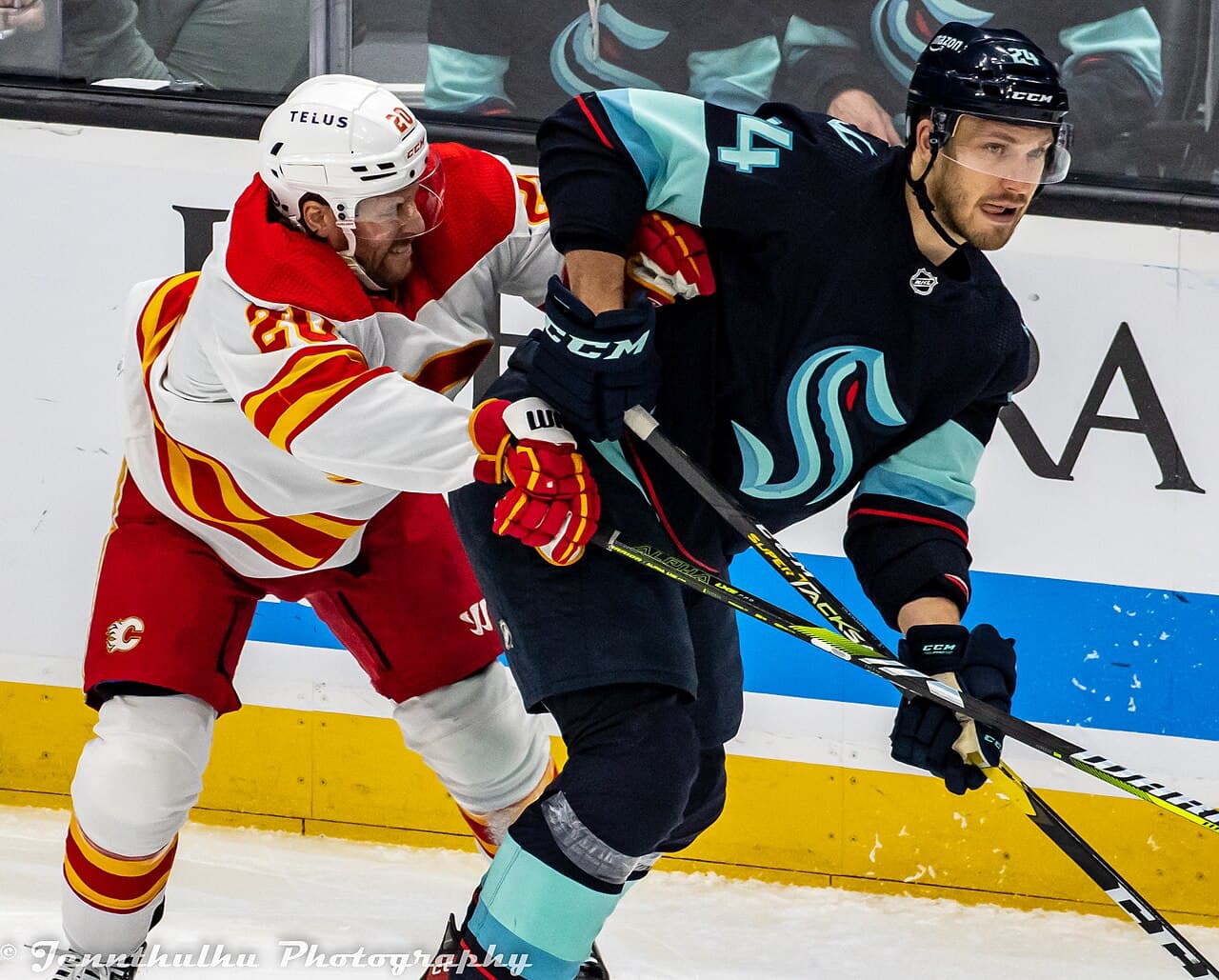
The Minnesota Wild reshaped their forward group and blue line depth this offseason, acquiring veteran forward Blake Coleman and defenseman Olli Maatta from the Calgary Flames in exchange for defenseman Jake Middleton and a package of draft picks. Calgary retained half of Coleman's salary to make the money work. The move landed a few weeks ago, but with the Wild's winger roles in flux heading into 2026-27, it is exactly the kind of transaction fantasy managers should be evaluating now, well before drafts, because it changes who plays where in Minnesota's top nine.
The deal and the fit
Minnesota sent Middleton and three draft picks, reported as a 2029 second, a 2027 third and a 2028 fourth, to Calgary, with the Flames retaining 50 percent of Coleman's contract. Coleman, 34, is a two-time Stanley Cup champion who brings a two-way game and penalty-killing value, and he is coming off a season of 20 goals and 35 points in 69 games. Maatta, a veteran defenseman, adds depth on the back end after posting 15 points across a split season between Calgary and Utah.
The fit for Coleman is the interesting part. With several Wild wingers unlikely to return, including veterans who have moved on this offseason, there are open roles in Minnesota's forward group, and Coleman slots into one of them as a reliable two-way winger who can play up or down the lineup and kill penalties. That role clarity is what gives him fantasy relevance in the right formats.
Fantasy fallout: where Coleman fits
Coleman's fantasy value is format-dependent. In standard points leagues, a 20-goal, 35-point season from a bottom-six or middle-six winger is useful depth rather than a difference-maker, and his ceiling depends on whether Minnesota deploys him in a scoring role or a checking role. The upside case is that the open winger spots push him into a middle-six job with some power-play or offensive-zone usage, which would lift his point potential. The likelier case is a defensively oriented role that caps his scoring but adds value in leagues that reward hits, blocks, shots and penalty-kill contributions.
That multi-category profile is Coleman's calling card. In deeper leagues and formats that count peripheral stats, a two-way winger who kills penalties and plays a physical, north-south game can be a quietly valuable roster piece even without gaudy point totals. Managers in category leagues should value him higher than his raw scoring suggests, while points-only managers should treat him as depth.
The ripple effects in Minnesota
The more valuable fantasy question may be who benefits from the reshuffled forward group. With winger roles opening up, the Wild's existing young forwards and top-line pieces could see their linemate situation and power-play deployment shift. A veteran like Coleman absorbing bottom-six and penalty-kill minutes can free the team's skill players for more offensive-zone and power-play usage, which is a subtle boost to the fantasy value of Minnesota's top scorers.
Maatta's arrival matters for the blue line depth chart, though his fantasy relevance is limited in most formats. His addition, alongside the departure of Middleton, reshuffles the Wild's defensive pairings, and deep-league managers should watch how the power-play quarterback role and top-pairing minutes settle in camp, since those are the spots that carry fantasy value on the back end.
The Verdexed model take
Verdexed's model projects skaters on role, usage and category profile, and its read on Coleman is a solid multi-category depth forward whose value is highest in leagues that count hits, blocks and shots. The model sees his scoring as steady but unspectacular and flags his deployment, whether Minnesota uses him in a scoring or checking role, as the swing factor for his point ceiling. In points-only formats, the model treats him as replaceable depth; in category formats, it rates him as an underrated contributor.
The model's broader signal is about opportunity cost. By absorbing defensive minutes, Coleman indirectly supports the offensive deployment of Minnesota's skill forwards, and the model nudges the Wild's top scorers up slightly on the cleaner path to power-play and offensive-zone usage. For Maatta, the model sees minimal standalone fantasy value outside of very deep leagues.
There is a real-hockey value to Coleman that fantasy managers should not confuse with fantasy value. His penalty killing, forechecking and playoff pedigree make him a useful player for a Minnesota team with postseason ambitions, and that team utility is exactly why he may end up in a checking role that suppresses his scoring. The lesson for drafters is to separate what makes a player valuable to his team from what makes him valuable to a fantasy roster. A two-way winger who kills penalties helps the Wild win games and helps a category-league manager in the peripheral stats, but he does little for a points-only team if his deployment is defensive. Match the player to your format, and do not overpay for a reputation built on winning hockey rather than fantasy production.
What to do in your league
Value Blake Coleman as a category-league depth piece whose hits, blocks, shots and penalty-kill work outrun his modest point totals, and draft him accordingly rather than as a scoring source. Keep an eye on his camp deployment, because a middle-six role with any power-play time would raise his ceiling. Give a small bump to Minnesota's top forwards on the reshaped depth chart, and in deep leagues track how the Wild's defensive pairings and power-play quarterback role settle after the Maatta-for-Middleton swap. This is a depth move, and depth moves are won in the later rounds by the managers who read the roles before anyone else does.